Which kind of rooflight sits properly in a stone-slate or Welsh-slate roof?
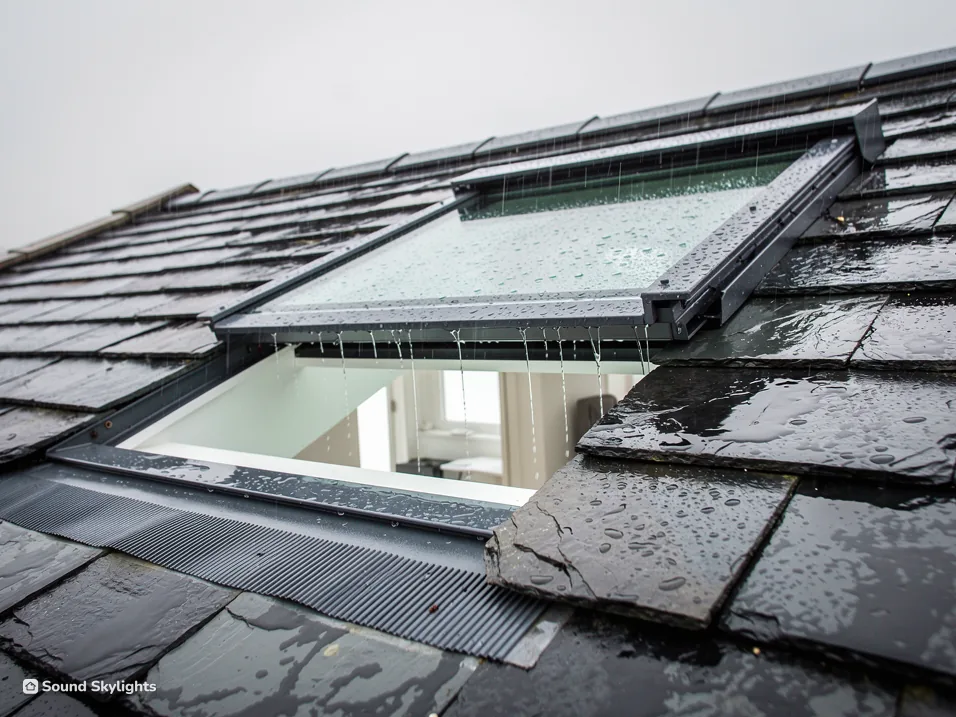
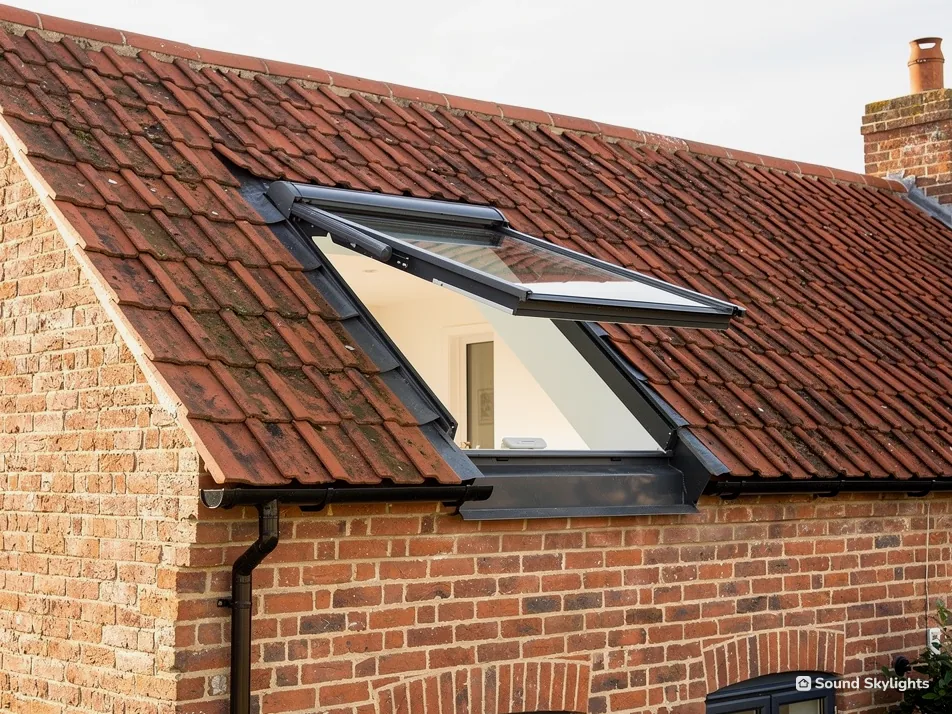
Marple Bridge is a predominantly stone-built village, in the council's words, and a house of that kind is likely to have gritstone walls under stone slate or Welsh slate. That decides a good deal before you think about glass. A roof window sits in the slope with a flashing dressed to the covering around it, and stone slate and Welsh slate are different materials with different thicknesses. So at the survey we look at your own roof and pick the flashing kit to suit it.
Why a slim frame helps
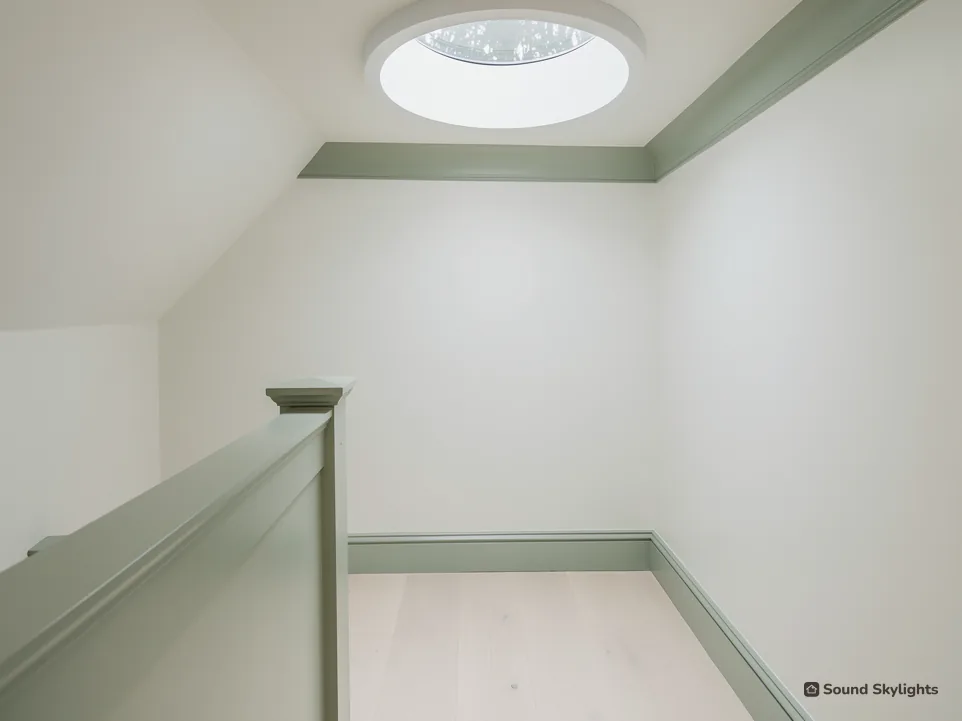
On a small old house the roof is part of what you see from the lane. A rooflight that sits low in the slope, with a thin frame, reads as part of the roof rather than a box on top of it. Conservation rooflights are made for exactly this. VELUX sells a conservation range of roof windows with slim frames that lie flush. For a listed house, that look may be the only one that goes forward. For anyone else it is a choice, and our guide to picking a low-profile conservation window sets out the differences.
Same opening or a new one
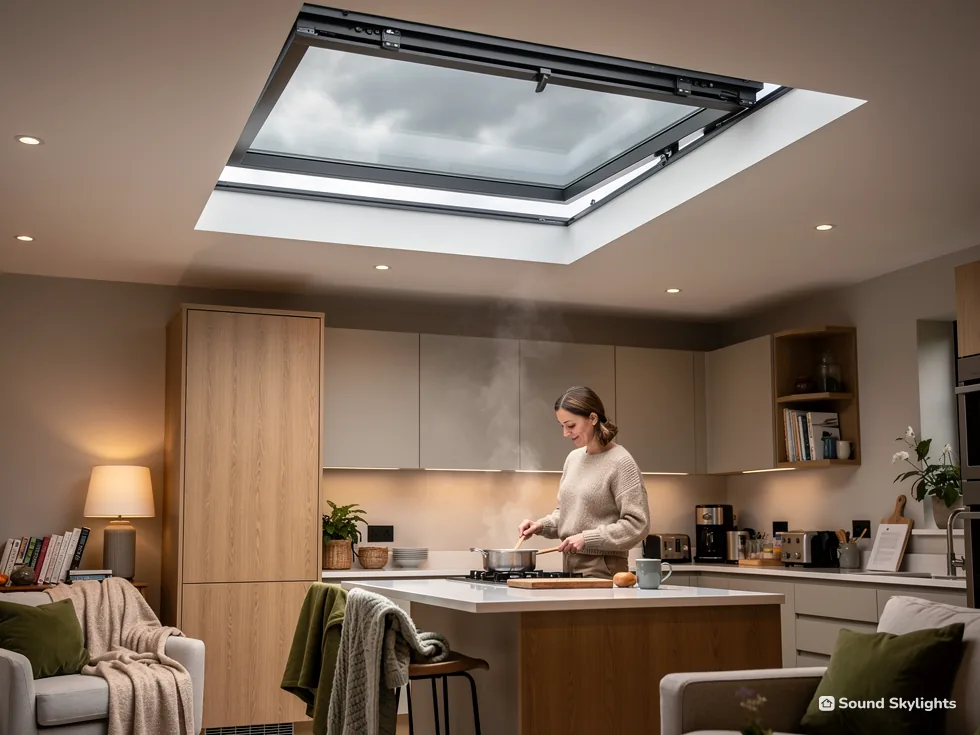
Replacing an old window? The rafters and the lining inside tell us whether the new unit can take the place of the old one exactly, which spares a plastered reveal. Our page on keeping or changing the opening explains the test. If you want a window where there was none, we place it by the rafters and by where you stand in the room, not by what looks tidy from the lane.
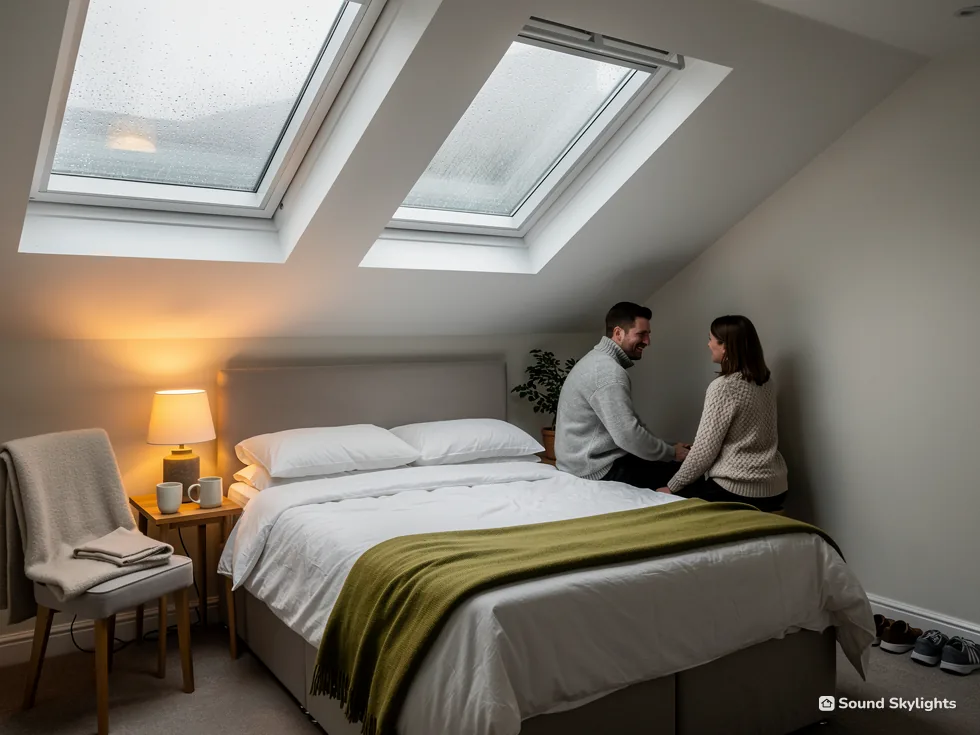
A cottage bedroom under a slate slope
- Roof
- Stone slate or Welsh slate, checked at the survey
- Window
- Slim roof window, flush in the slope
- Opening
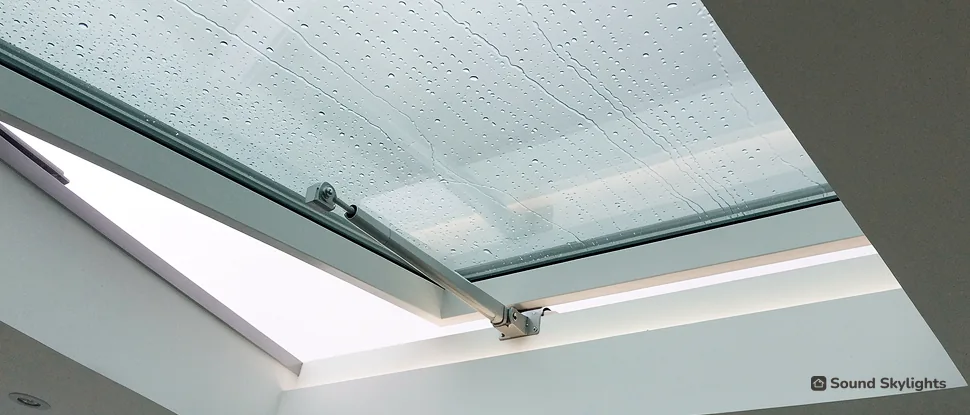
- Handle if it is within reach, rod or motor if not
- Blind
- Blackout, chosen with the window
- Paperwork
- Building Regulations notification handled where the work is notifiable