Bury rooflights, from Georgian stone to mill terraces

Skylights and rooflights for Bury's Georgian streets and mill-town terraces

Bury is a market town that emerged in the Industrial Revolution as a mill town, and its houses run from late Georgian brick and York stone to terraces built beside the factories. We fit the rooflight that suits the room, the roof and the person using it.

Takes you to the survey form on this page and adds your postcode to any WhatsApp message.

  • Georgian and listed addresses checked with Bury Council before we quote
  • Terrace loft rooms: a window you can open, and a blind to match
  • Rear extensions on the newer estates suit a flat rooflight or lantern
19 road miles north-west of Stockport

Bury emerged in the Industrial Revolution as a textile mill town, and seven cotton mills stood here by 1818. The terraces came with them. By the turn of the 19th century rows of terraced houses encircled the town centre, and districts such as Freetown, Fishpool and Pimhole went from farmers' fields to terraces beside the factories and mills. Manchester Road, Silver Street and the streets around them hold late Georgian brick terrace and York stone housing. Large-scale housing development has since taken place around Unsworth, Redvales, Sunny Bank, Brandlesholme, Limefield, Chesham and Elton.

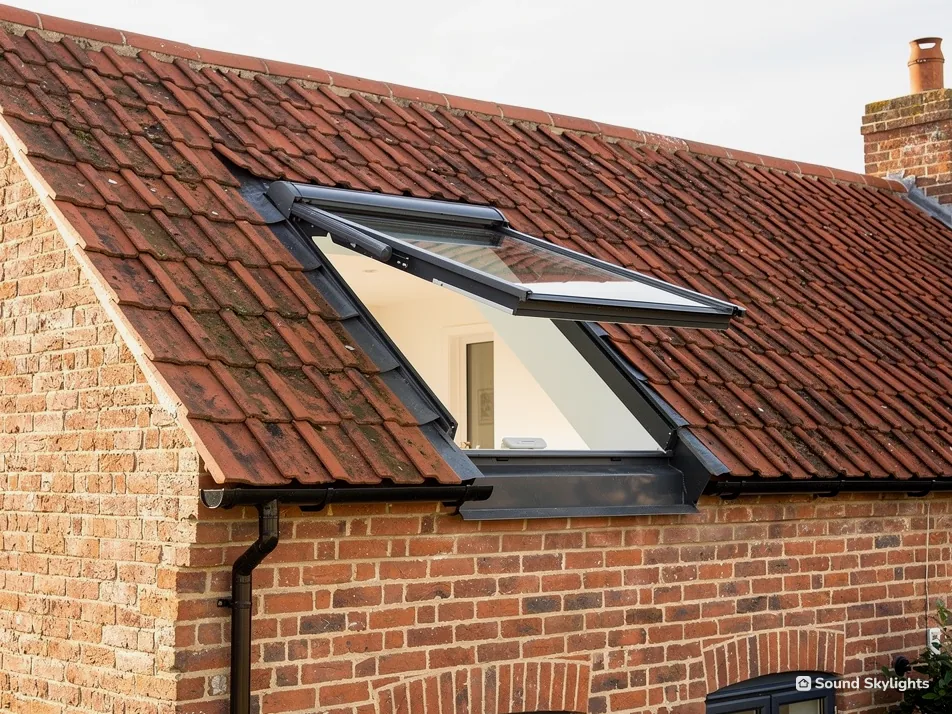
Each of those kinds of house asks something different of a rooflight in daily use. A Georgian house raises the question of whether the address is listed or sits in a conservation area. A mill-town terrace raises the question of a loft room, a window to open and a blind to shade it, because Victorian and Edwardian mill-town terraces are typically red brick under Welsh slate. A newer estate raises the question of a rear extension and how to keep its glass clean. The survey is free, and the fixed written quote follows from what you tell us about the room.

What suits a Bury house

These five match the town's mix: older streets that need care at the address, terraces with loft rooms, and estates with extensions.

Close-up of a white roof window handle with its key lock

Living under one of these rooflights

  • In a terrace loft room the question is who opens the window and how, a handle, a rod or a wall remote.
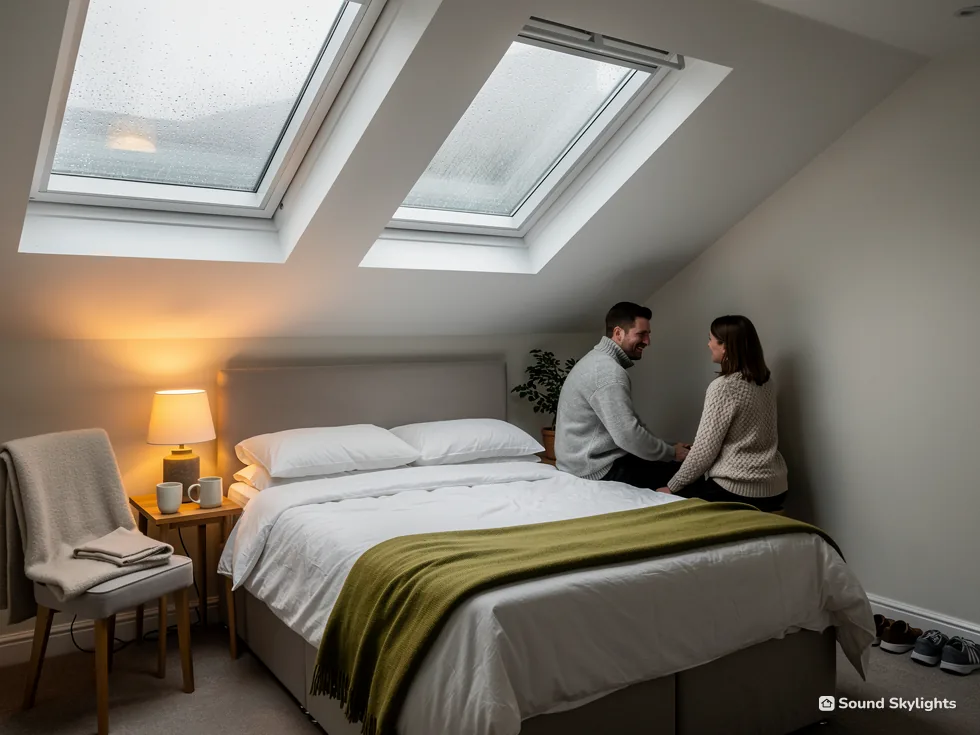
  • A bedroom in the roof wants a blind that blocks the morning. A study may want only a pleated one for glare.
  • A conservation rooflight on an older roof may clean from inside or may need a ladder, depending on the model, and we say which when we survey.
  • The free survey is where you tell us how the room is used, before any figure is written down.

Bury's older houses, terraces and estates, and what each needs

Three questions that grow out of how the town was built, from the Georgian streets to the terraces round the centre and the estates beyond.

Our house is on one of the older Georgian streets. Will the address limit the rooflight?

Late Georgian brick terrace and York stone housing around Manchester Road and Silver Street is the kind of housing where the planning position for a house like this needs checking rather than guessing. Bury Town Centre and Walmersley are among the conservation areas recorded in the town, and the council has made Article 4 directions that cover parts of the town. Whether either touches your roof depends on the address, so we ask Bury Council before we put a price on anything.

What a conservation area does and does not do

Conservation-area status alone does not cancel a Bury house's right to add a rooflight under the national rules. An Article 4 direction can, and the planning guide sets out what else changes the position. An Article 4 direction is a council order that narrows what you can do to a house without applying first. What a particular direction restricts is not something we assume; the council tells us, and then we design to it.

If the house is on the list

Historic England lists buildings in Bury, from the Parish Church of Saint Mary at Grade I to Derby Hall at Grade II. The route for a listed home runs through listed building consent, which is almost always needed, and the consent decides the design. The listed homes guide explains the route.

The rooflight itself

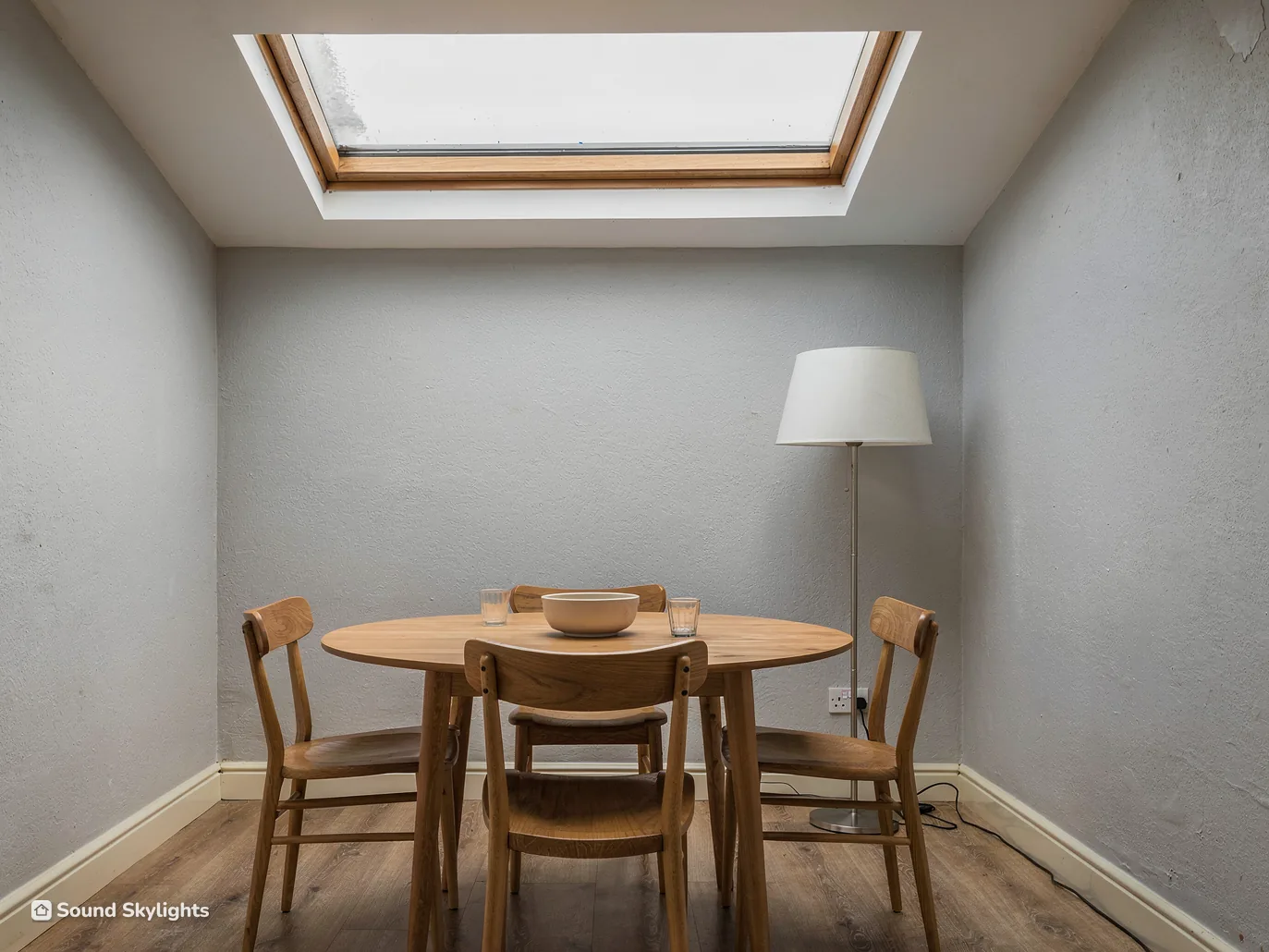
On an older roof a low-profile conservation rooflight sits close to the slates, so the roof line stays calm. It is a good match for a room where the window is opened rarely, such as a landing or a bathroom. Where it is a bedroom, ask about a motor and a blind in the same order. A rod beats a stepladder.

Terms from the council letter

Article 4 direction
An order from the council withdrawing some of the usual rights to alter a house without applying.
Consent for a listed home
The consent required before changing a listed building in a way that affects its character.
Low-profile rooflight
A rooflight made low and slim so it sits flat against an older roof.

We have a terrace near the centre with a loft room. What do we need to think about for daily use?

The terraces that ring the centre, in districts such as Freetown, Fishpool and Pimhole, were built beside the factories and mills. A loft room in one is a snug space, and a roof window in it works hard: it lights the room, lets you open it in the morning and is the thing you notice when you wake.

Handle, rod or motor

A manual window with a top handle is fine where you can reach it from the floor. Where the room is steeply pitched and the handle is out of reach, a telescopic rod fixes that. For a window you open every morning, a motor on a wall remote makes the habit easy, and a solar one needs no cable through the plaster. A rain sensor is offered on VELUX electric and solar windows, and it suits a house left empty on a wet weekday.

Blind and bedding

A blackout blind running in side channels shuts the room for a child who naps or a shift worker who sleeps by day. Fit it at the same time as the window, because the blind kit is matched to the model. What each choice looks like in use is on the blinds and controls page.

Slate and the flashing

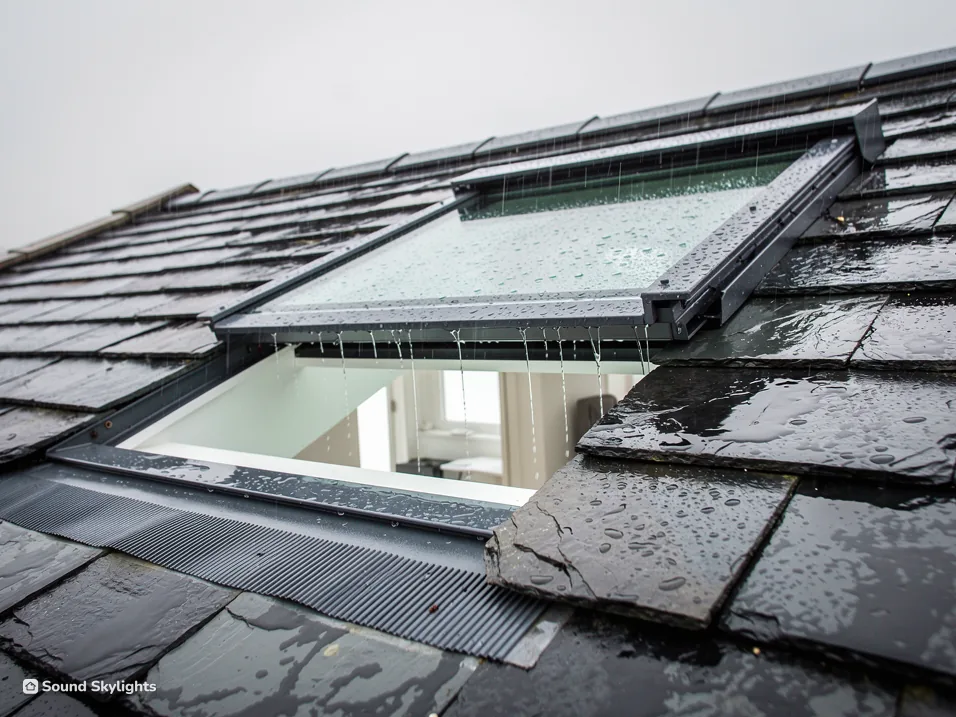
The flashing that seals the window into the slate is chosen to suit it, and each kit fits one kind of covering. We look at the roof from outside before we confirm the window. If the loft is turning into a new floor, that floor needs a safe way out, and the Building Regulations guide covers what the design has to show. The loft conversion page goes into sizes and positions.

At a Bury terrace survey

Settle who opens the window and how before the size of the window. The size usually follows the rafters anyway.

At the back of our estate home, should the extension roof take a flat rooflight or a lantern?

On the estates of Unsworth, Redvales and Chesham, a house may have gained its extra room at the back, and the flat roof over it is where the daylight goes. Two products compete for that spot, and the room itself helps you decide.

A flat rooflight

A flat rooflight sits low on its upstand and looks tidy from the garden. It suits a narrow room such as a galley kitchen or a utility. An electric one can be worked from a wall switch, so no one stands on a chair to let the heat out. Our page on choosing for a flat roof compares the types.

A lantern

A lantern rises above the roof as a glass frame with a ridge, which gives more height and more sky and suits a wide room with the table under it. That height comes with a bigger piece of glass to clean and shade. Outside cleaning is a ladder job at the back door, and in a south-facing room, a blind or solar control glass is worth discussing at the survey. Whether a lantern needs planning permission depends on the house and the extension, so the planning guide is the place to start.

Before you choose

Ask what the roof around the opening is made of. A worn roof covering is better renewed before a new rooflight goes in, and our guide to upstands and coverings explains why. If the extension is still to be built, the rooflight is part of that design, and the rooflight order and the roof order should be settled together.

Two ways to light a rear extension

Low flat unit
Low on an upstand, simple to reach, good for narrow rooms
Lantern
Raised glass frame, more height, suits a wide room
Opening
Fixed, or electric from a wall switch or handset
Shade
Blind under the glass, or solar control glass
Cleaning
Outside of the glass from a ladder at the back

The landing and bathroom in our terrace never get daylight. What can be done from the roof?

In a terrace built beside the mills, a landing between the bedrooms tends to borrow light from the rooms either side or from nowhere. A bathroom with no window is the same story. Both are daily-use problems rather than design ones: you notice them every morning and every evening, and what matters is how quickly the fix settles into the routine.

Where a sun tunnel fits

A sun tunnel does the job where there is loft space above. It begins as a dome on the roof, runs down through the loft as a tube and ends in a diffuser fitted into the ceiling. It does not open, so nothing needs reaching, and it carries no blind. It does need an opening cut in the ceiling for the diffuser, and it needs a clear route up through the roof space. A rigid tube suits a straight run, and a flexible one bends round a rafter or a water tank. Our page on rigid and flexible tubes sets out the difference.

Where a roof window does better

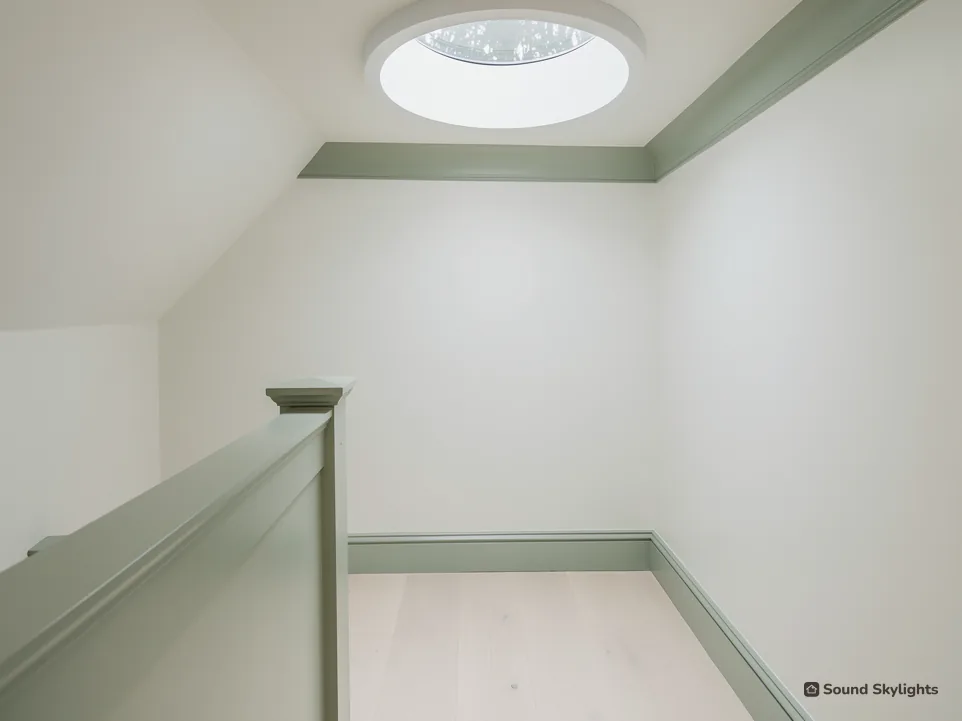
If the stairs rise into the roof space, or you want a landing you can look out from, a roof window is the answer. It lights the stairwell from above and can open on a rod. On a slate roof the flashing is matched to the slate, as it is for any other window.

Flats and shared roofs

A terrace that has been split into flats changes the question. The roof is shared, so who may alter it comes before which window to pick. Tell us at the start if that is your case, and the FAQ below says what to ask for.

Landing or bathroom

If nobody needs to open it, a sun tunnel does the job quietly. If you want to look out or open it, a roof window earns the extra effort.

Where we work around Bury

Bury, Greater Manchester

The ring on the map is a straight-line radius of 30 miles from Stockport, and our service area is measured by road, so the postcode check gives the firm answer.

Does your Bury postcode qualify?

We work across Bury, 19 road miles north-west of Stockport, taking in the terraced districts beside the old mills and the newer estates. Put in your postcode and we will confirm.

Takes you to the survey form on this page and adds your postcode to any WhatsApp message.

Nearest town pages

Before you book a Bury survey

Who handles planning for a house in Bury?

Bury Council. Building control is done by the council, or by a registered building control approver of your choosing. The council is also the body we ask about your address when it falls near a conservation area.

Is Bury the same thing as the borough of Bury?

No. The borough is wider and takes in other places besides the town. This page is about the town of Bury, but the same council handles planning across the borough, so the planning route is the same for them all.

We think our roof window leaks at the frame. Can it simply be replaced?

Often a window of matching size goes into the existing opening. The old label shows the size code, which the size code page explains, and the same-opening guide covers what changes if the size changes.

Can a sun tunnel brighten a landing in a terrace?

It can, if there is loft space above the landing for the tube. The dome sits on the roof, the diffuser sits in the ceiling and there is no view and nothing to open. The diffuser sits in a hole made in the ceiling plaster. See sun tunnels.

We live in a flat. Can we have a rooflight?

Flats are different: planning permission is needed for a rooflight, and the freeholder will usually have to agree too, because the roof is rarely yours alone. That differs from a house, where the planning guide sets out when permission is not needed.

How do I find out if my street is in a conservation area?

Bury Council publishes the conservation area boundaries, and they are also shown on planning.data.gov.uk. Bring the address to the survey and we will go through it with you.

Free survey

Book your free survey

Tell us about the room and the roof. We visit, measure and send a fixed written quote for the job in Bury, Greater Manchester.

  • Fixed written quote
  • We handle the Building Regulations notification where the work is notifiable
  • 10-year workmanship guarantee

Request my survey