Which rooms are best for a rooflight you open by pressing a switch?
Kitchens and dining tables
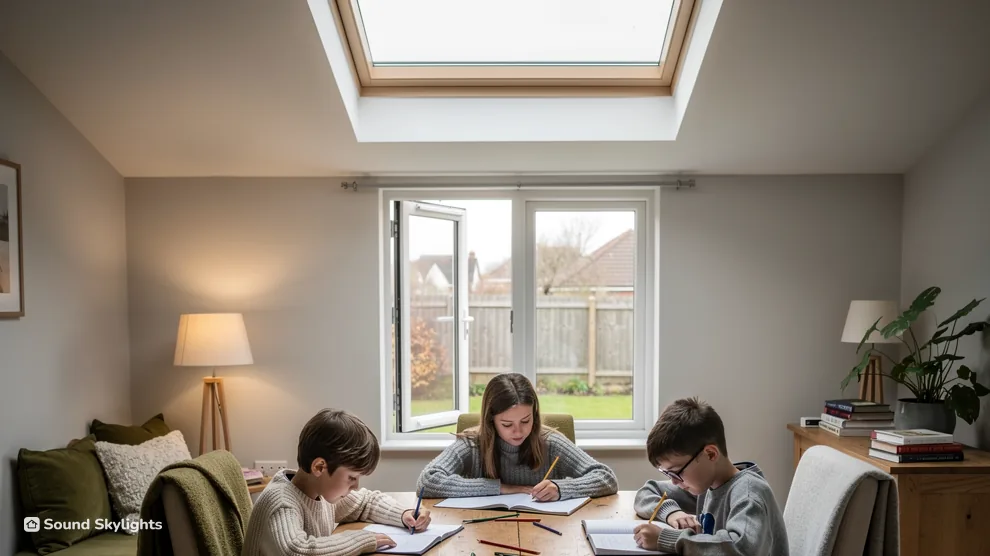
In a kitchen, an opening rooflight can be used every day. Cooking fills a room with steam, and a rooflight above the worktop gives it somewhere to go. A wall button by the doorway, or a handset left on the shelf, means nobody fetches a pole with a pan in one hand. A dining extension works the same way: the table sits under the glass, and on a close afternoon you open the roof without moving the laptop or the homework.
Landings, loft rooms and bathrooms
- Landings and stairwells: a skylight at the top of a stair can be a long way above anyone's hand. A fixed one lights the landing but cannot be opened. A motor puts the control on the landing wall.
- Loft rooms: a loft conversion has roof windows over the bed or the desk, and you want to open them without climbing onto furniture.
- Bathrooms: a window over the bath is the same story, with the controls and the wiring route chosen for the damp and a damp-room blind beneath it.
Extensions, orangeries and natural light
Add a kitchen to the back of a semi, or an orangery-style room under a flat roof, and the daylight that reached the house through the old rear wall is cut off. Over the centre of the room, a flat rooflight brings natural light down, and an opening one lets the same glass handle the kitchen steam. On a Victorian terrace in Edgeley or Reddish, a back addition that is short of light can take one over the worktop. A conservatory given a solid roof follows the same logic.
Where a pole is simply fine
Not every rooflight needs a motor. A window within easy reach opens by its handle, and one a little higher opens with a control rod. If the ceiling is low and the person using the room is tall and able, manual is the sensible answer, because an electric unit is a larger fitting than a manual one.
