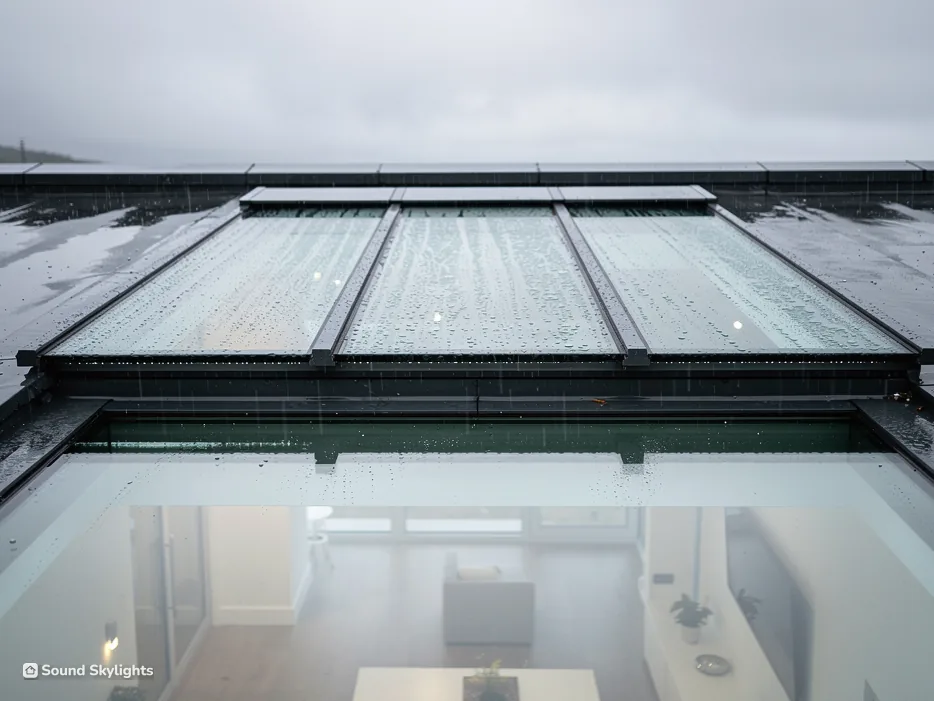

Should the roof of our estate-house extension have a lantern or a flat rooflight?
Most of Haydock's estates sit either side of the A599, and an extension at the back is one way to add space to a house on them. The roof over a new kitchen or dining room can be flat, and what goes in it matters more than almost any other decision in the project.
Two shapes, two rooms
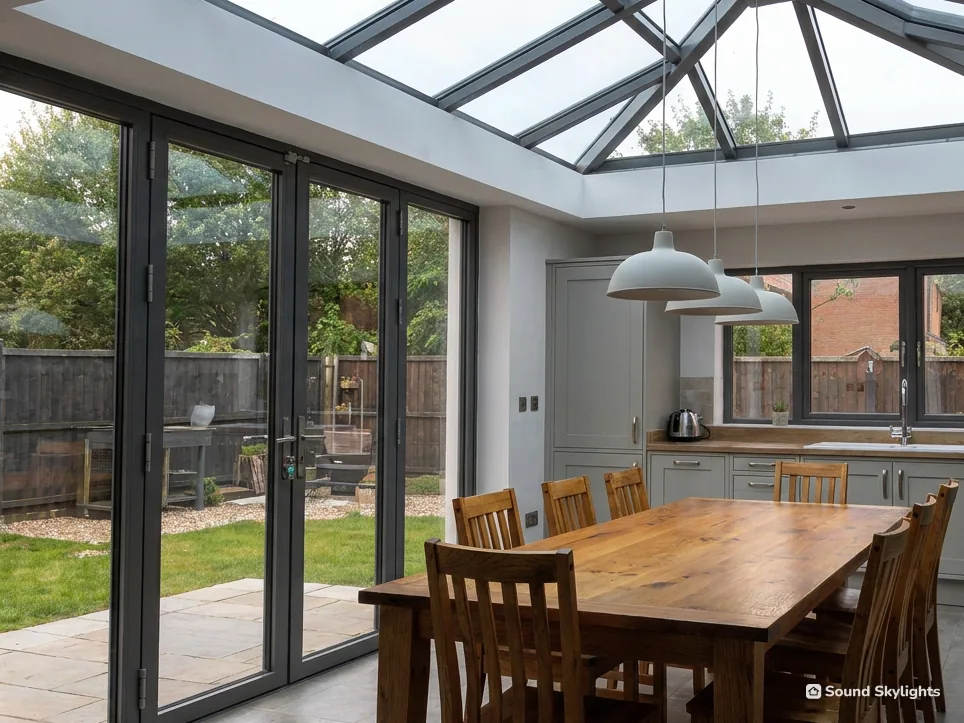
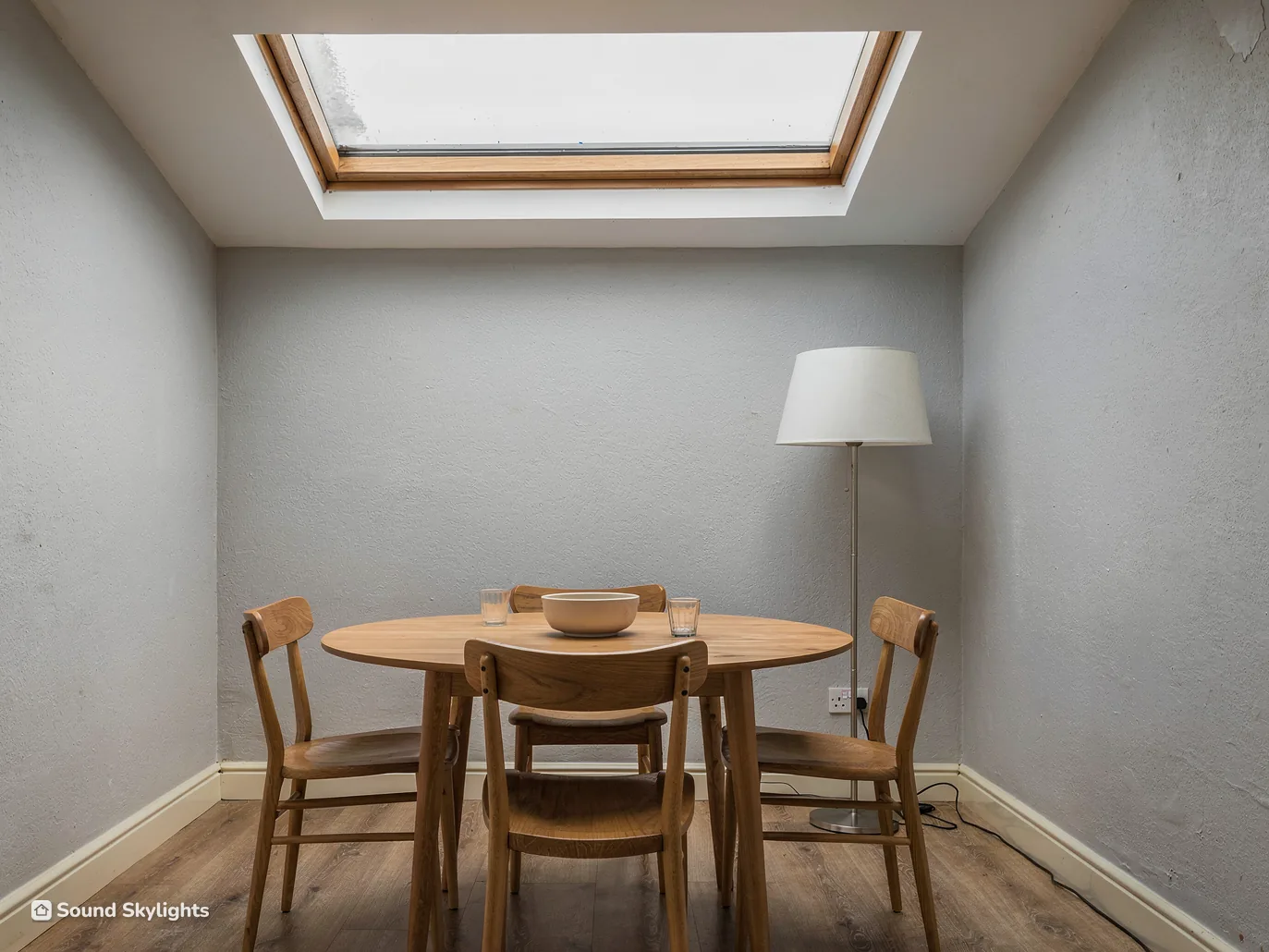
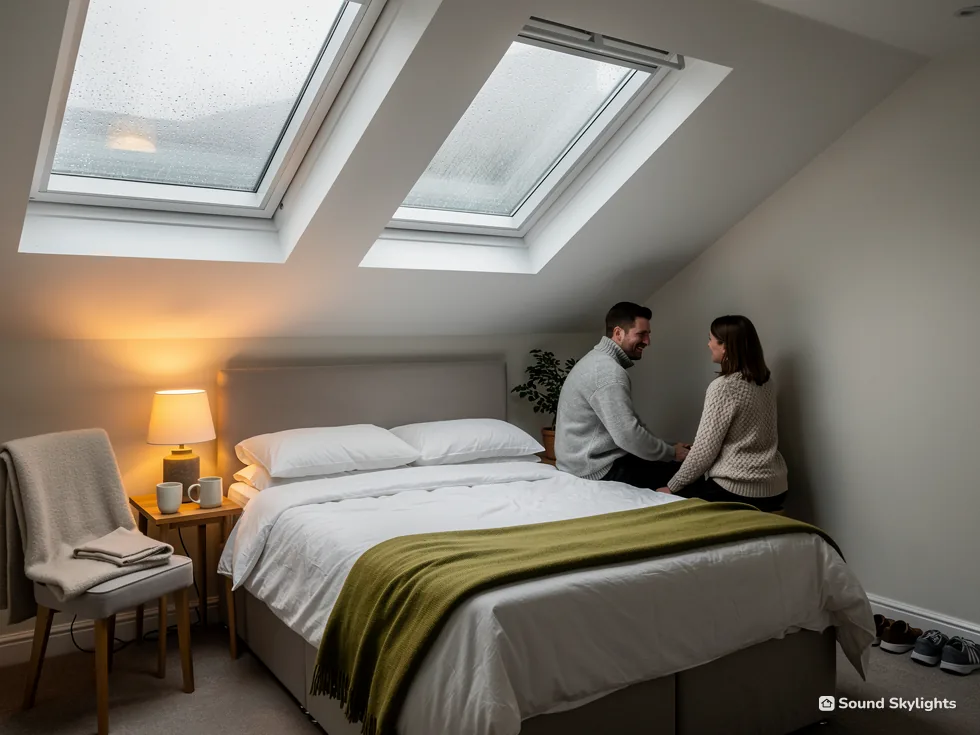
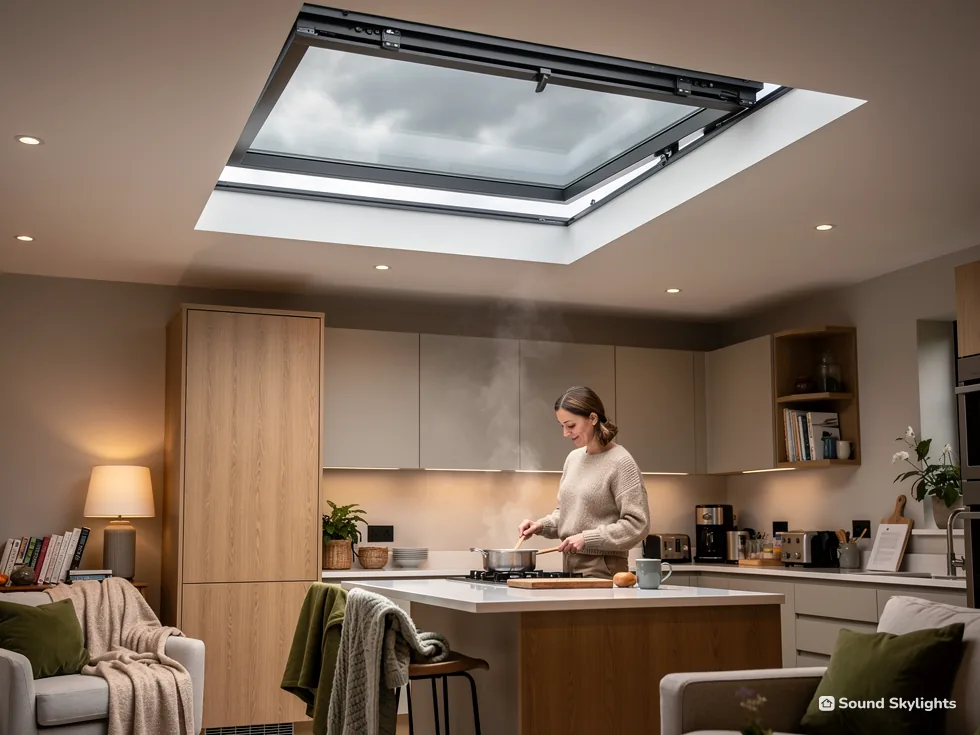
A flat rooflight stays low on a kerb and suits a narrow room or a galley kitchen. A lantern stands up from the roof in a pitched glass frame and gives a wider room more height. If you cannot decide, it helps to sit in the finished room in your mind and ask where the light should land. Our guide to lantern sizes and kerbs sets out what a lantern needs from the roof beneath it.
Shade, glass and cleaning
A glass roof over a kitchen can warm up on sunny afternoons. A blind is the simple answer, and solar control glass is the other. The outside of the glass needs a clean once in a while, and a lantern with more bars takes longer than a single flat pane. We tell you which you are buying.
Planning for a lantern
On a new extension, the lantern is assessed together with the extension, and we check that position with the council before work starts. Haydock houses follow the same national rules as anywhere in England, set out in our planning guide.
What to decide at the survey
Three things settle the rest. First, the width of the room under the roof. Second, whether you will want the glass to open. Third, who will do the cleaning and how they will reach it. Once those are answered, the choice between a flat rooflight and a lantern usually makes itself, and the quote is written to match.
Two ways to light a rear kitchen
- Flat rooflight
- Low on its upstand; neat from the garden
- Lantern
- Pitched glass; more height in a wider room
- Opening
- Fixed, or opening from a wall switch
- Shade
- Blind, or solar control glass
- Cleaning
- Single pane is quicker than a barred lantern