How do we choose between a lantern and a flat rooflight for our rear extension?
On a modern development the extension at the back can be where the family lives, and when it has a flat roof, that roof is the plain place to put daylight. Two shapes cover the choice, and they behave quite differently once the novelty has worn off.
The flat unit
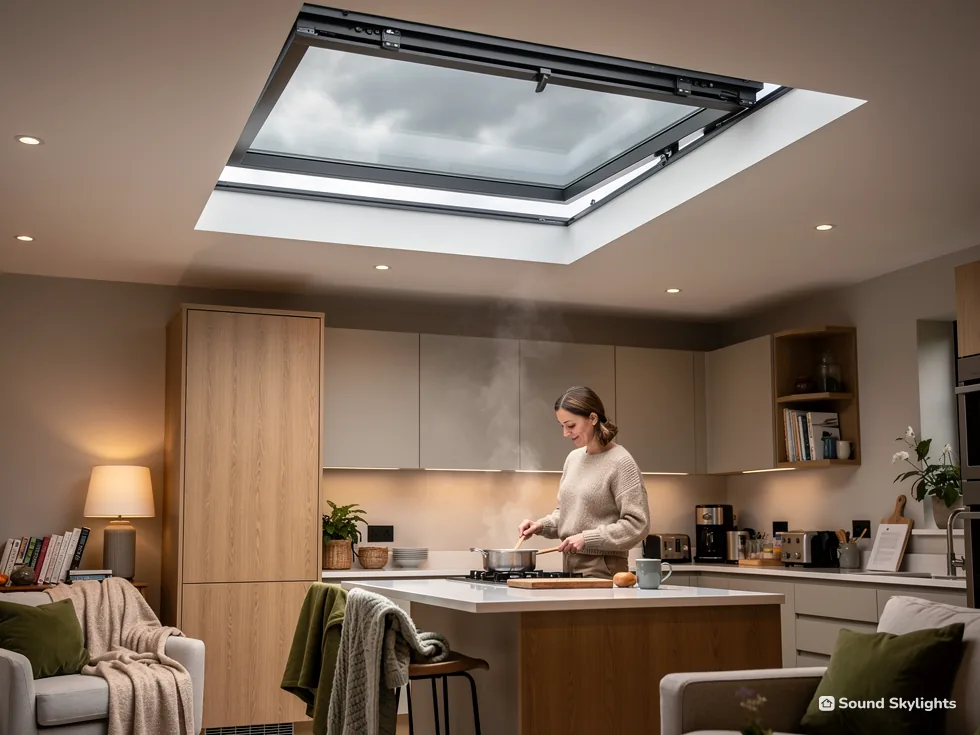
A flat rooflight sits low on a raised upstand. It looks tidy from the garden and takes little room above the roof. Because the glass is flat, you can wipe it from a short ladder, or with a pole from an upstairs window if the angle allows. It suits a galley kitchen, a utility room or a narrow dining area where the aim is a patch of light, not a feature.
The lantern
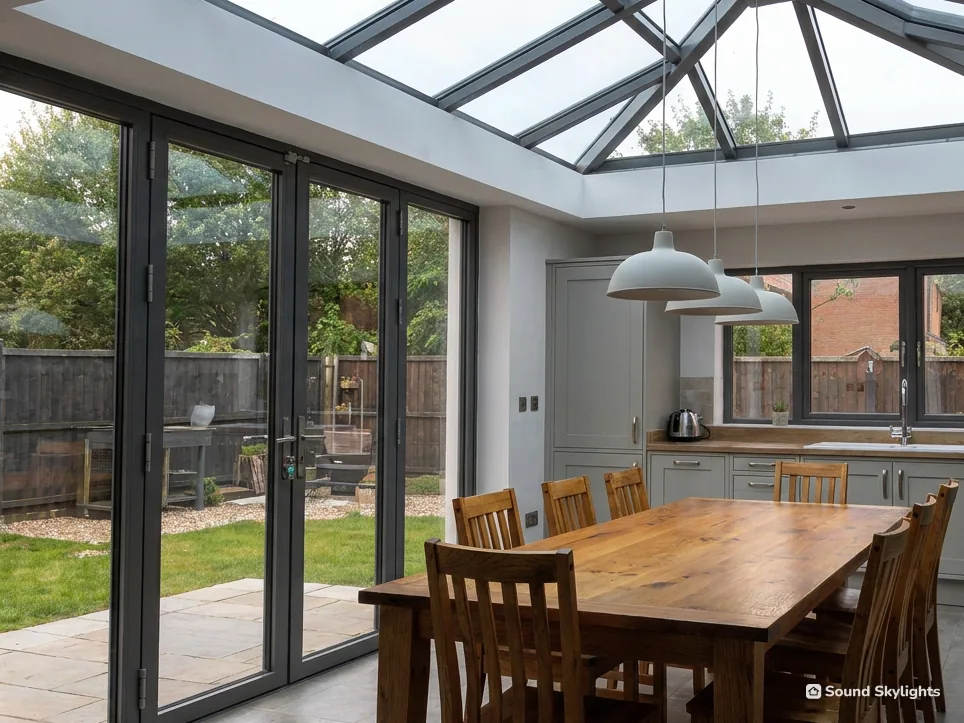
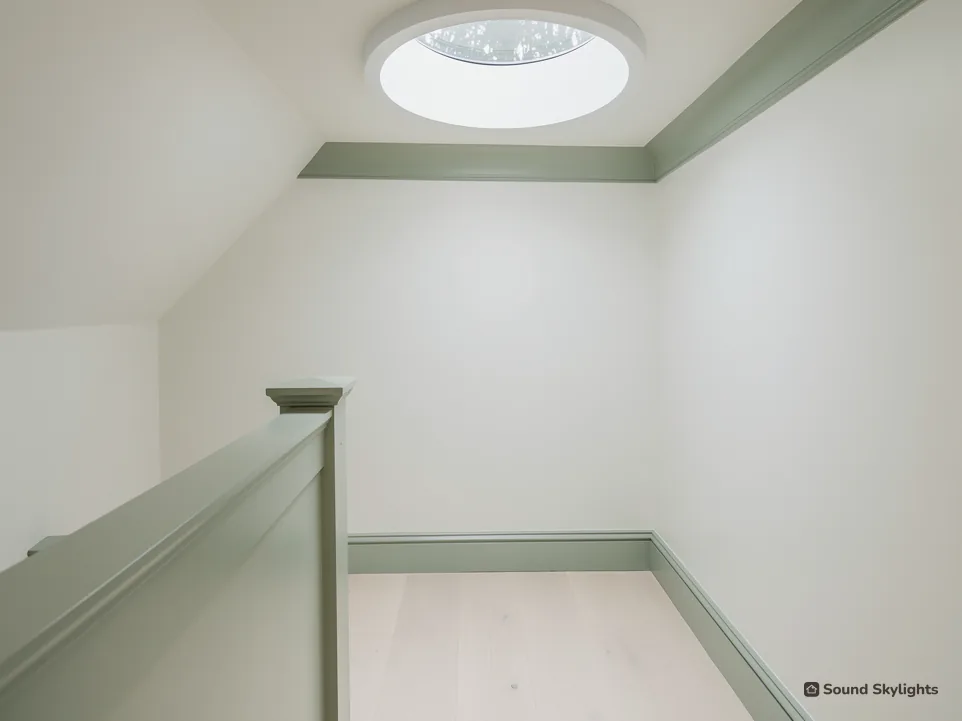
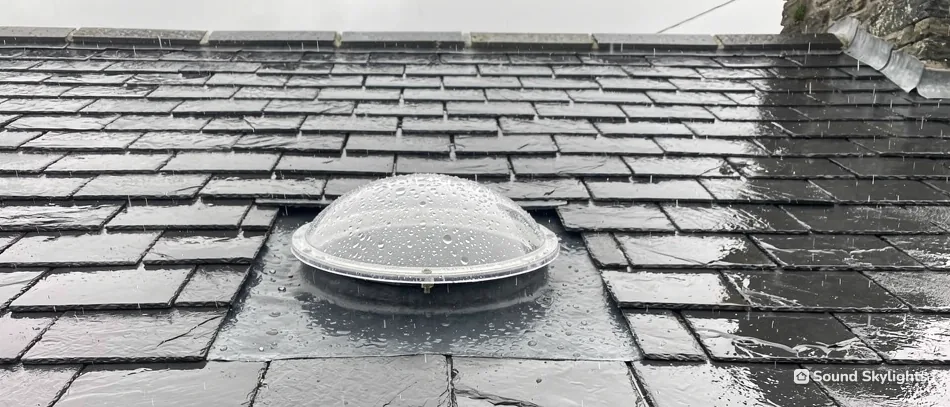
A lantern is a glazed box with a pitched top. It brings light in from several sides and gives the room height. In a wider kitchen with a table under it, it is a real change to how the space feels. It also gets more sun and more weather, so a blind and a plan for cleaning matter more. The glazing bars take longer to wipe. Some makers coat the outer pane so rain helps clear it, though that does not remove the need to look at the glass now and then. If the room is used all day, with a laptop on the table and children doing homework, glare is also worth planning for before you choose.
Shade and warmth
Glass overhead warms a room in summer. A pleated blind softens it, and solar control glass is available from makers if the room faces the garden. An opening unit lets the cooking heat out, and an electric one works from a wall switch. Our guide to picking a rooflight for a flat roof goes through the options in detail.
A developer's roof, a newer extension
A house on one of the modern developments that replaced the old works sites has a newer roof. That helps an extension, because the line of the new roof can follow the old one without fuss. The survey still looks closely at where the rooflight will sit against the wall, and at the covering, before anything is ordered.
Planning for each
Fitted to an existing flat roof, a lantern usually stands too far proud to count as permitted development, so planning permission is normally needed unless the council says otherwise. On a new extension, the lantern is assessed with the extension; we confirm the position with the council before work starts. For a Lowton house the planning guide explains the difference before you commit to either.
Lantern or flat unit, compared
- Shape
- Lantern rises; the flat unit stays low
- Best room
- Wide for a lantern, narrow for a flat unit
- Cleaning
- Flat is simpler; bars on a lantern take longer
- Shade
- A blind on both; solar control glass as an option