Local sandstone and mill-town streets in Glossop

Skylights and rooflights for Glossop's sandstone terraces and mill-town streets

Glossop's houses are built from the local sandstone, solid since the days of home spinning and weaving. We choose the rooflight to fit the stairs, the loft or the back room, and the person who has to open it.

Takes you to the survey form on this page and adds your postcode to any WhatsApp message.

  • Stairs and landings with no window lit by a sun tunnel or roof window
  • Flush conservation rooflights weighed up for Glossop's designated areas
  • A word with High Peak Borough Council about your address comes first
13 road miles east of Stockport

Glossop is a market town in High Peak, Derbyshire, on the edge of the Peak District, roughly 160 metres up at its centre. The area is dominated by buildings of local sandstone. The early houses were solid and built of that stone, with room for home spinning and weaving, and the town grew fast in the late 18th century when it turned to calico production and printing. Two significant former cotton mills and the Dinting railway viaduct still stand.

Houses built of solid stone leave less room for guesswork. The questions are practical: how to light a stair with no window, how to set a rooflight into a stone-slate or Welsh slate roof so that it looks right from the street, and what to do about rain when the weather turns and nobody is home. A survey starts with how each room is used and who opens the window.

Rooflights for stone roofs and dark stairs

Five choices suit the houses here: a flush rooflight for an old roof, roof windows for lofts, and a sun tunnel where a stair or landing has no window of its own.

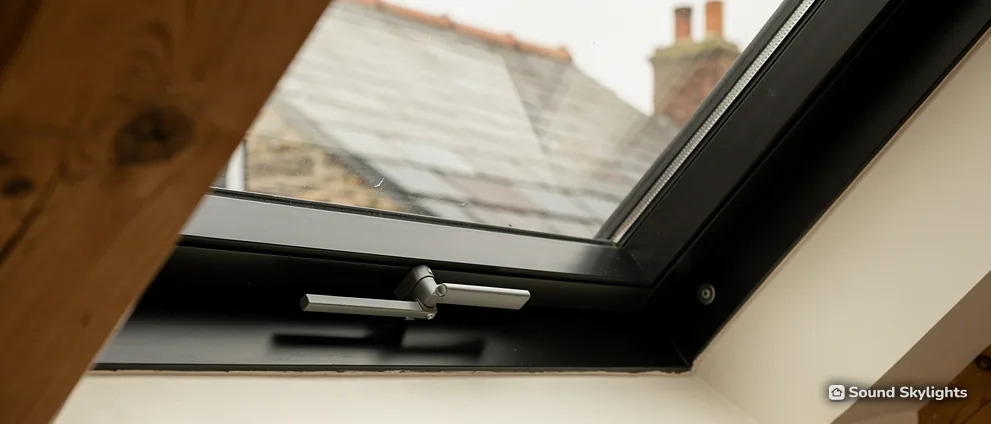
A black-framed roof window and its handle in a loft, a timber beam beside it

Daily use under a Glossop stone roof

  • A loft window on a steep slate or stone-slate roof can sit high, so a rod, a remote or solar opening keeps it in daily use.
  • A stair lit by a sun tunnel needs no blind. A loft bedroom under the same roof may want blackout on a remote.
  • A flush conservation rooflight and a roof window on a taller slope are cleaned from different places, and we plan that with you.
  • Some VELUX electric and solar models include a rain sensor that shuts the window in a downpour while you are out.

What Glossop's stone houses ask of a rooflight

A stair without a window, an old roof that must look right, an open window in the rain and a loft bedroom: four questions for Glossop's stone houses.

The stairs in our stone terrace have no window. How do we get daylight down them?

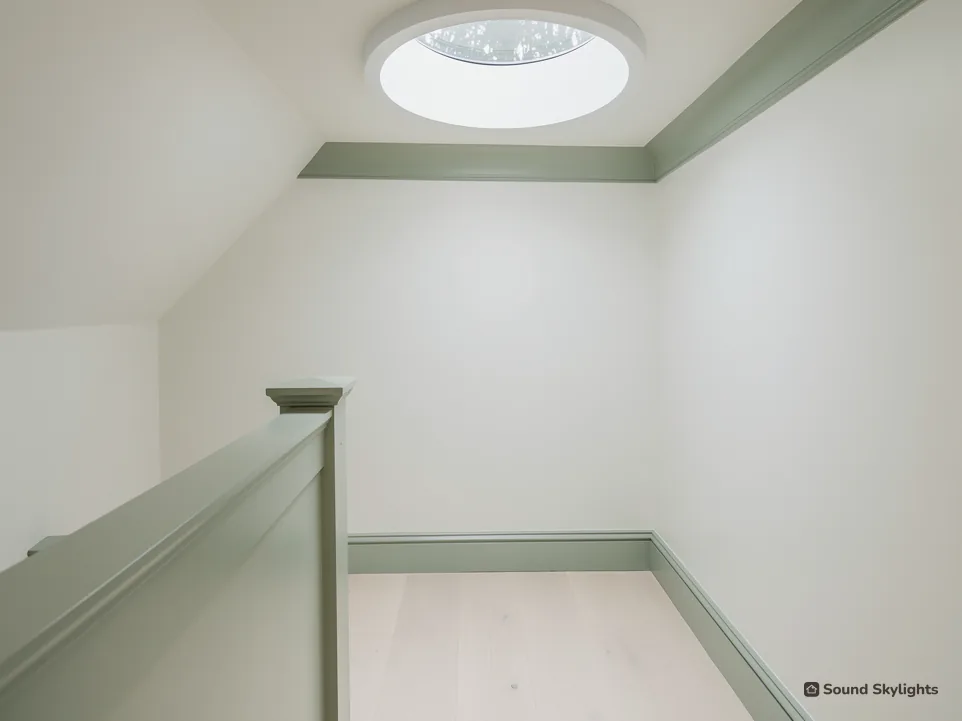
Glossop's early houses were solid and built of local stone, and in a house like that a stair or landing can have no window at all. The roof is then the only way to bring daylight in, and there are two sensible routes.

A sun tunnel

A sun tunnel is a daylight pipe: a dome out on the slope, a tube through the loft space and a frosted panel flush with the landing ceiling. It suits a stair, a hall or a bathroom with an unused loft above it. Nothing about it opens and it shows no sky, so it solves darkness and nothing else. The panel in the ceiling wipes clean from inside the house, and we explain at handover how the dome on the roof is looked after. The guide to rooms a sun tunnel suits shows where it works, and the page on rigid or flexible sun tunnels explains the tube.

A roof window over the stair

If the loft has been made into a room, the daylight can come through a roof window in the slope, or the stair can borrow light from the room above. A roof window opens, which a sun tunnel cannot, and that matters on a stair that gets warm. It also needs reaching: over a stairwell the handle can be well out of arm's length, so we talk about a rod or a motor.

Which suits you

A narrow landing suits a sun tunnel. A wide stair with a room above can suit a roof window better. We make the call at the survey, once we have seen the loft.

Light for a windowless stair

A sun tunnel lights the stair. A roof window lights it and lets you open it, if you can reach the handle.

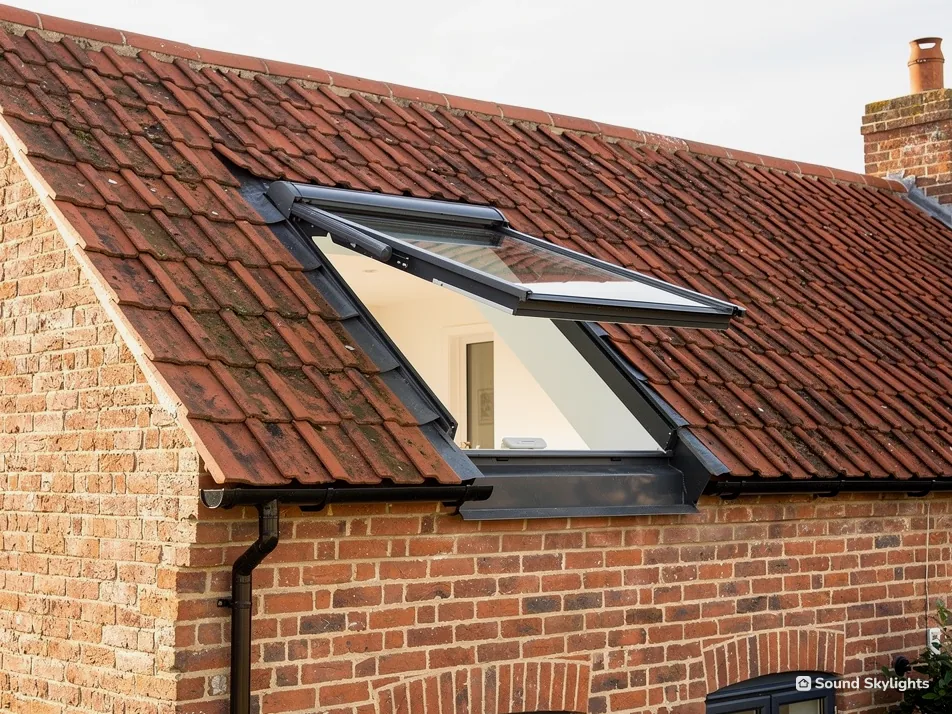
How do we put a rooflight into an old stone-slate or slate roof so it looks right?

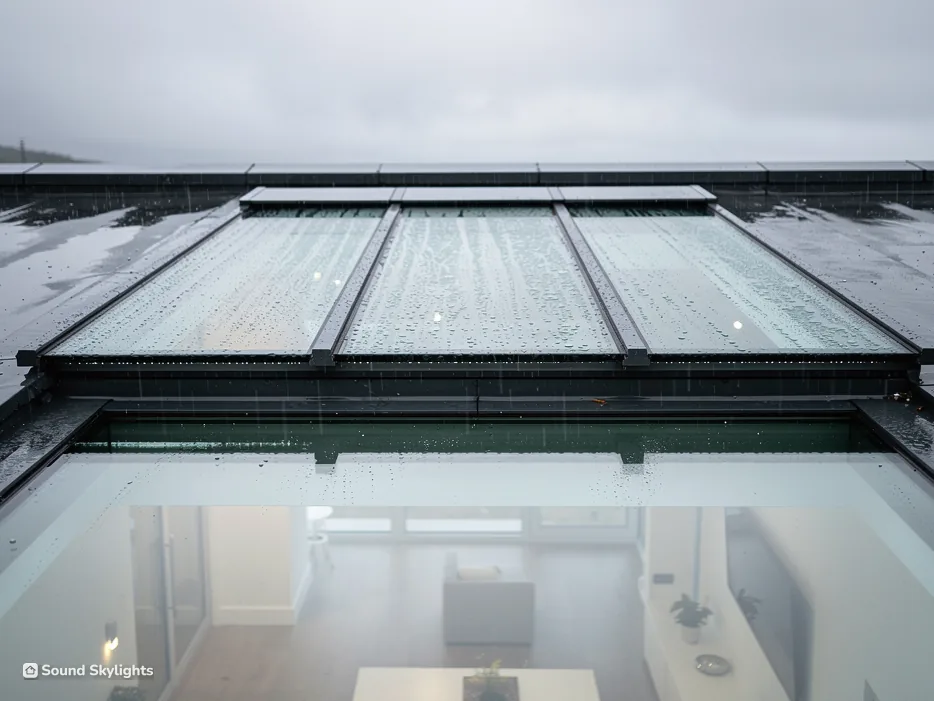
On an older roof, the neatest answer is usually a conservation rooflight. It sits close to the slope with a slim central bar, so from the street it looks like part of the roof rather than something added to it. Modern ones are normally double glazed. Our guide to what a conservation rooflight is explains the style.

Glossop's designated areas

The planning data records conservation areas in Glossop, and they include Glossop Norfolk Square and Glossop Howard Town. High Peak Borough Council publishes conservation area maps that show where they run. Sitting inside one does not, on its own, take away the right to put a rooflight on a house in England, and the planning guide sets out what does. We check your address with the council before we quote.

The national list

The national list takes in the Town Hall and Market Hall and the Norfolk Arms, both Grade II. A house on the list would almost always need listed building consent before a rooflight was fitted or changed. The listed buildings guide explains how that works.

How it looks from inside

A stone house has thick, solid walls, and a rooflight in the slope above sits in the roof, not the wall, so the inside lining is plaster that can be shaped to the opening. We look at how the lining will meet the window frame, because a neat finish inside matters as much as a neat line on the roof.

Choosing the style

Not every old roof needs a conservation rooflight, but it is worth seeing one beside a standard window before deciding. Our choosing guide sets out the differences in the frame, the bar and the finish.

Terms for an old roof

Flush fitting
A rooflight set low in the slope so the glass sits close to the roof covering.
Central bar
The slim vertical bar that divides the glass of a conservation rooflight, in the style of old cast-iron skylights.
Stone slate
A heavy roofing slate cut from sandstone, found on some older houses at the edge of the Pennines.
Consent for a listed home
Permission for changes to a listed building that affect its character, separate from planning permission.

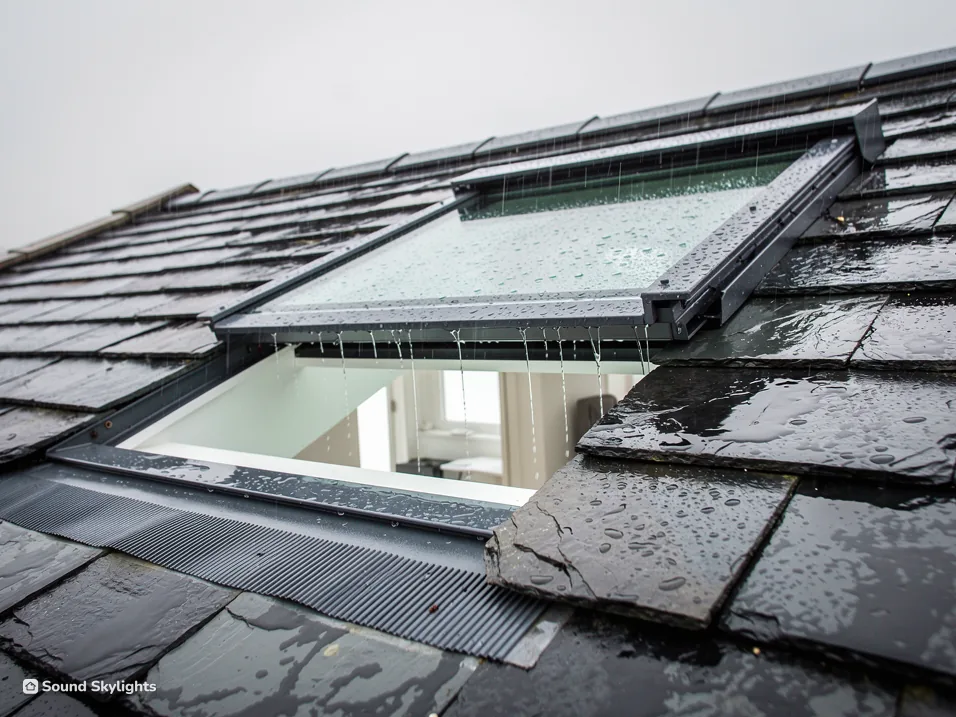
What happens if we leave a roof window open and go out for the day?

The land around Glossop was too wet and cold for wheat, though it suited hardy Pennine sheep, so the weather here is worth planning for. The question for a roof window is simple: if the sky changes while the house is empty, who closes it?

Reach and habit

The first answer is to close it before leaving, which depends on being able to reach the window easily. A low window or a rod makes that routine. A window you have to climb for is more likely to be forgotten.

A small gap

Some roof windows can be held on a narrow opening that lets a room breathe without leaving a wide gap. In a child's bedroom a restrictor limits the opening further, as long as the window kept for escape, if the room has one, still opens fully for an adult, and our child-safe guide covers how. In a bathroom, a narrow gap does a lot of work.

Sensors

VELUX describes its electric and solar roof windows as available with a rain sensor that shuts the window when it detects rain. That removes the need to remember, which helps in a bedroom or a landing used by the whole house. The rain sensor guide explains the limits: a sensor reacts to rain on the glass, not to a forecast.

Making the choice

A rod hooks the handle of a manual window, and a remote does the same for an electric one, so neither depends on standing on a chair. Ask yourself who is last out of the house and whether they can reach the window without one. If the answer is no, choose a model that closes itself, or one that cannot open wide.

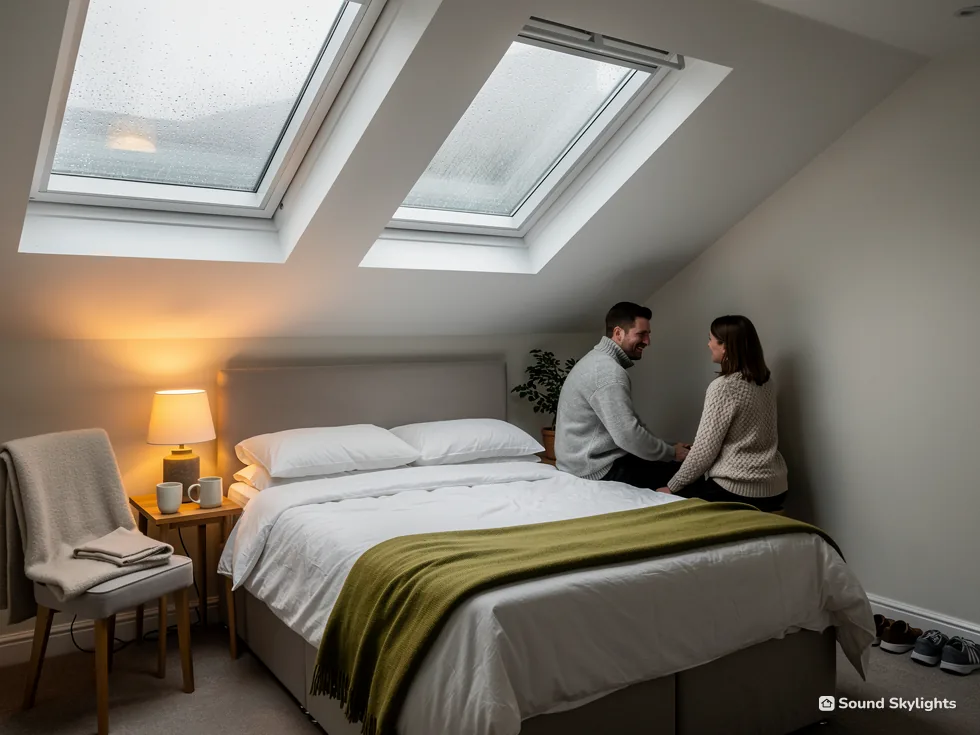
We want to turn the loft of our stone terrace into a bedroom. What matters for the windows?

A loft bedroom asks more of a roof window than a landing does. It is the room where the blind, the handle, the glass and the safety of a child or an older relative all matter at once.

Blind and handle

A bedroom blind should be blackout, and it should be worked by the window's own remote or by a rod, so that it actually gets closed. Put the handle where the person who sleeps there can use it from the floor. The blinds and controls page lists the choices.

Glazing

Energy-efficient rooflights are made with better glazing so that the room loses less heat, and the maker supplies the details. We explain the options at the survey and in our energy-efficient rooflights guide.

A child's room

If a child will sleep in the loft, think about the handle height and about a restrictor that keeps the opening small, and ask which window, if any, is the room's escape window, since a restrictor there must still let an adult open it fully (the Building Regulations guide covers escape). Those are choices to make now, because they are easy at the order stage and awkward to add later.

Planning and Building Regulations

A loft conversion is building work in its own right, and the design must include a route of escape from the new storey. The Building Regulations guide explains this, and the Building Regulations notification for our roof windows is ours to deal with, where the work is notifiable.

If you rent from a landlord or hold a lease

Most of the land in Glossop was once owned by the Howards and held on leasehold. If your house is leasehold now, read the lease for what it says about alterations to the roof before you commit.

Glossop streets we work in

Glossop

Glossop falls inside the map ring, a straight-line radius round Stockport and not a road distance.

Will we reach your Glossop street?

Glossop lies 13 road miles east of Stockport, with stone terraces near the centre and older streets around Old Glossop.

Takes you to the survey form on this page and adds your postcode to any WhatsApp message.

Nearest town pages

Glossop rooflights, query by query

Who decides planning questions for a house in Glossop?

High Peak Borough Council. You can use the council's own building control or a registered building control approver. Your address goes to the council before we write the quote.

Does living in a conservation area mean we cannot have a rooflight?

No. In England, a house inside one can still be given a rooflight. A condition on an earlier planning permission can take that right away, and a listed house will need its own listed building consent in almost every case, so we look for both. The planning guide has the detail.

Can a sun tunnel go on a stone-slate roof?

It can, with a flashing matched to the covering. We look at the roof at the survey and say what the sun tunnel needs. A sun tunnel is an alteration to the roof, and the sun tunnel guide explains the rules.

Do you give a price without seeing the house?

No. We survey first and then give a fixed written quote, because a stone house with a deep wall and an old roof can differ from the one next door. The cost guide explains what changes a price.

What does the guarantee cover?

A written 10-year workmanship guarantee comes with the fitting. Makers' own guarantees on their products differ, and the guarantee page sets out what ours covers.

Can a new roof window go where an old one was?

It can. If the new window matches the size of the old one, it can take the place of the old one in its opening, with the plaster lining left alone. The code on the old frame's label tells us. The new opening or same opening page explains the difference.

Free survey

Book your free survey

Tell us about the room and the roof. We visit, measure and send a fixed written quote for the job in Glossop.

  • Fixed written quote
  • We handle the Building Regulations notification where the work is notifiable
  • 10-year workmanship guarantee

Request my survey