A sun tunnel or a roof window: which suits a dark landing best?
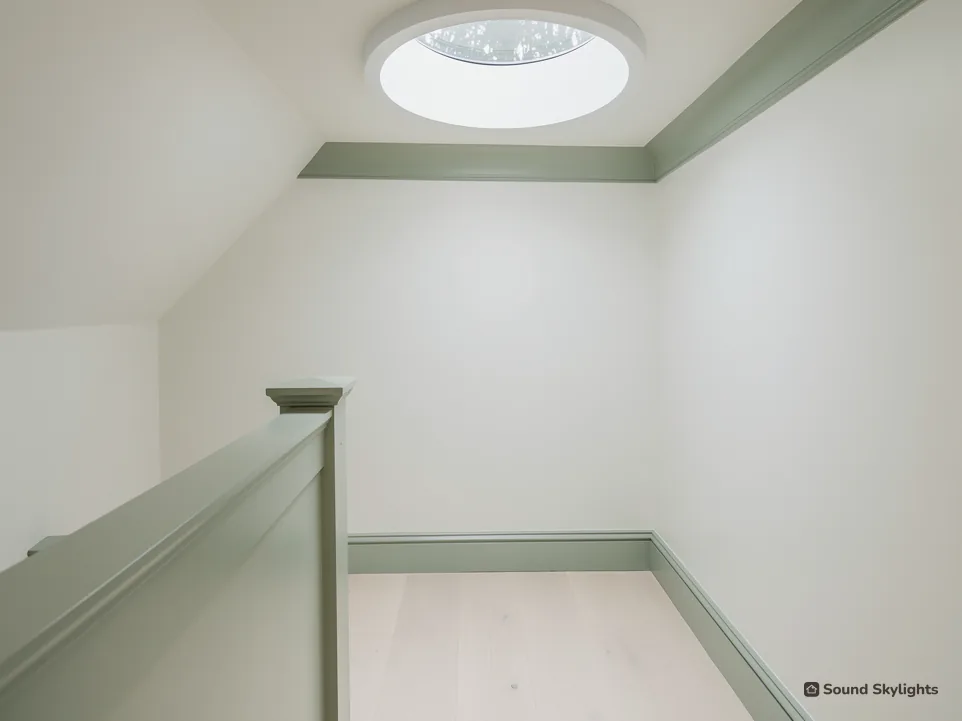
In a compact two-storey house the landing is a narrow space between bedrooms with no window of its own. Daylight has to come from above, and there are two ways to bring it in. The first is a sun tunnel, a small dome on the roof joined by a tube through the loft to a diffuser in the ceiling. The second is a small roof window set into the slope above the stairs.
What each gives you
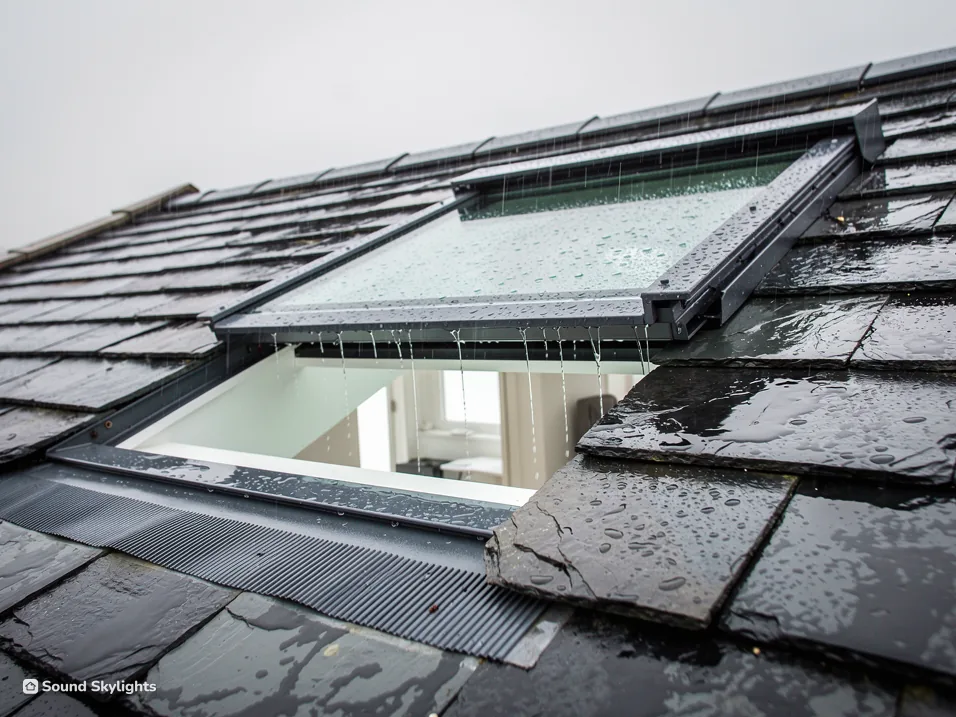
A sun tunnel brings daylight and nothing else. It does not open and offers no view, and it needs loft space to run its tube. That is a fair trade on a landing, where nobody wants a view and nobody wants another handle to remember. A roof window can open, can have a blind, and shows the sky, but it needs a position on the slope above the stairwell. The sun tunnel room guide goes through each space.
Which is easier to live with
A sun tunnel has no controls and no blind, so there is nothing to forget. A roof window above a stairwell is likely to be out of reach, so it wants a handset or a switch. If nobody will open it, a fixed window or a sun tunnel is the sensible choice. If you do want it to open, ask about electric or solar opening at the start.
Bathrooms too
A windowless bathroom under the roof is another place a sun tunnel works well, because the diffuser sits in the ceiling and spreads the light across the room. Our page on rigid and flexible tubes explains how the tube is chosen to suit your loft.
Landing choice in a line
Light alone and no upkeep points to a sun tunnel. Light you can open, shade and look through points to a roof window.