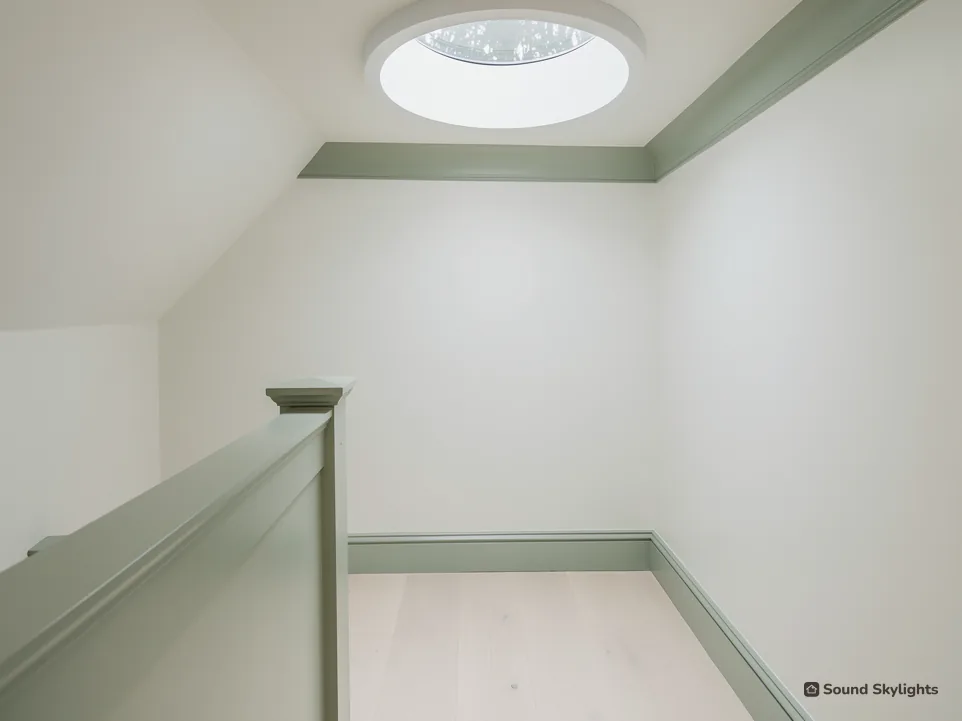
The landing and stairs get no daylight at all. Roof window or sun tunnel?
In some houses the stairs run through the middle of the building, with no outside wall to put a window in. The result is a landing that stays dim in the middle of the day. Two products answer it, and they are chosen for different reasons.
A sun tunnel
Outside sits a dome, which feeds a tube across the loft to a diffuser set into the ceiling. The ceiling is cut open for the diffuser, and the tube needs a clear run through the loft. It does not open and it gives no view, which suits a landing or a bathroom where nobody wants either. Indoors there is only the diffuser to dust, and the dome outside is the only part to reach. Our page on rigid or flexible sun tunnels explains the tube choices.
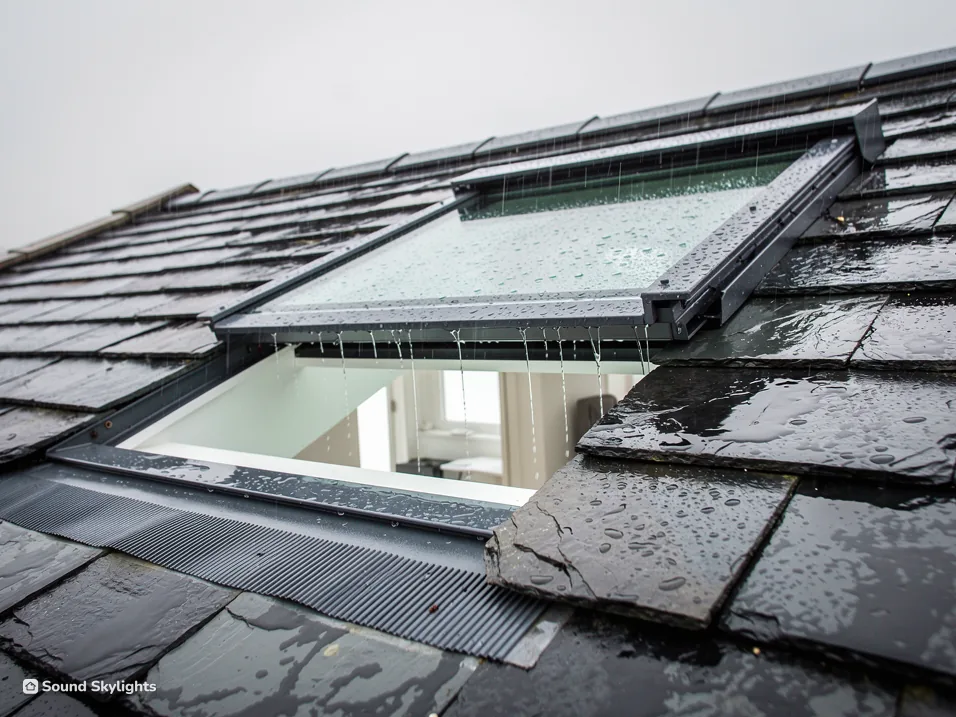
A roof window
Where the loft is already used, or about to be, a roof window above the stairs lights the landing and the room alike. Here the daily-use question returns. A window above a stairwell sits well out of reach, so the opening method is settled with the window. A rod serves a window that is opened only on odd days. If you open it daily, a remote is kinder.
Choosing between them
Ask what the landing is for. If it is a route to bedrooms, a steady glow all day may be all you need. If the loft above it is becoming a room, the window serves both. We look at the loft at the survey and say which fits. Think too about who lives in the house: an older relative who cannot manage a stepladder, or a child who should not be handed a rod, changes which opening method makes sense. And our page on fitting roof windows when converting a loft goes into sizes and positions.
Hyde landing, in a line
If nobody will open it or look out of it, a sun tunnel is the plain answer. If the loft is a room, put in a window.