
We live on one of the 1950s estates. What suits a low-pitched tiled roof or a flat block?
Stamford Park, Copley and Ridgehill were built from 1953 onward, and new estates replaced the slums after the first post-war clearance plan. On council estates of that era the roofs are typically low-pitched and tiled, some blocks are flat-roofed, and each kind asks for its own window.
The low-pitched tiled roof
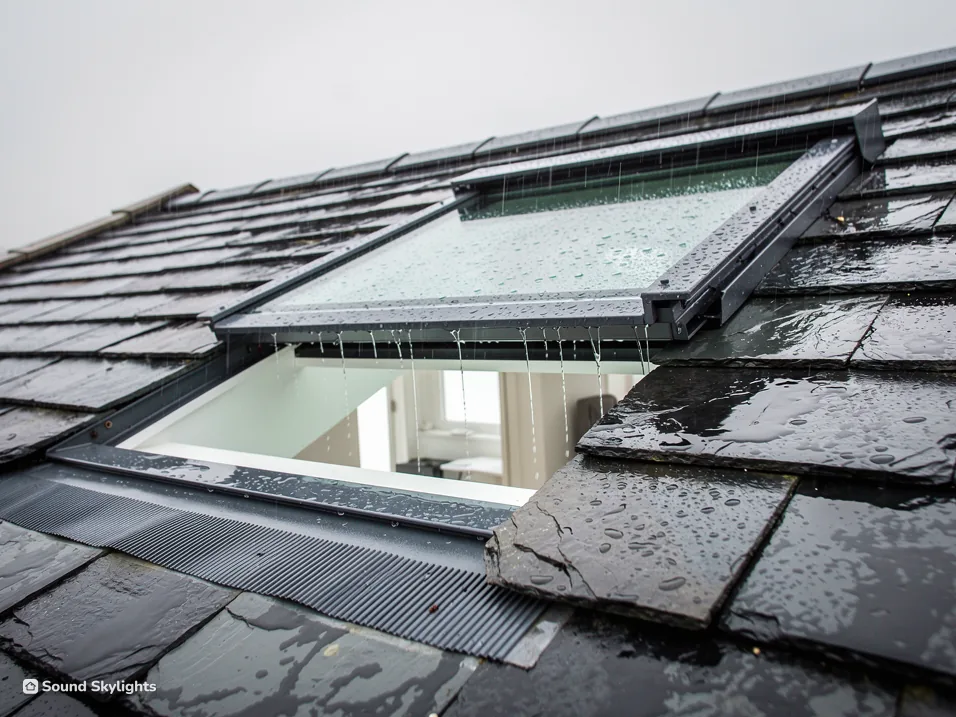
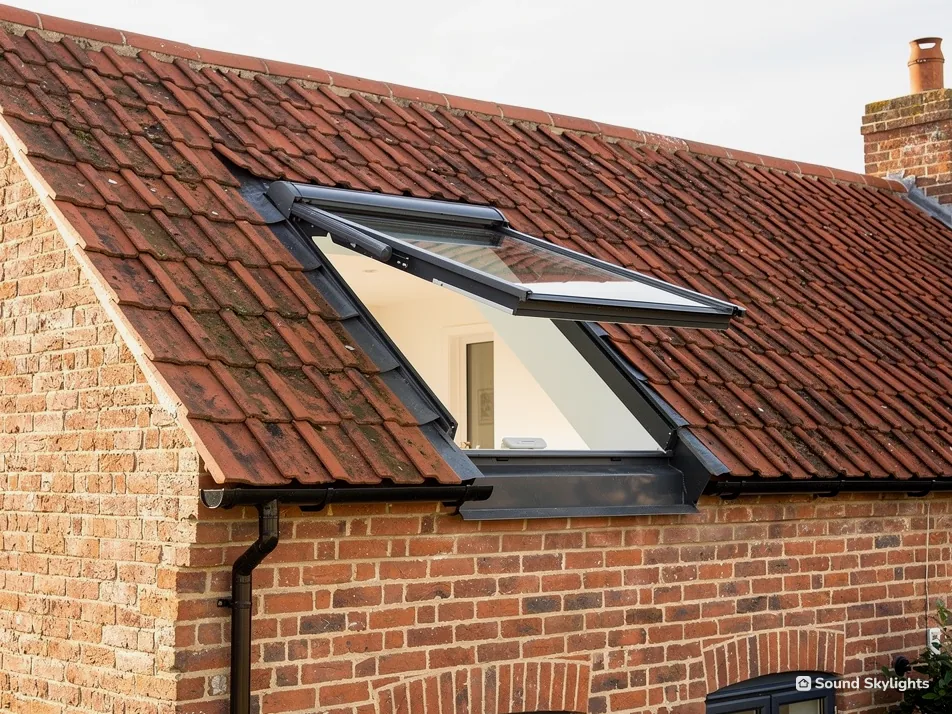
On a shallower slope, how a roof window opens matters. A centre-pivot window turns on its middle and lets you clean the outer glass from inside. A top-hung window opens from the top. Our guide to centre-pivot and top-hung roof windows compares them so you can choose for the room.
The flat roof
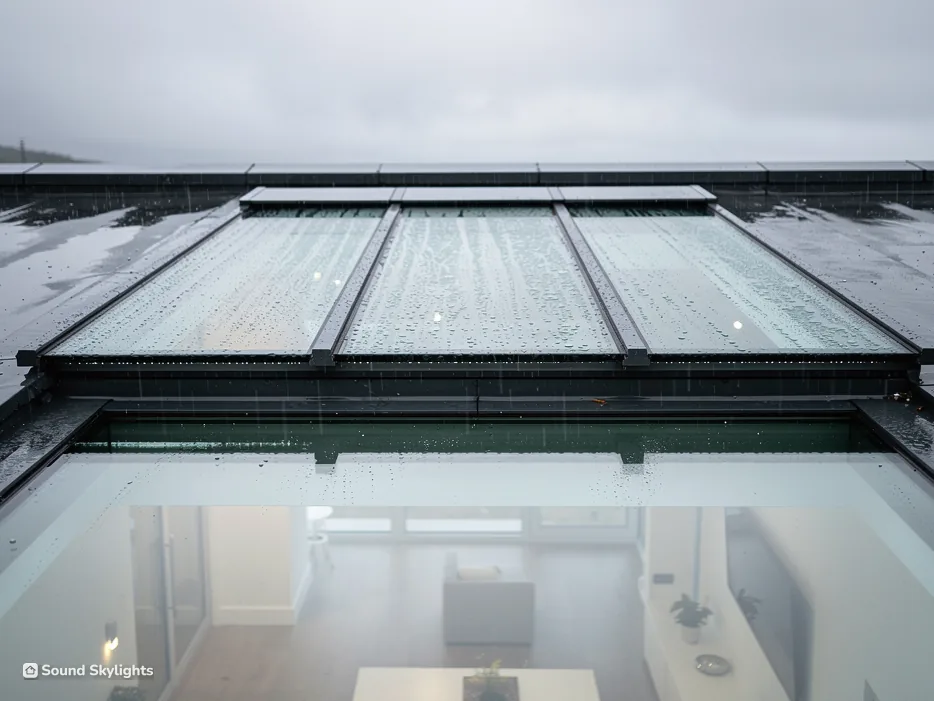
A flat rooflight sits on a kerb built into the roof. It suits a bathroom, a kitchen extension or a flat-roofed block, and it can be fixed or electric. The guide to upstands and coverings explains how the roof covering meets it.
Why shade matters
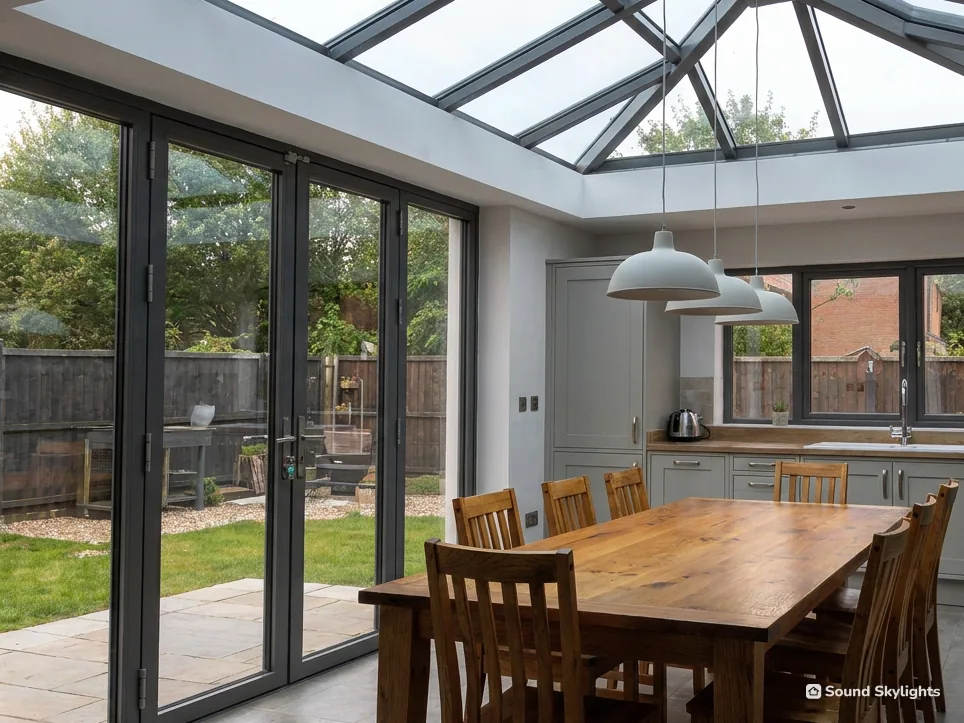
A bright kitchen is pleasant until midsummer. A blind or solar control glass keeps it comfortable. Ask us about both at the survey.
A bathroom with no window
Under a low pitched roof, a bathroom or landing can take a sun tunnel where there is loft space for the tube. It lights the room but cannot clear steam, so a bathroom that steams up may do better with an opening window. We weigh the two with you at the survey.
Cleaning
A single flat pane is the easiest to keep clear, and the pivoting kind of roof window can be cleaned from indoors. Before we leave, we show you what to use, where to stand and how often the glass is worth a look.
The estate roof rule
Choose the window for the roof you have: flat glass for a flat roof, a pivot or top-hung window for a shallow tiled slope.