Our 1930s semi has a flat-roofed kitchen at the back. Lantern or flat rooflight?
The 1930s semis that survive in Sale were built for a growing middle class. Where one has had a single-storey extension added at the back, the flat roof of that extension is the obvious place for daylight, and the choice is between two shapes.
How each one lives
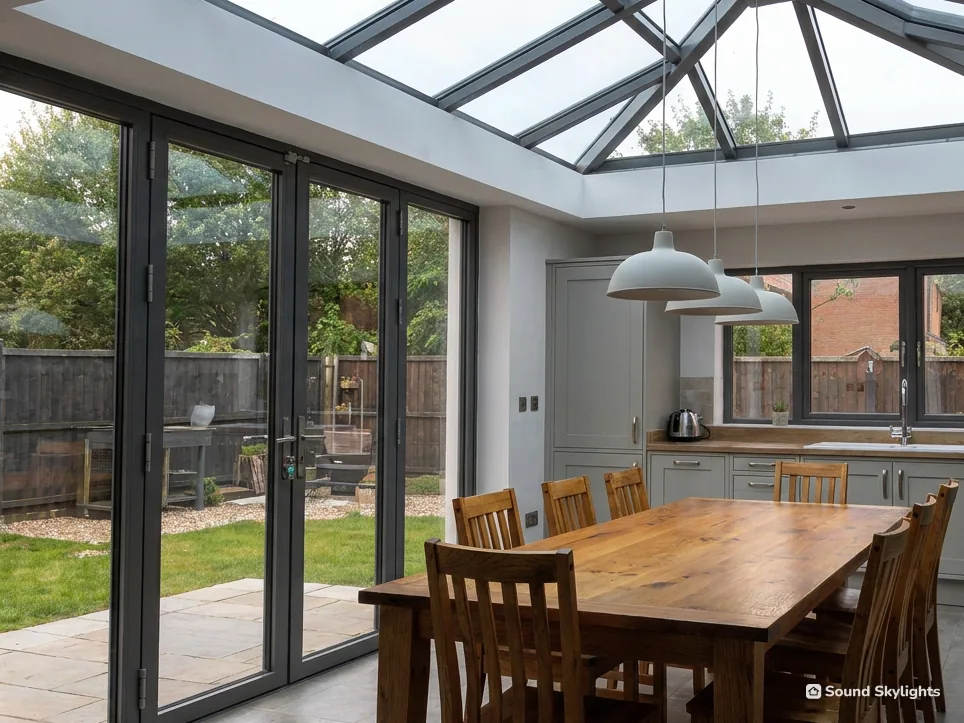
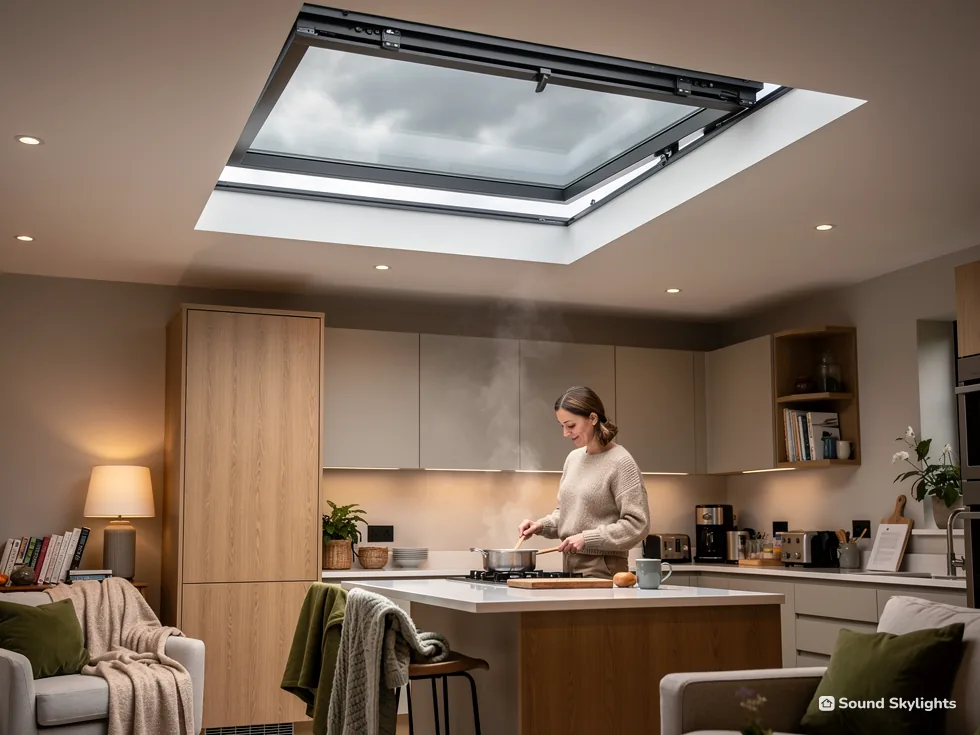
A flat rooflight sits low and looks calm from the garden. A lantern stands up as a glazed box with a ridge, lifts the ceiling and works best in a room wide enough for a table underneath. Either one can be fixed. An opening version can be electric, raised from a wall switch, which helps in a kitchen where steam gathers.
The outside glass
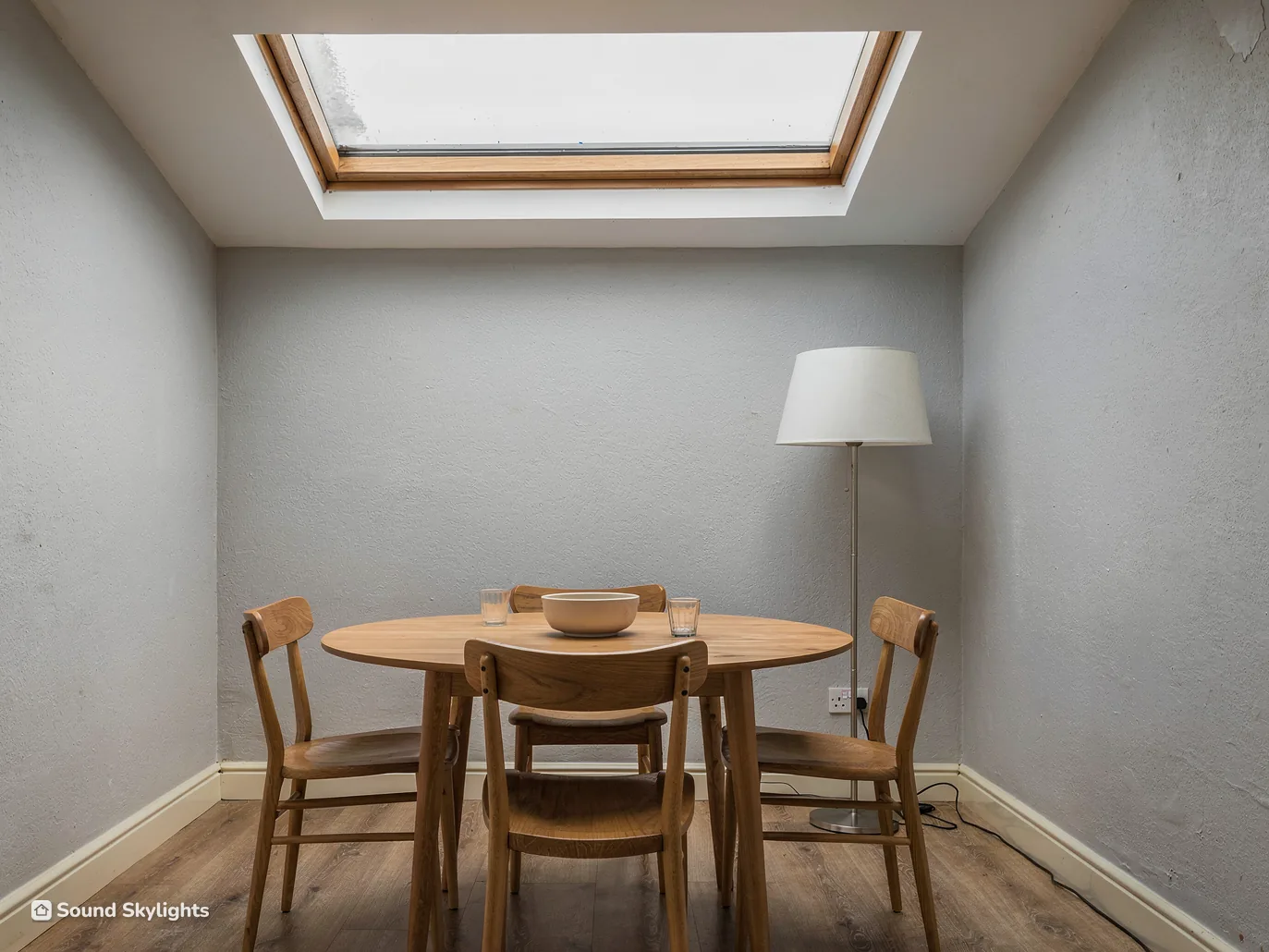
Think about cleaning before you think about style. A flat pane is reached with a long-handled brush from the garden or from a ladder. A lantern has more bars and more panes and takes longer. We explain which you are taking on before you order.
Shade in summer
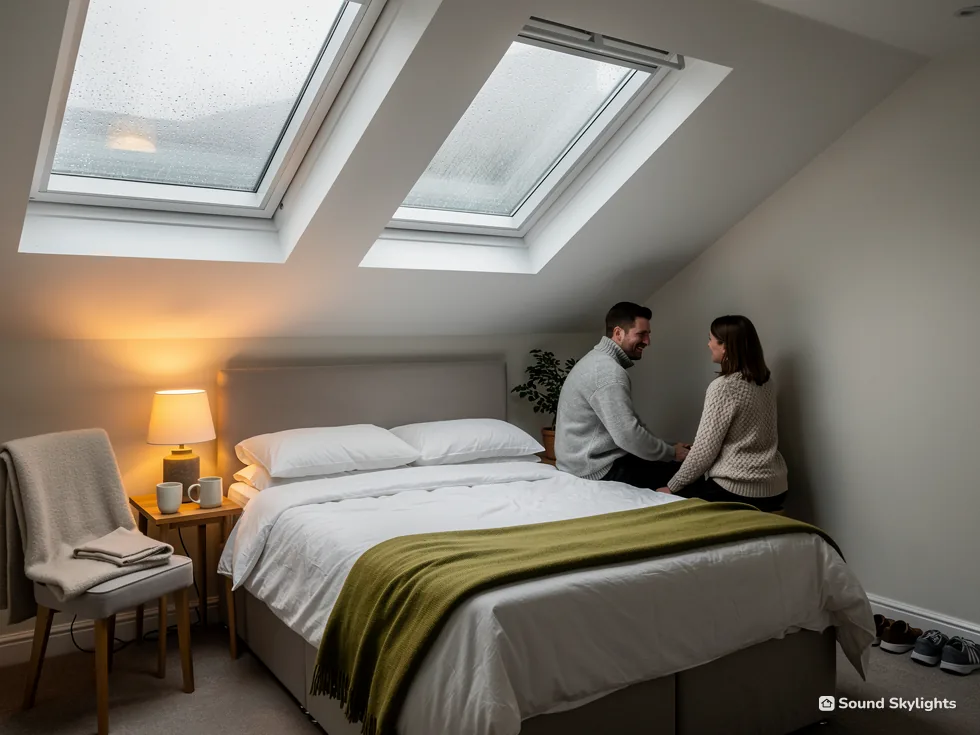
A rear extension can catch the afternoon sun. A pleated blind keeps the room usable, and solar control glass is another route; the page on solar control glass explains what it does.
Where the table goes
Furniture decides more than people expect. A table in the middle of a wide kitchen sits under a lantern. A worktop along one wall is better served by a flat rooflight directly above it. We ask where things will stand, since the best position for the glass is over the part of the room people use most.
Planning
Whether a lantern on a new back extension needs an application is covered in the planning guide, and your address goes to Trafford Council before work starts.
Back-kitchen test
Stand where the table will be and look up. If the room is wide, a lantern earns the height.