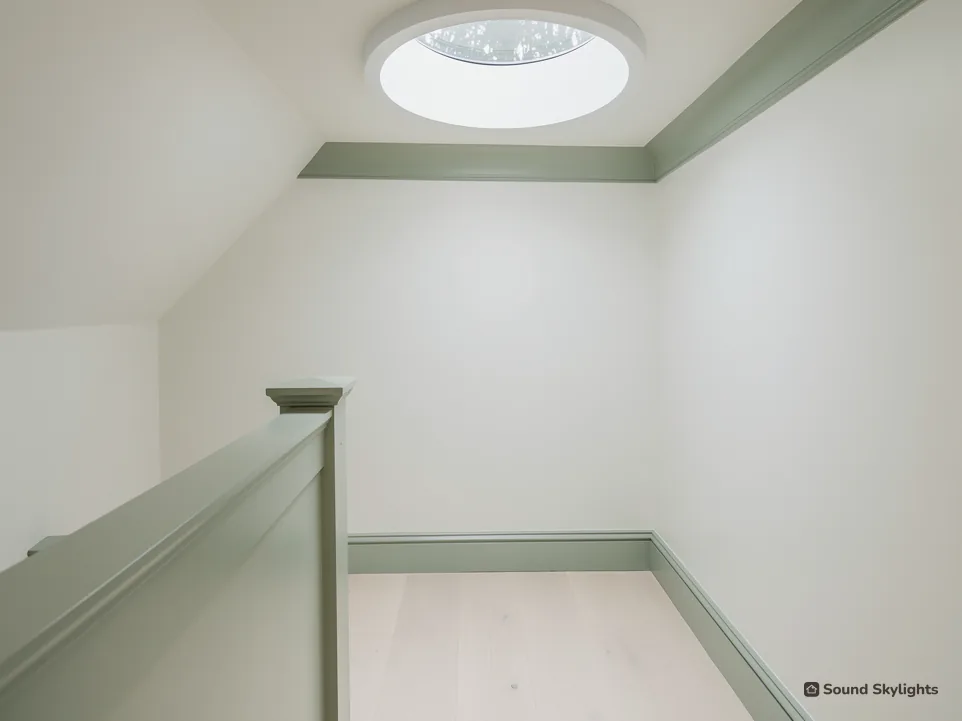

We have a house from the interwar building boom and a flat-roofed extension at the back. Which rooflight?
The houses built between the wars at Cledford and around King Street were not designed with a back extension in mind. If yours has gained one since and it has a flat roof, that roof is the obvious place for the light.
Flat or lantern
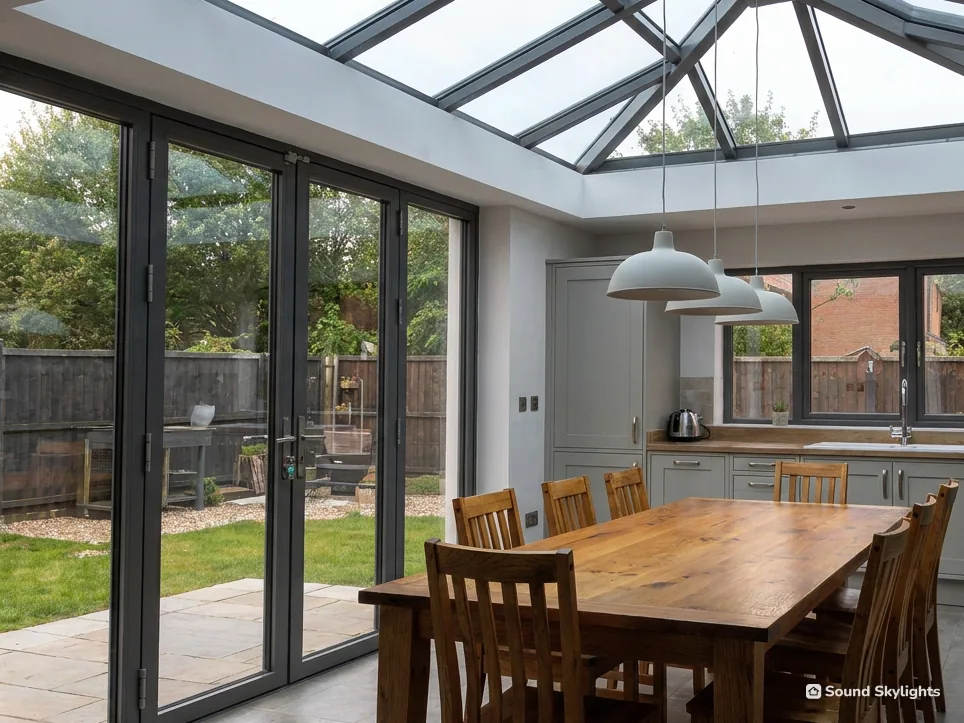
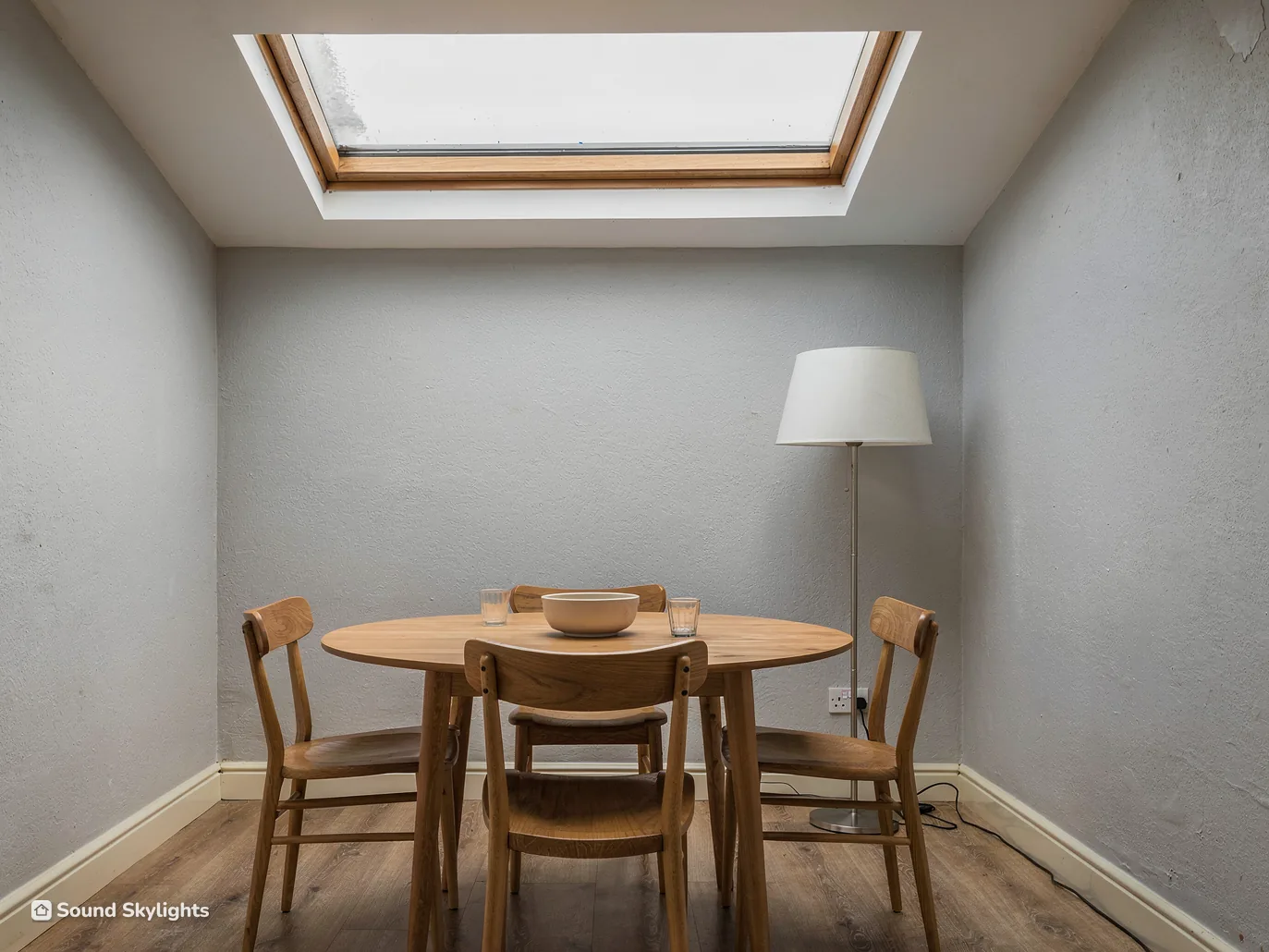
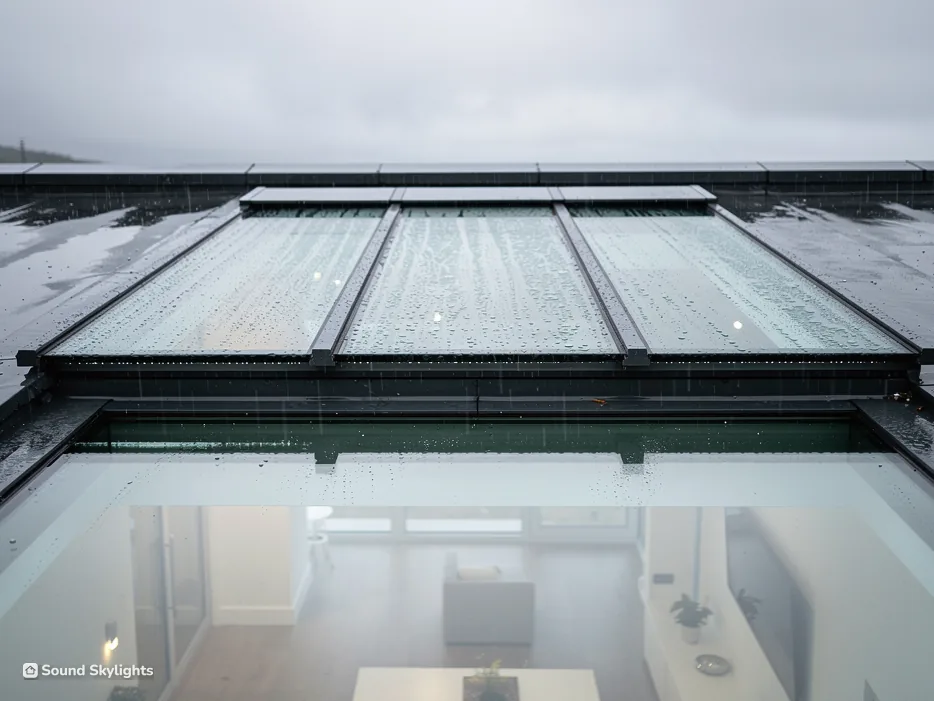
A flat rooflight sits low on its upstand. It suits a galley kitchen or a utility room and is easy to look after. A lantern stands above the roof in a pitched glass frame, giving more height and sky, and it suits a wide room with the table underneath. Either one can be fixed or opening. An opening one can be worked from a switch or a handset. Our guide to the best rooflight for a flat roof compares them.
The blind and the outside glass
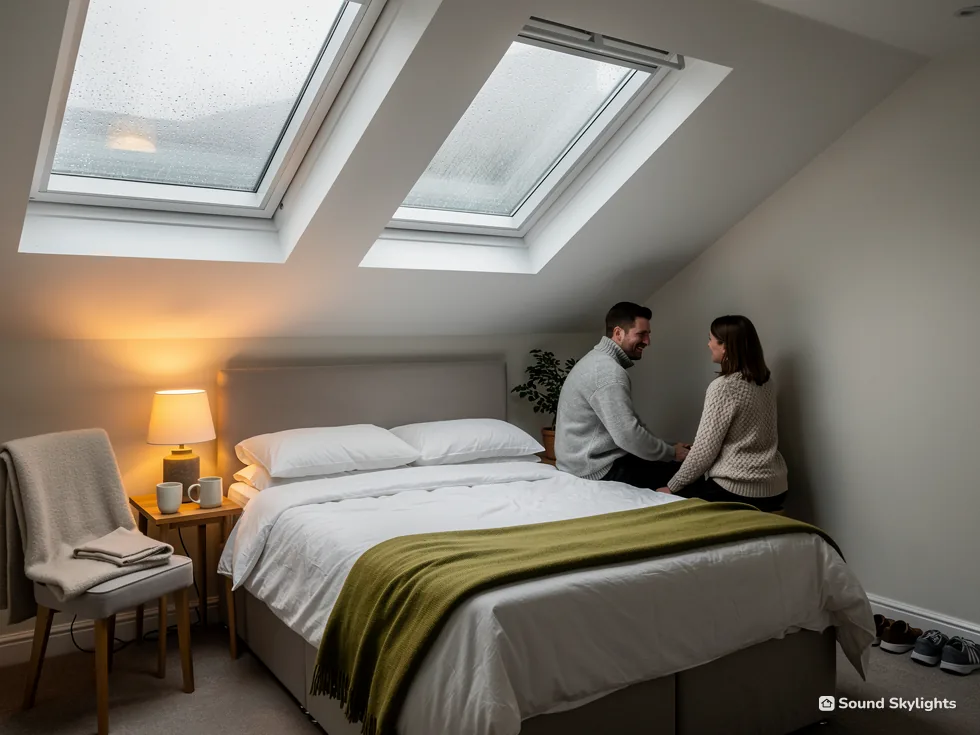
The two daily questions are about the glass. A blind under a flat rooflight keeps a low afternoon sun from taking over the room, and a pleated blind does it without darkening the room. The outside is a different matter. A flat pane collects dust and leaves, and somebody has to reach it. A coating on the outer pane lets rain do more of the work. A lantern has more bars to clean around. We explain which suits you at the survey.
Standing in the room
Before you choose, stand where the table or the cooker will be and look up. A narrow room feels taller with a flat rooflight and a clear pane. A room with a wide table feels grander under a lantern. Ask yourself where the light should land and whether you want to see sky from your chair. The answers decide more than the catalogue does.
Planning
Putting a lantern on a roof that is already there can need a planning application, depending on the house. Our lantern planning answer explains the usual position.
Choosing for the back of the house
- Narrow room
- Flat rooflight, low and neat
- Wide room
- Lantern, taller with more sky
- Blind
- Pleated to soften, blackout if the room doubles as a bedroom
- Outside glass
- Coating, ladder or roof access planned first