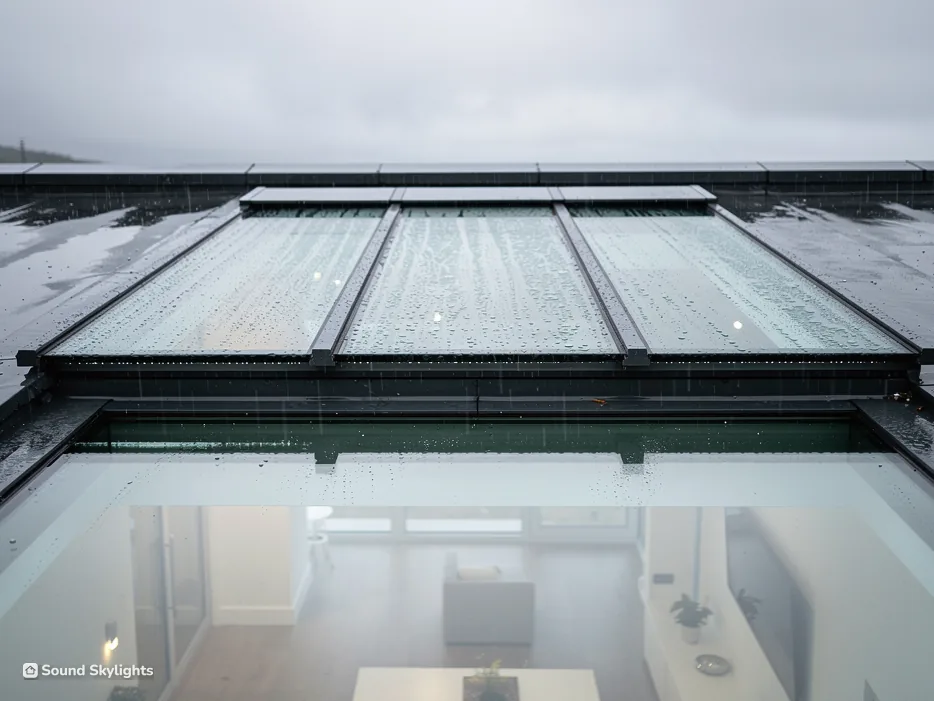

How much does a Pennine-foothill position matter for a roof window?
High Lane stands at about 170 metres above sea level, in the foothills of the Pennines. Raised ground catches rain differently from a valley floor, and a window in a roof is the one part of the roof that opens. That does not make this an exposed-roof story. It makes a sensible case for choosing the window with some care.
Seal and glazing
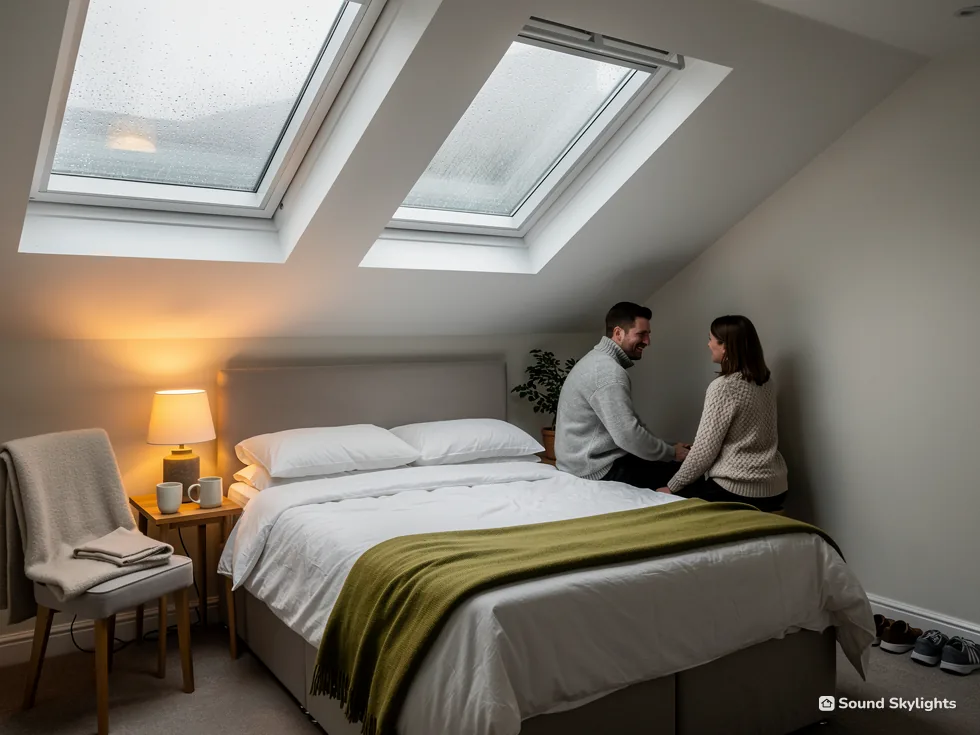
A roof window is a frame in the slope, and the frame has to stay tight. Makers offer different glazing specifications, and a well-sealed window with good glass is simply more comfortable in a cold bedroom. We explain the makers' options at the survey in plain language. Our guide to solar control glass covers the glass that handles strong sun, and the guide on condensation explains the fog that can build up on a cold pane.
When nobody is home
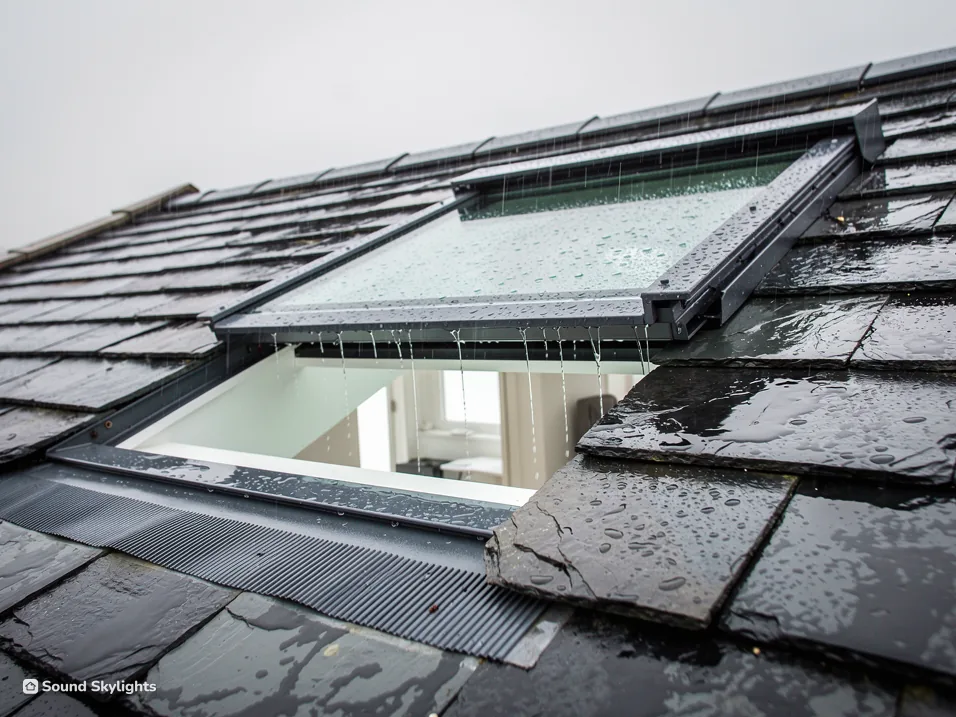
The daily-use worry on raised ground is the window left open on a mild morning when a shower arrives later. The makers' electric and solar roof windows, VELUX's among them, can have a sensor that shuts the window at the first rain. A manual window has no sensor, so for those the habit is to shut it before you leave. Our guide to rooflight rain sensors explains what the sensors do and where they sit.
Who reaches it
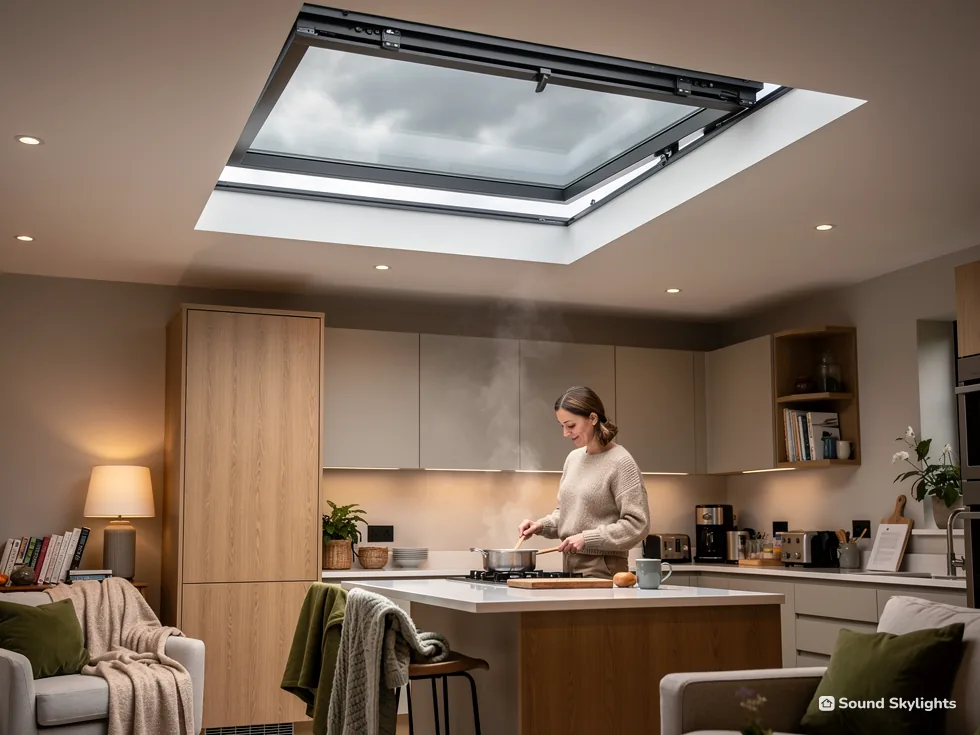
If the window is high on the slope, a remote or solar motor replaces the rod, and the blind runs from the same remote. That is the decision we ask about first.
Cleaning the glass
Rain washes a pitched roof window, though not always evenly, and a smear on the lower edge is the usual result. A pivot window turns the outer pane inward, so you can wipe it from the room. Others need a ladder. We tell you which kind you are buying, so the cleaning is settled before the window is ordered and not discovered in the first spring.
On rising ground
Choose the window that closes itself if you cannot be sure you will remember.