Our 1930s house has a flat-roofed extension at the back. Flat rooflight or lantern?
House building began on High Terrace of the Mersey in 1934, and a house from the 1930s that has had a kitchen or dining room built on the back may have a flat roof over it. That roof is the natural place for light. The choice is between a flat rooflight, which sits low on an upstand, and a lantern, which stands up in a pitched glass frame.
How each one feels in the room
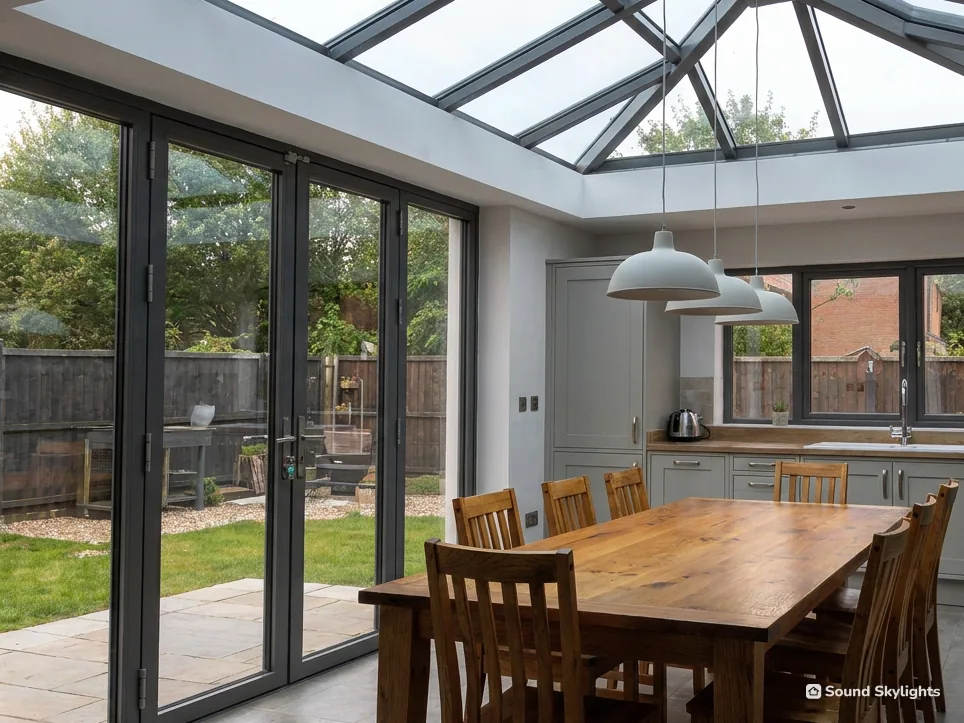
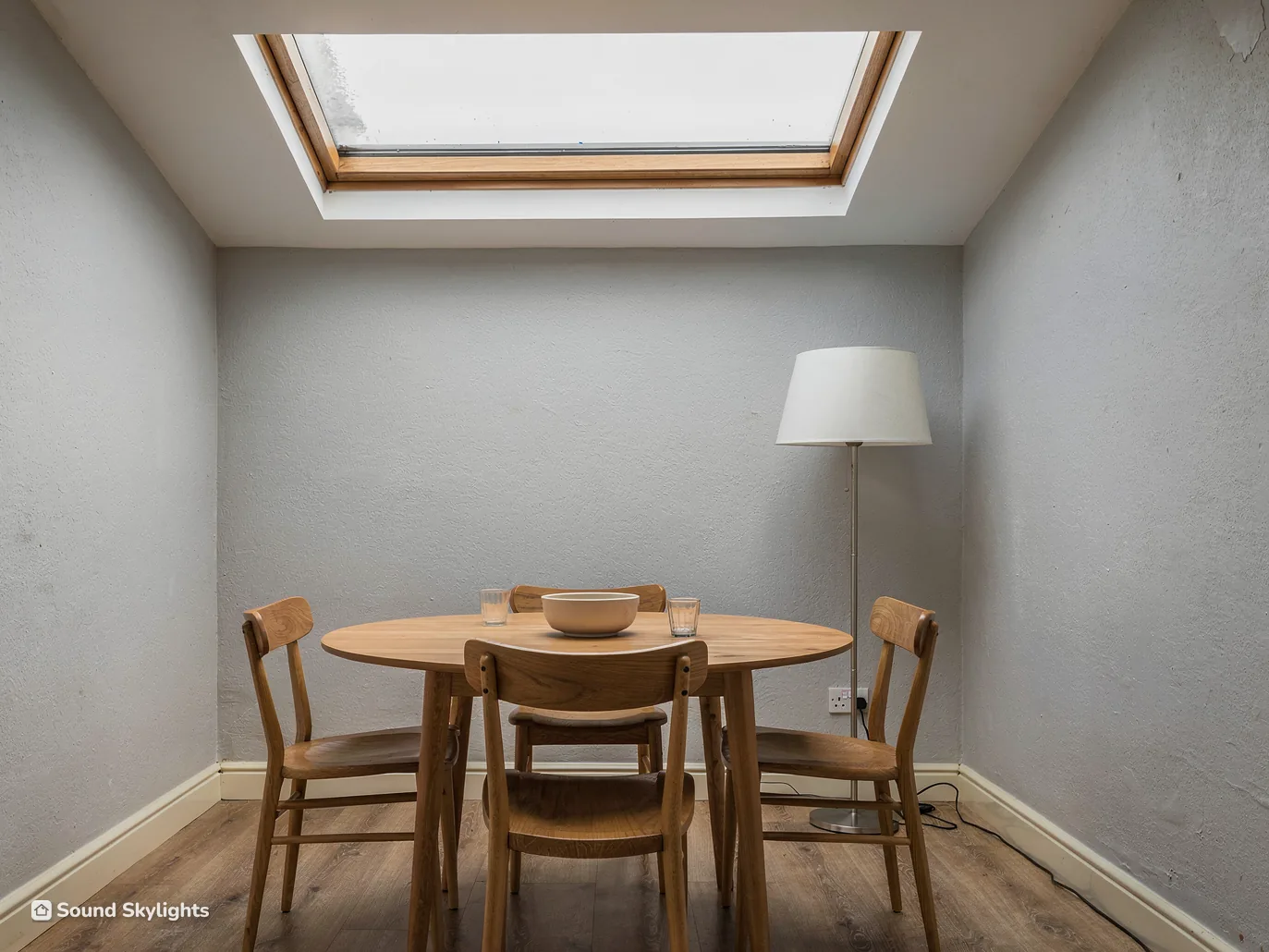
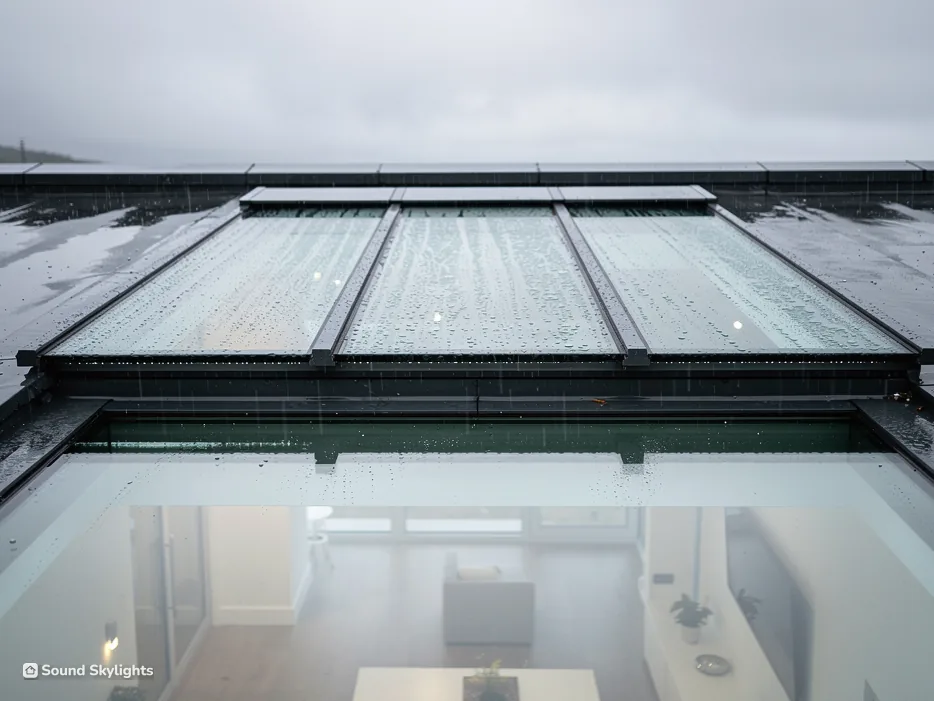
A flat rooflight gives clean light and a tidy line from the garden. It suits a narrow room, a utility space or a galley kitchen. A lantern gives the ceiling extra height and shows more sky, so it suits a wider room where the table sits underneath. Either can be fixed or have an opening section, and an opening one is worked from a wall switch or a handset kept in the kitchen drawer. Our comparison of flat rooflight types sets the options side by side.
Planning, in a sentence
A flat rooflight on a house is usually permitted development, but a lantern on a roof that is already there normally needs planning permission unless the council confirms otherwise. The planning guide explains why, and we confirm your position before you commit to a design.
Blinds and heat
An extension full of glass can run bright in summer. A blind beneath the rooflight shades it, and some makers offer solar control glass. Decide on the blind when you choose the rooflight, because its fixing is part of the frame.
Cleaning
A low flat pane is simple to keep clear. A lantern has bars where leaves and dirt settle, so work out how you will wipe it before you buy.
Back-extension rule
A narrow room wants a flat rooflight. A wide room with the table in the middle can carry a lantern.