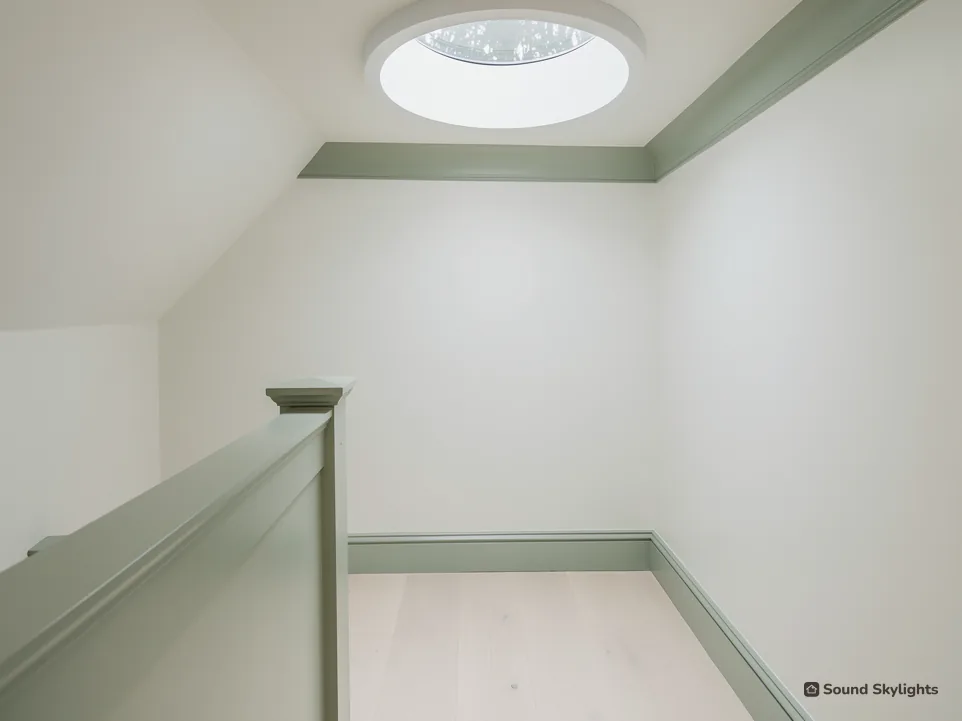
Can a garage conversion or a flat-roofed extension on an overspill estate take a rooflight?
The late-1960s and 1970s expansion brought new estates of council and private housing, and houses on them may since have gained something at the back: a kitchen extension, a utility room or a garage that became a room. These roofs are often flat, and a flat roof is a good place for light.
Garage conversions
Turning a garage into a room is building work in its own right, set out in the Building Regulations guide. The rooflight is chosen to suit the new room, and we handle the notification where the work is notifiable. A garage roof is usually low and the room underneath dim, so one well-placed rooflight can make a difference. Our guide on putting a skylight into a flat roof already there shows what the job involves.
Flat rooflight or lantern
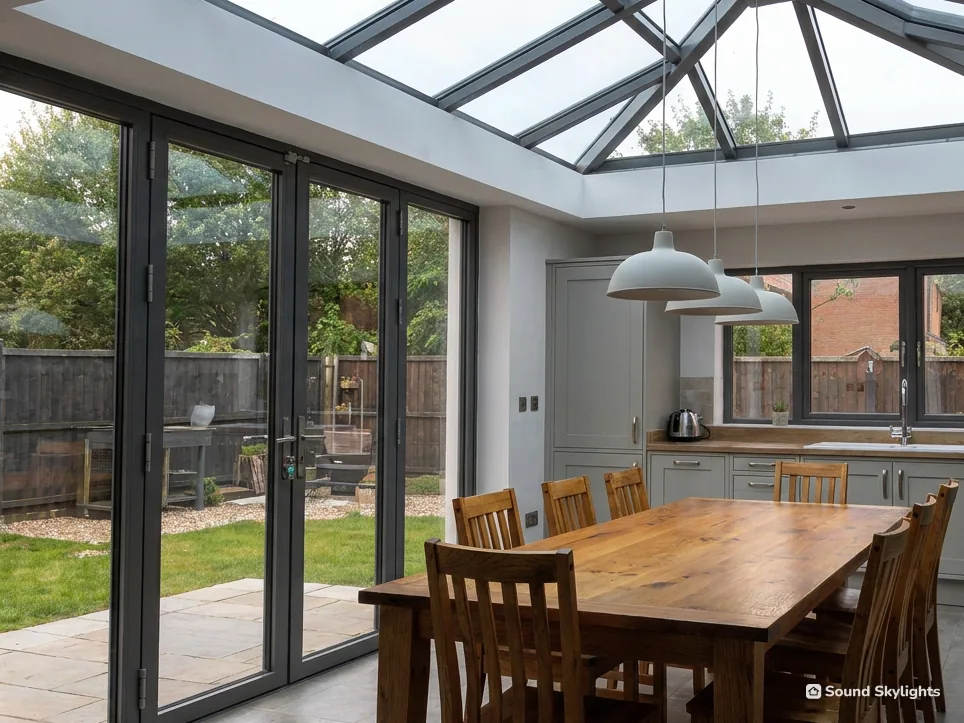
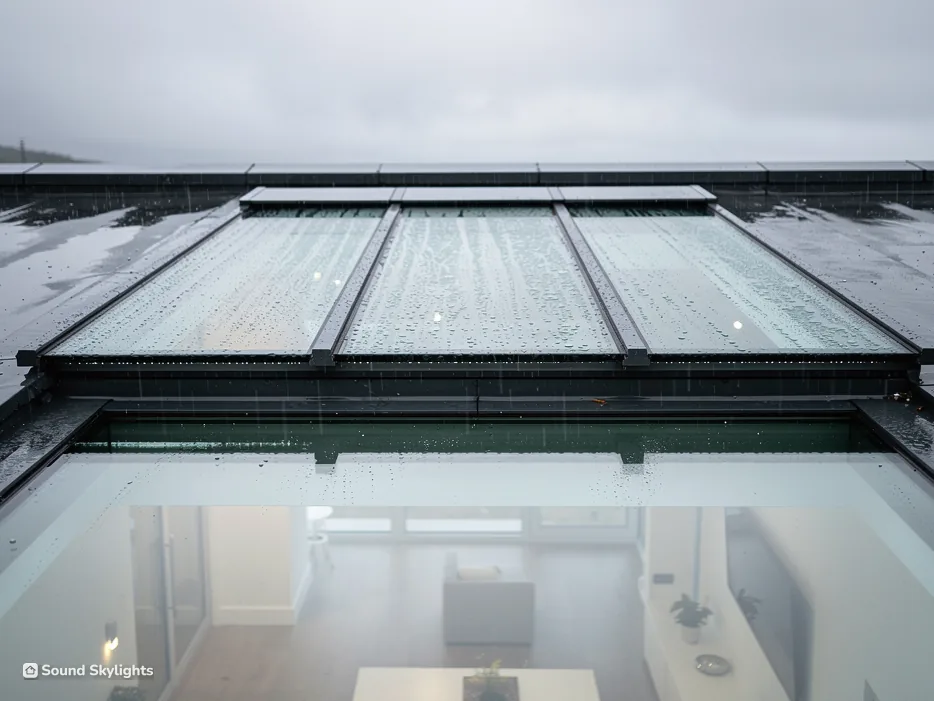
A flat rooflight lies low on its upstand and suits a narrow kitchen or a utility room. A lantern is a glazed box that stands above the roof, and it gives a wider room more height and sky. Either can be fixed or opening. If it opens, think about reach. Our lantern sizes and kerbs page shows what a lantern needs underneath it, and the lantern planning guide covers where a lantern stands on planning.
Light for a conversion
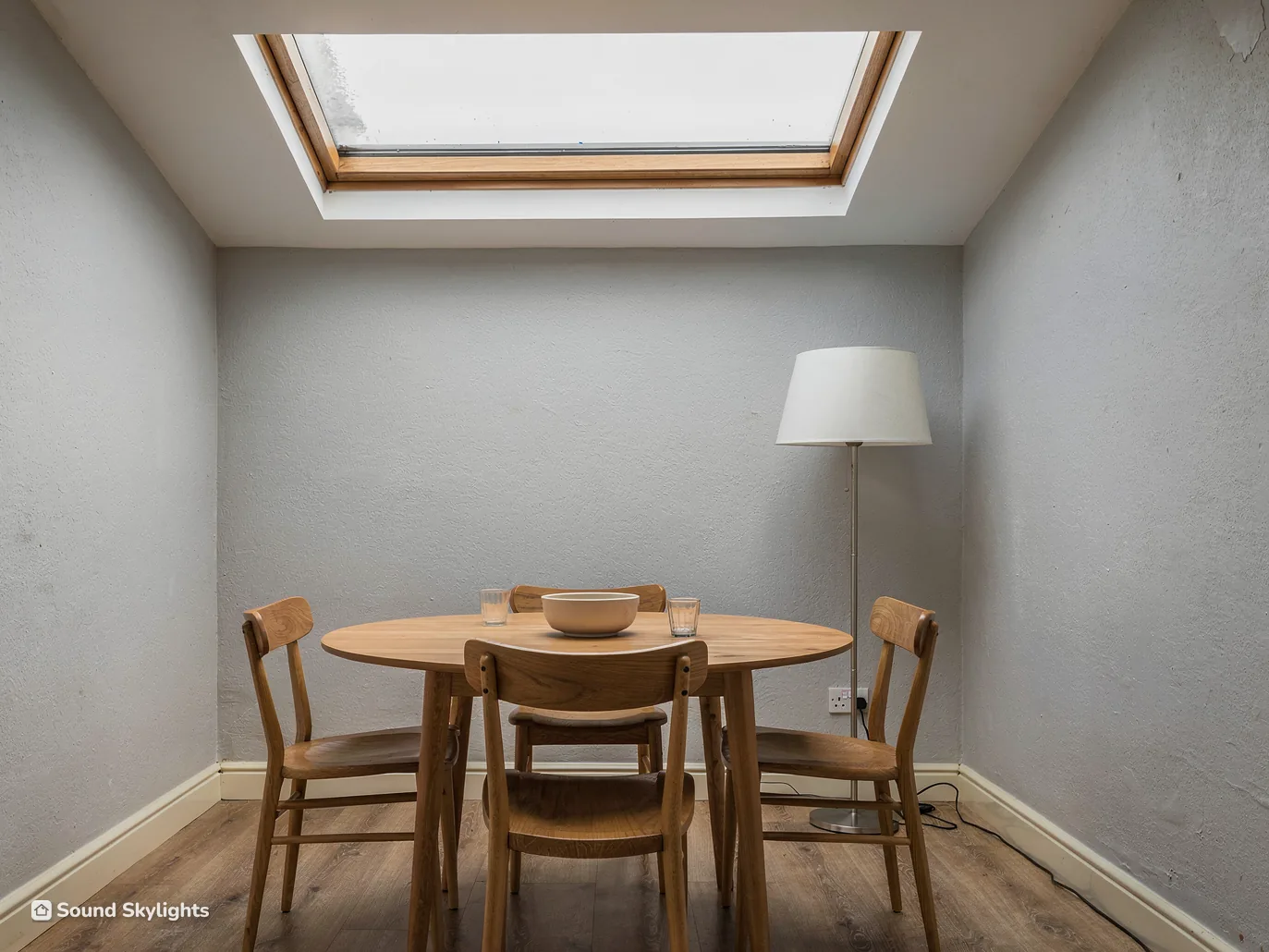
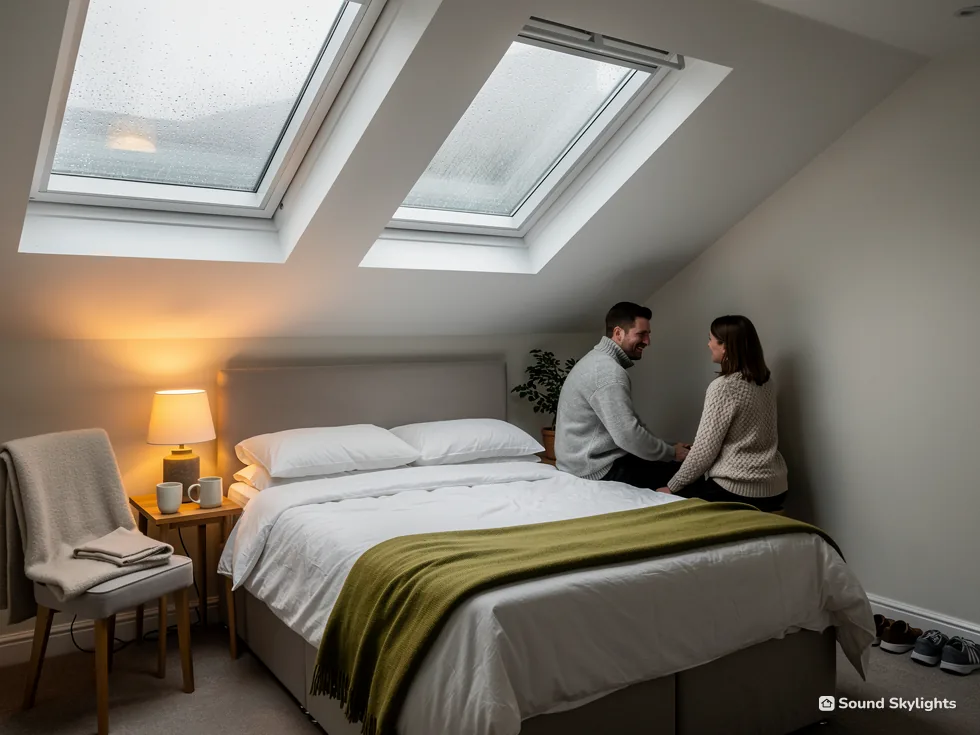
A garage conversion often ends up as a playroom, a study or a utility room. Each wants a different amount of light and a different blind, and the room decides whether the rooflight should open at all. A playroom with a child in it is a good reason to ask about a restrictor. Our child-safe opening guide covers the options.
Cleaning the glass
Outside, a single pane over a low roof is easy to wipe with a long-handled brush. A lantern has more bars and needs more care. We explain which you are taking on before you order.
Back-of-the-house rule
Choose the rooflight for the shape of the room, then check the roof under it. The roof is the part to settle first.