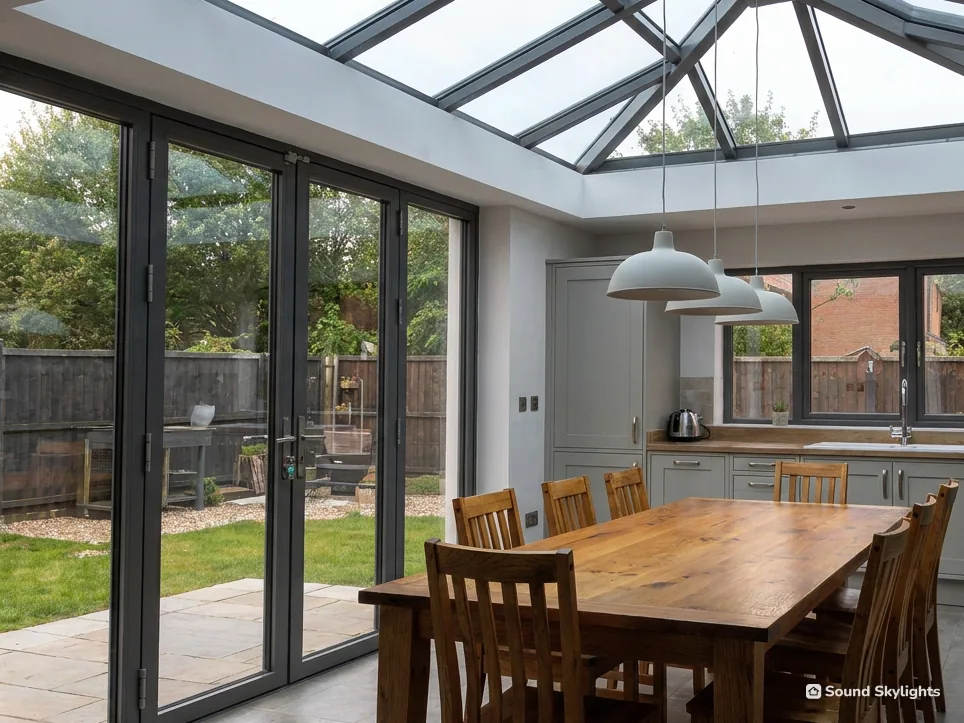

A roof lantern over the kitchen looks lovely, but will the room be too bright and hot?
A house that gains a kitchen extension may well make a roof lantern its centrepiece. It lifts the ceiling, adds sky and lights a table far from the garden doors. The daily-use question is the one people forget at the design stage: what is the room like at two in the afternoon in June?
Glare and heat
A lantern holds a lot of glass facing every way. In a south or west-facing room that means strong light on a table and heat that builds through the afternoon. Two things help. Solar control glass is coated to cut the heat that comes through, and a blind fitted under the glass shades the room on demand. The solar control glass page explains what the coating does and does not do.
Blinds
Blinds under a lantern are sized to the opening, and the choice is between pleated, which takes the edge off the sun, and a fuller blackout style, which shuts the room down. For a kitchen where people eat, the lighter option is the natural fit. Ask for the blind with the lantern, as the fitting is easier before the plaster is finished.
Fixed or opening
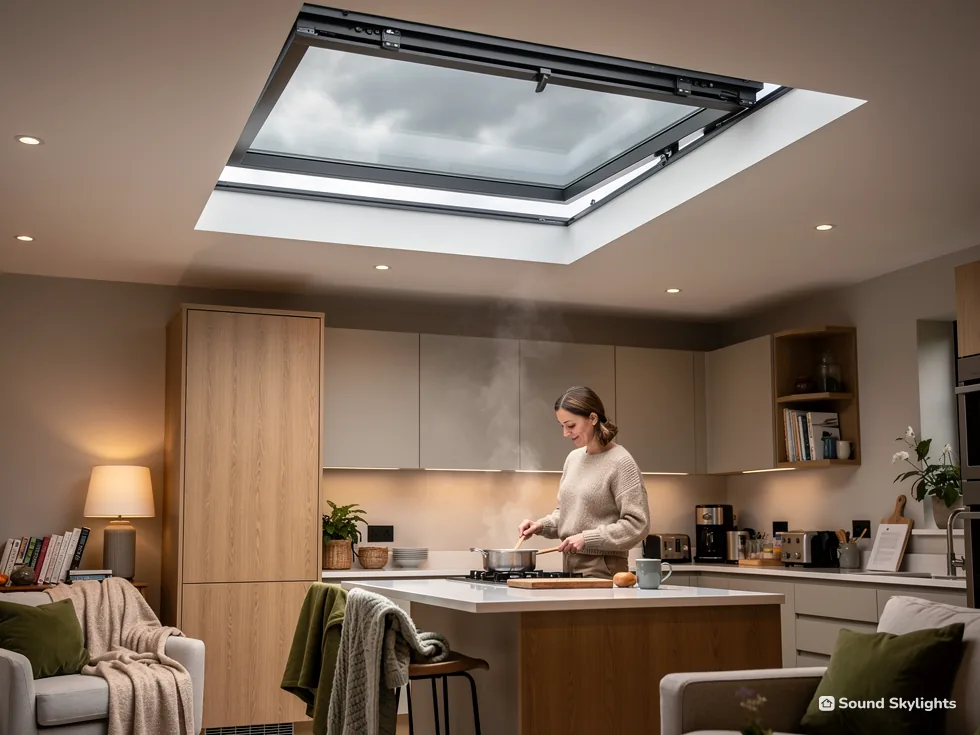
A lantern can be fixed or can open. Fixed is simpler and keeps the controls to a minimum, and an opening lantern gives the room a way to shed the warmth of cooking. Neither is wrong. What matters is that the choice is made for how the kitchen is used, and not left until the glass is on site.
Planning
The planning position for a lantern depends on the house and the extension, and it is explained in the planning guide. We confirm it for your address before you commit. Our page on lantern sizes and kerbs covers what the roof structure must provide.
A kitchen lantern in daily use
- Glass
- Solar control coating for a sunny aspect
- Shade
- Blind under the glass, sized to the opening
- Opening
- Fixed, or electric for a lantern that is out of reach
- Outside
- Cleaning route agreed before the order