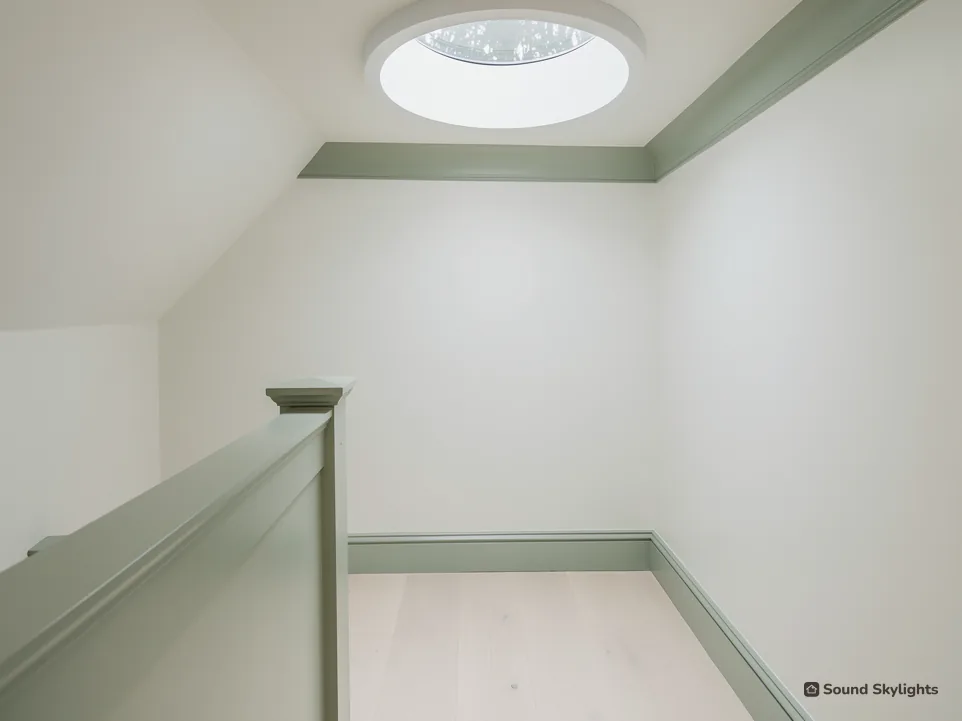
Our stairs and landing are dim all day. Which gives more light, a sun tunnel or a roof window?
Where the landing sits in the middle of the first floor with no window of its own, it is the room that gets least daylight and the place where a lighting choice makes the biggest everyday difference. Under a concrete-tile roof on a low-to-medium pitch, either option can work.
Sun tunnel
A sun tunnel is a small dome on the roof, a tube running up through the loft space and a frosted panel in the ceiling. It brings daylight down to the landing without a window to open or a blind to buy. It suits a space with loft above and no wish for a view. The page on fitting time explains what the work involves.
Roof window
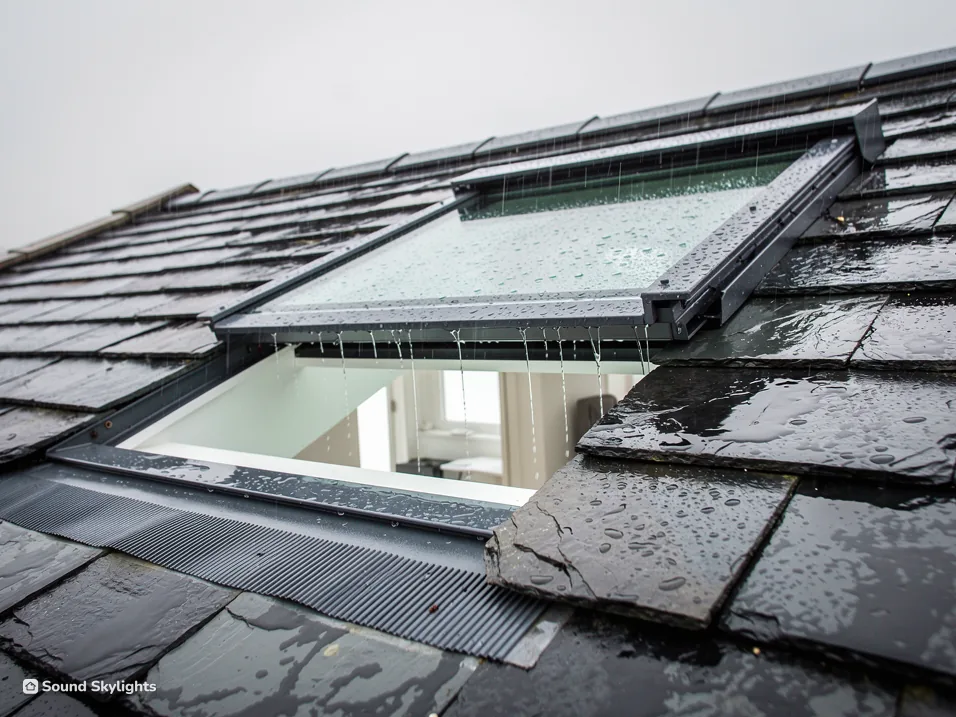
A roof window gives sky and a view, and it opens to let air through. If the landing leads to a loft stair, a window above it lights both. The catch is reach: a window above a stairwell is a long way up, and an opening handle there is no use. A rod or an electric or solar motor solves that.
How we choose
We stand on the landing and ask what you want it to do. If the answer is daylight and nothing else, we lean to the sun tunnel. If it is air as well, or a view of the sky, we lean to the window.
Cleaning and care
A sun tunnel dome on a low roof needs a wipe from a ladder now and then, and nothing indoors. A roof window needs its outer pane cleaned, which on a low-to-medium pitch is easier than on a steep slope but still wants a plan. We show you the safe way to reach it before we leave, and which products to avoid on the glass.
Bathrooms
The same question comes up in a bathroom with no window. A sun tunnel lights the room, but it will not clear steam, so a bathroom with loft space above may do better with an opening roof window.
The parts of a sun tunnel
- Dome
- The clear cap on the roof that gathers daylight.
- Tube
- The reflective duct that carries the light through the loft, rigid or flexible.
- Diffuser
- The frosted panel in the ceiling that spreads the light into the room.