Davenham: a Domesday village with a modern estate beside it

Skylights and rooflights for Davenham's older village and the Kingsmead estate beside it

Davenham has an old village centre by the church and a large estate built on farmland between 1996 and 2006. Their roofs and rooms are very different, and we match the rooflight to each, and to the person who will use it.

Takes you to the survey form on this page and adds your postcode to any WhatsApp message.

  • Kingsmead tile roofs and rear extensions surveyed before a rooflight is chosen
  • Older houses near the church checked against the listed building position
  • Cheshire West and Chester Council asked about your address before the fixed written quote
24 road miles south-west of Stockport

Davenham is recorded in the Domesday Book of 1086 as Devenham, and the present church building is a Victorian Gothic revival reconstruction of 1844 to 1870. It sits in the middle of the Cheshire Plain, near the River Dane and the River Weaver, on ground low enough that exposure is not a worry. The Kingsmead estate came later, built on farmland from 1996 to 2006 and cut off from the old village by the A556.

So the village offers two kinds of roof and two kinds of brief. Near the church, a house may be older or listed, and the question is what the roof will accept. On a newer estate, the roof is a modern tile and the question can be a kitchen or garden room, where a flat rooflight or a lantern will change how the room feels. In both, we ask first who uses the room, how high the glass sits, and how it will be opened, shaded and cleaned.

Rooflights for an old village and a newer estate

These five cover the tiled roofs of the estate and the extensions behind them, with options for older houses near the church.

Davenham roofs, and what to ask of them

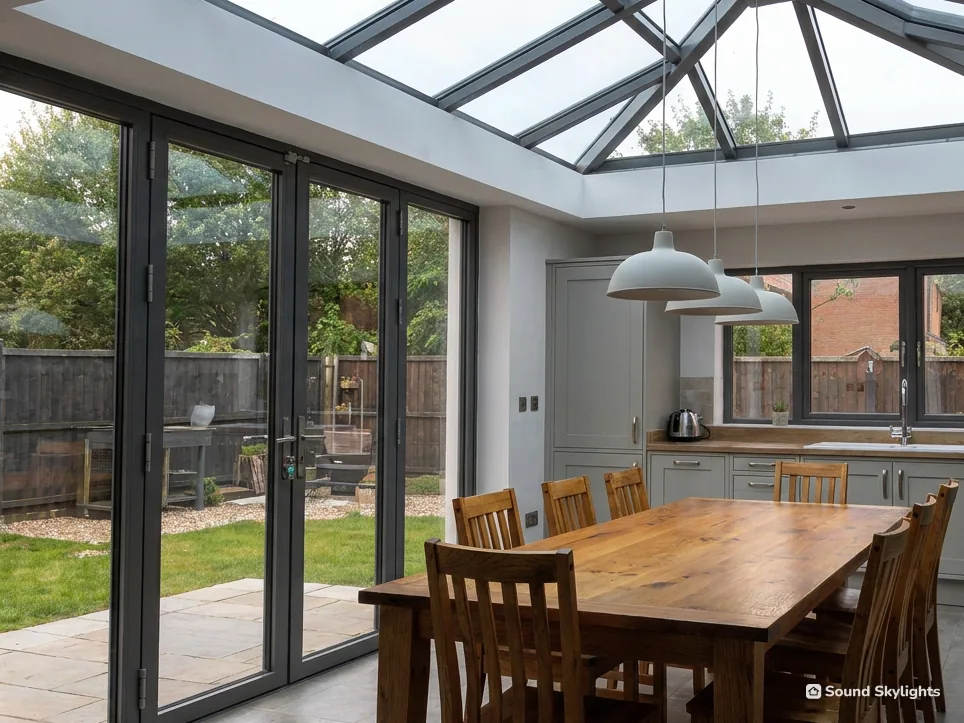
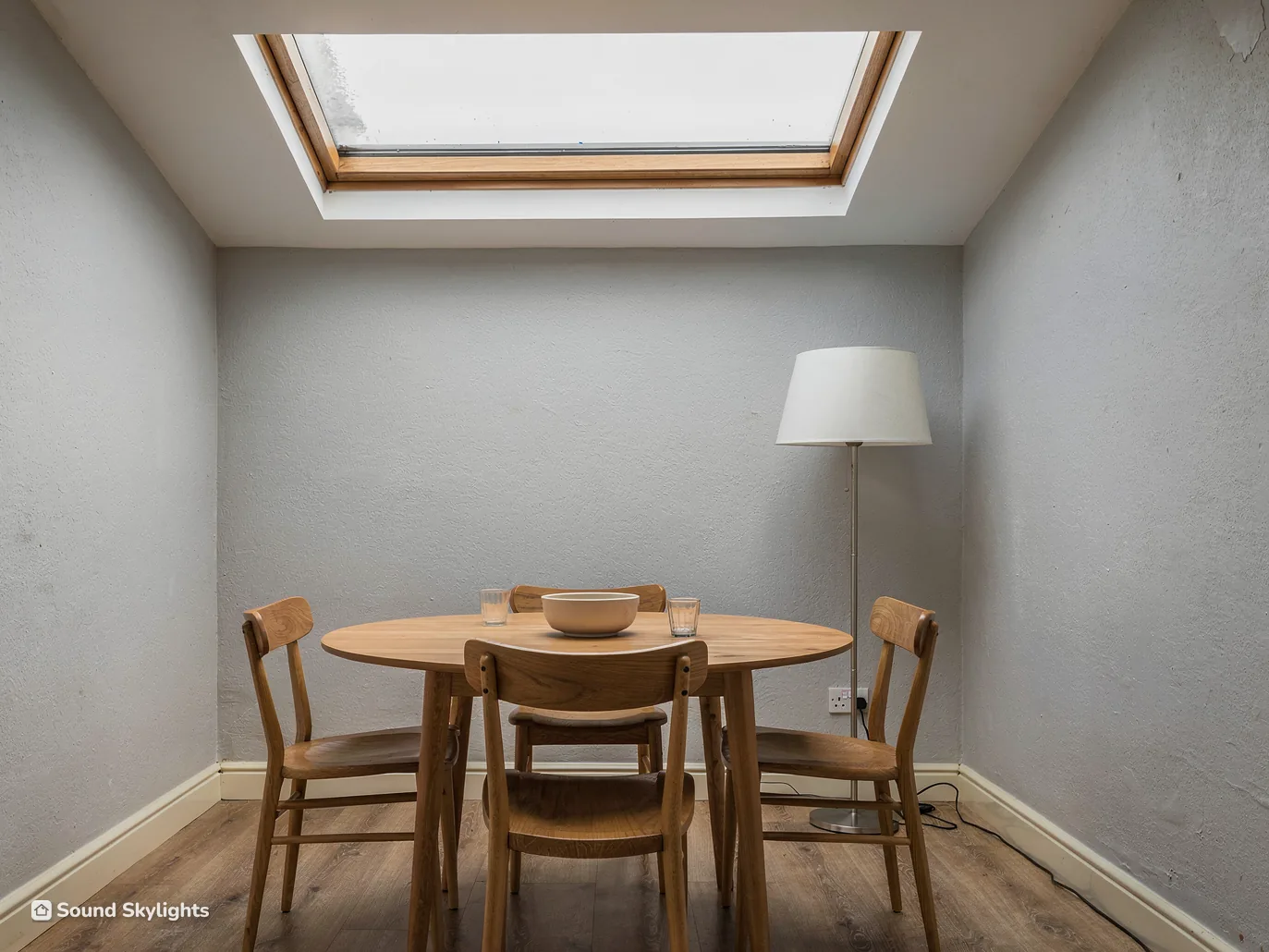
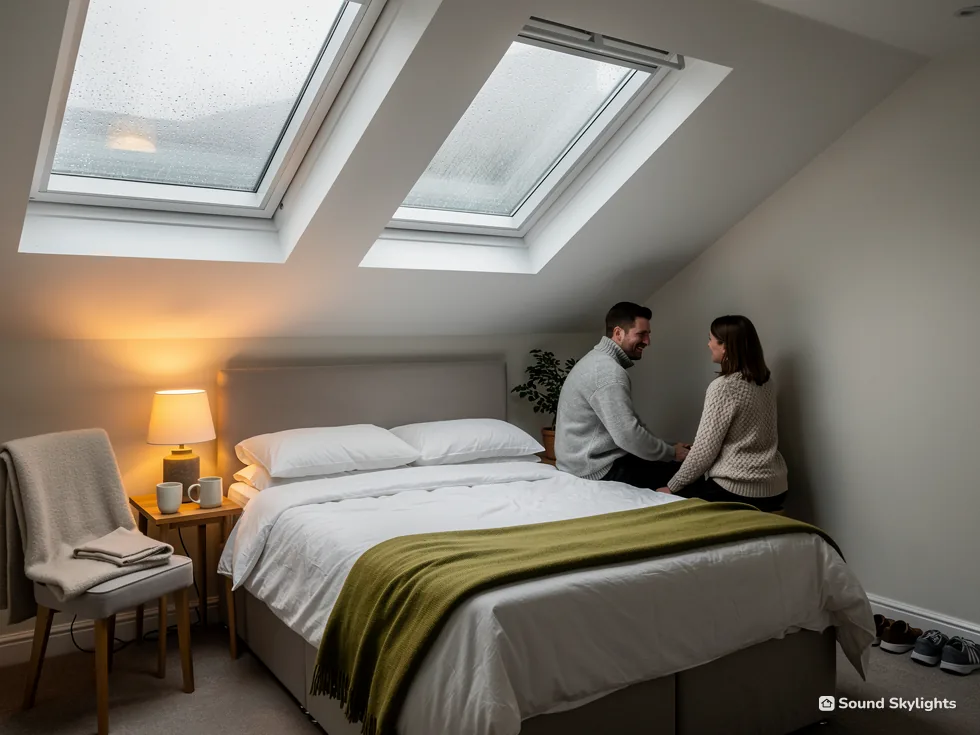
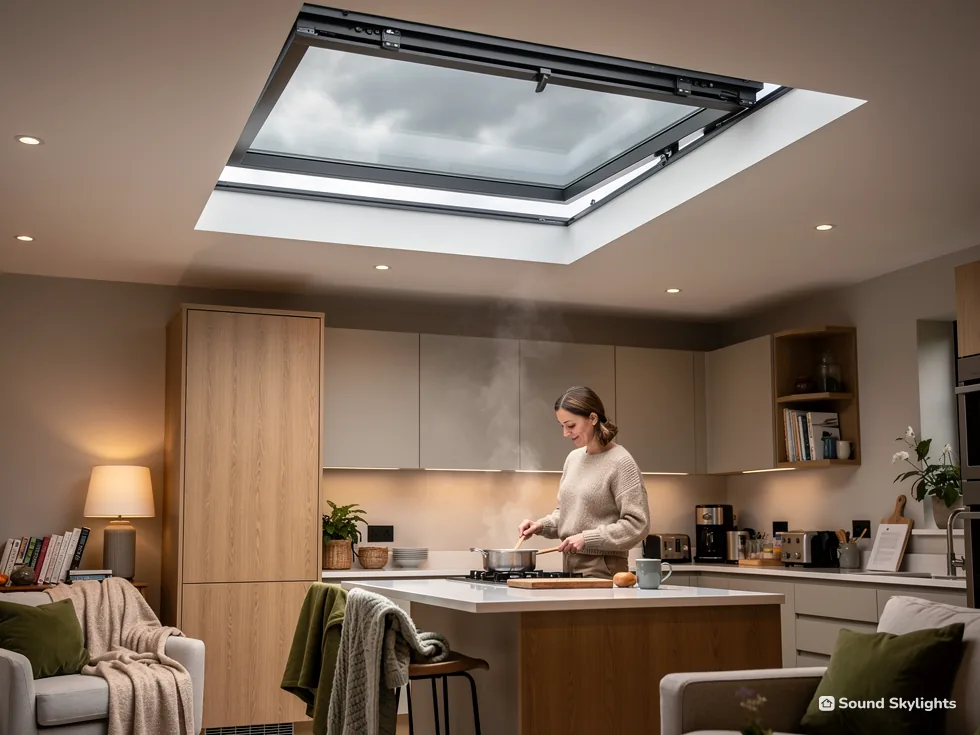
Four questions from four kinds of room: an estate kitchen, a tiled loft, an older house by the church, and a sunny garden-facing space.

Which suits a kitchen extension on a newer estate, a lantern or a flat rooflight?

The Kingsmead estate was built on farmland between 1996 and 2006, so its houses are modern. Where one has a single-storey, flat-roofed extension at the back, that roof is where daylight can come in without taking anything from the garden.

Two different shapes

A flat rooflight is a low glass unit on a raised upstand. It looks tidy from the garden, and because it is flat to the roof, a wipe over from a short ladder or a long-handled tool is often enough. A lantern is a glazed box that rises above the roof and brings light in from several sides, adding height as well as brightness. It suits a family kitchen with a dining table, where the extra volume is something you notice.

Opening and shading

Either shape can be fixed or opening. A fixed unit asks nothing of you. An opening one is worth having where the room fills with cooking heat, and an electric version opens from a switch on the wall, so nobody climbs on a chair. A blind matters more than people expect: a lantern facing a sunny garden can be bright at lunchtime, and a pleated blind or solar control glass keeps the table comfortable.

Planning

A lantern put on an existing flat roof normally falls outside permitted development, so it calls for a planning application unless the council tells you otherwise, and the planning guide explains why. On a new extension, the lantern is assessed with the extension; we confirm the position with the council before work starts. Our note on choosing a rooflight for a flat roof goes further into the options.

Kitchen extension, side by side

Flat rooflight
Low profile, simple to wipe, good for narrow rooms
Lantern
Taller glazing, more volume, suits a wide table
Opening
Fixed, or electric from a wall switch
Shade
Pleated blind or solar control glass

Our house has a low-pitched tiled roof. Does that change a loft roof window?

Houses built from the 1960s onward typically carry concrete interlocking tiles on a lower pitch than pre-war houses. That general pattern can apply to newer houses around the village, and it matters for a roof window because the slope decides how the glass sits in the room.

Shallow slope, different reach

On a steep roof the window is tall and narrow and its handle can end up high. On a shallow one the glass lies closer to the horizontal, so the window sits nearer the ceiling and the room can feel as if it has a skylight rather than a window. Heads and handles are within reach in some rooms and out of it in others. We look at the room and the person: a teenager's bedroom, a guest room, a hobby space.

Top-hung or centre-pivot

A centre-pivot window turns on its middle, so the lower edge swings out and the upper edge swings in. That makes the outer pane easy to wipe from indoors, which matters on a roof you would rather not climb. A top-hung window opens from the bottom and gives a wider gap at the base. Our guide to centre-pivot or top-hung roof windows explains how each behaves in daily use.

Opening and rain

An electric or solar window removes the reach problem, and the rain sensor on some VELUX electric and solar models closes the window itself once drops hit the glass. That helps when nobody is home. Where children are about, restrictors keep the opening limited, and the child-safe opening guide sets out the choices.

We live near the church in the old village. Is our roof harder to change?

Historic England lists buildings in Davenham, among them the Church of St Wilfred, Davenham Hall, the Bull's Head Inn and houses on Church Street. If your home is listed, a skylight almost always needs listed building consent, applied for before any order. Our guide to rooflights and listed buildings explains how it works.

If your house is not listed

Whether a conservation area touches your road is something we never assume. Each address goes to Cheshire West and Chester Council for a check ahead of the quote, and you hear what comes back. For the usual limits on adding a rooflight to a house, read the planning guide.

What the survey looks at

An older village house can have uneven rafters or a roof that has been patched over time. The survey looks at the covering, how the roof is built beneath it, and where a window can go without cutting into something that carries load. We also look at what the room will be. A study over a staircase asks for different glass from a spare bedroom, and a hall that has never had natural light may suit a sun tunnel better than a window. A house beside a lane is also seen from the road, so the way the window sits against the tiles gets as much care as the size.

Choosing the window

Conservation-style roof windows are slimmer and sit lower in the slope, with a central bar that reads well from the road. They are a good match for an older roof even where nothing is listed. A manual handle suits a window you reach easily, and a pole or a remote suits the one you do not.

At the church end

Listed or not, check the address first. Choose the window once the roof has told you what it will take.

Which blind copes with a room that faces the garden and gets the afternoon sun?

On a low, flat Cheshire Plain there is little to stop the sun once it swings round to the back of the house. A kitchen or garden room with glass overhead can warm up fast, and the blind then becomes the part of the rooflight you touch every day. It is worth choosing it as carefully as the window.

Matching blind to room

A pleated blind sits close to the glass and filters light, which suits a kitchen or living area where you still want daylight. A roller blind is simple and quick. A blackout blind is the usual choice in a bedroom, and it is one option among several rather than the point of the window. For an extension, makers also offer glass with a solar control coating, which cuts some of the heat before it reaches the blind.

Reaching the controls

The best blind is the one you actually close. On a flat rooflight or lantern over a kitchen, a wall control or remote is easier than a pole. On a roof window over a loft stair, a handle on the blind or a rod does the job. VELUX makes blinds that run from the same remote as the electric and solar windows, so one handset can open the window and draw the shade. Our guide to blinds and controls covers the types.

Wiping the glass

A shade does nothing for a dirty pane. Cleaning depends on the roof: a flat rooflight is reached from a short ladder or with a long-handled tool, a pivoting roof window is wiped from indoors, and a lantern with several bars takes a little longer. We say which applies to your roof at the survey, so you know what you are taking on before the work starts, and go through it again at handover.

Shading words, simply

Pleated
A folded blind that filters light and sits close to the glass.
Blackout
A blind that blocks daylight, chosen mostly for bedrooms.
Solar control glass
Glass with a coating that cuts some solar heat.
Remote
A handset that opens the window and draws the blind.

Across the plain, from the church to Kingsmead

Davenham

Davenham falls within the circle on the map, which is measured as the crow flies from Stockport.

See if we cover your postcode

Davenham is 24 road miles south-west of Stockport, and we cover the old village, the estate beside it and the roads around them. Type your postcode to be sure.

Takes you to the survey form on this page and adds your postcode to any WhatsApp message.

Nearest town pages

Davenham: practical answers

Which council decides planning for a Davenham house?

Cheshire West and Chester Council. We ask them about your address before the quote is fixed. Building work can be inspected either by the council's own inspectors or a registered building control approver, and we take care of Building Regulations notification when the work calls for it.

Could a dark landing in a 1990s house take a sun tunnel?

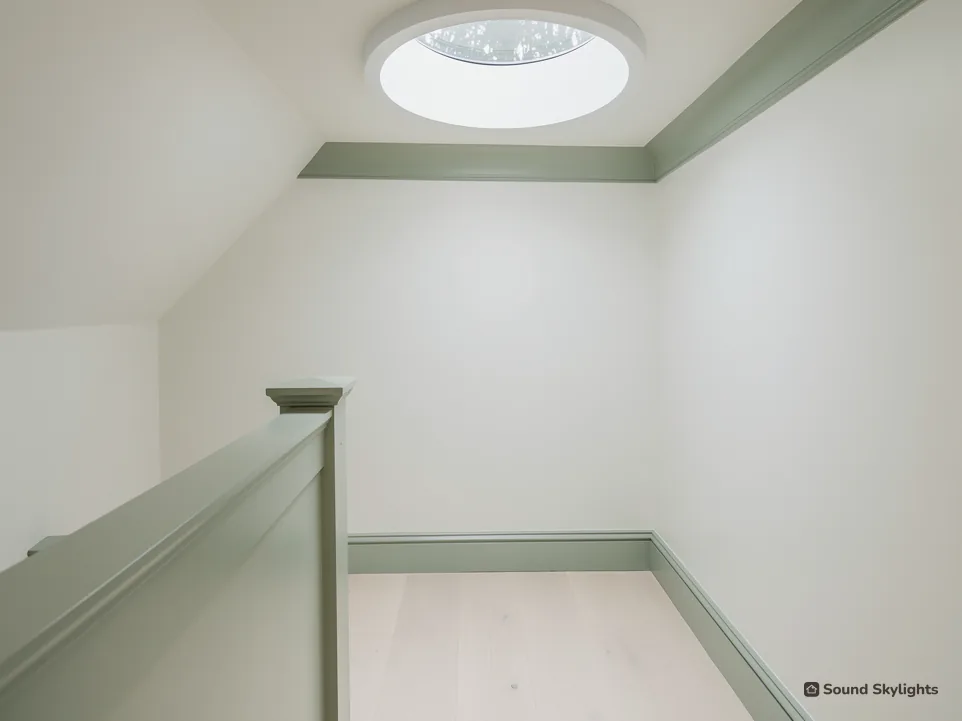
If there is loft space above it, yes. A sun tunnel brings daylight down through a small roof dome and a tube to a diffuser fitted into an opening cut in the ceiling. Nothing opens and there is no view, so it suits a landing or bathroom. Our guide to choosing rooms for a sun tunnel has the detail.

Is the flat roof on our extension fit for a rooflight?

We check at the survey. The rooflight sits on an upstand built into the roof, and a worn covering may be better renewed first. Our guide to upstands and roof coverings gives the reasons.

Does the village's low ground make any difference to the window we choose?

Not to the choice itself. Davenham sits at about 30 metres above sea level on the Cheshire Plain, so exposure is not a worry for us. The decision rests on the roof covering, the room below, the height of the window and who will open it.

Who shows us how the blind and remote work?

Controls, blinds and cleaning are explained at handover, so you know how each one works before we leave. If the window is high, that includes the rod or the remote you will use day to day.

What guarantee do we get on the work?

For the fitting at your Davenham home, the 10-year workmanship guarantee is ours to give. Makers' guarantees on the products differ, and we talk them through at the free survey, before the fixed written quote.

Free survey

Book your free survey

Tell us about the room and the roof. We visit, measure and send a fixed written quote for the job in Davenham.

  • Fixed written quote
  • We handle the Building Regulations notification where the work is notifiable
  • 10-year workmanship guarantee

Request my survey