Lowton: collieries and cotton behind it, new estates around it

Skylights and rooflights for Lowton's newer estates and its mining-era past

Lowton's old mining and spinning sites have mostly closed and been replaced with housing and light industry. Tiled estate houses, extensions and older farm buildings each need a different rooflight, picked for daily use.

Takes you to the survey form on this page and adds your postcode to any WhatsApp message.

  • Estate houses with extensions: lantern or flat rooflight weighed up at the survey
  • Bungalow lofts: where a roof window sits and who will open it
  • Fair House Farmhouse and other listed addresses: consent worked out before any order
24 road miles west of Stockport

In the Industrial Revolution Lowton was bound up with coal mining and manufacturing, close to several collieries and factories. The area grew through the 19th and early 20th centuries on coal mining support, cotton spinning and fustian making. Most of those historic manufacturing sites have since closed and been replaced by modern residential developments or light industrial estates, so newer roofs now stand where the works once did.

Houses built from the 1960s onward typically carry concrete interlocking tiles on a lower pitch than pre-war houses, and a roof like that sets the terms for a rooflight. A shallow tiled slope puts a roof window closer to the ceiling. An extension with a flat roof gives daylight its easiest way in. In every case the questions are the daily ones: who opens it, how high the glass is, what the blind has to cope with and how the outside is kept clean. We start with those at the free survey.

What suits Lowton's tiled and flat roofs

Five rooflights that match the estate houses, their extensions and the loft spaces above them.

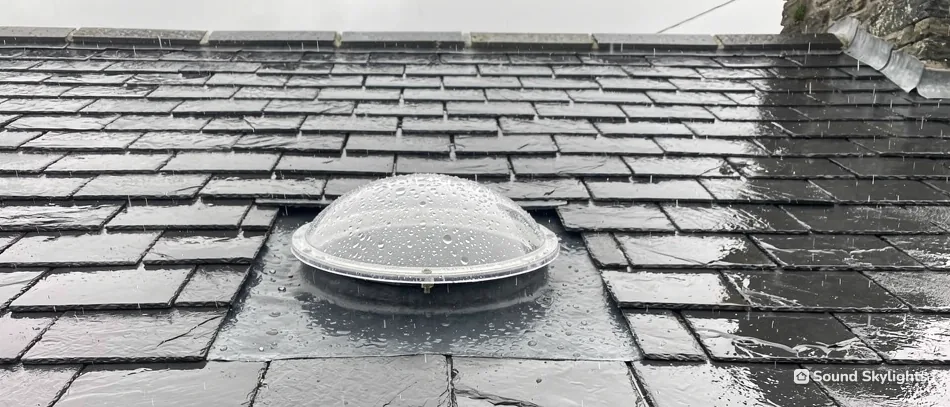
A sun tunnel dome on a wet slate roof

What a rooflight asks of you each week

  • A window above a bed or a stair is high, so a handset and motor mean nobody climbs on a chair to open it.
  • Bedrooms usually want blackout. A kitchen under a lantern is happier with a pleated blind that softens the afternoon sun.
  • Flat units are wiped from a short ladder, pivoting roof windows from inside, and we say which yours is before ordering.
  • The workmanship guarantee runs for 10 years and comes in writing, so you know what is covered.

Rooflight questions from Lowton's newer streets

Three situations that come up on the housing that replaced the old mining and mill sites: an extension, a bungalow loft and an older farm address.

How do we choose between a lantern and a flat rooflight for our rear extension?

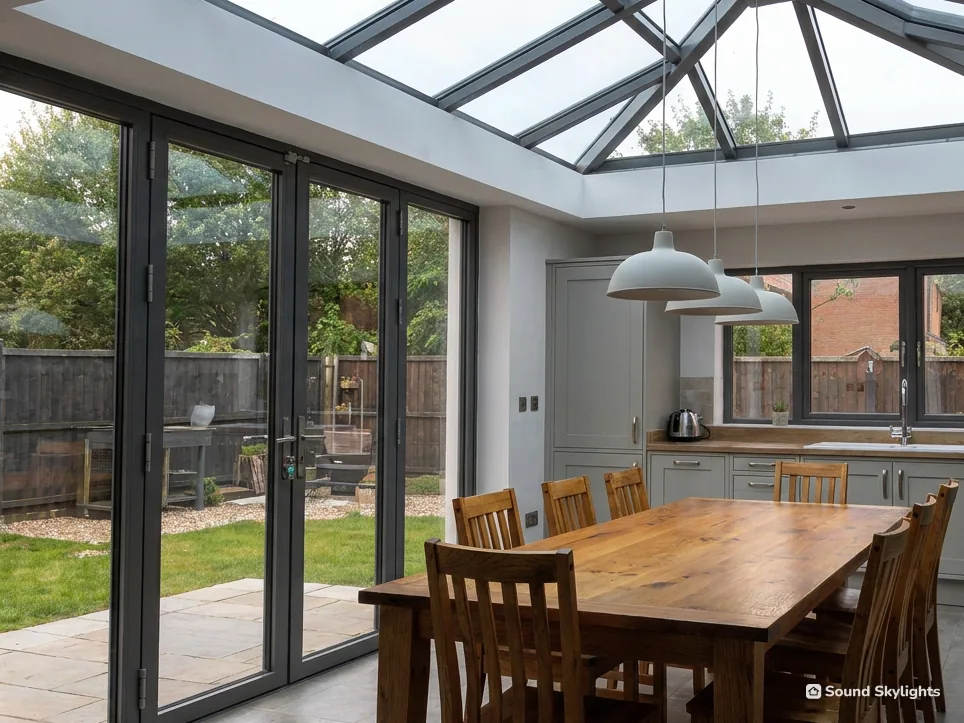
On a modern development the extension at the back can be where the family lives, and when it has a flat roof, that roof is the plain place to put daylight. Two shapes cover the choice, and they behave quite differently once the novelty has worn off.

The flat unit

A flat rooflight sits low on a raised upstand. It looks tidy from the garden and takes little room above the roof. Because the glass is flat, you can wipe it from a short ladder, or with a pole from an upstairs window if the angle allows. It suits a galley kitchen, a utility room or a narrow dining area where the aim is a patch of light, not a feature.

The lantern

A lantern is a glazed box with a pitched top. It brings light in from several sides and gives the room height. In a wider kitchen with a table under it, it is a real change to how the space feels. It also gets more sun and more weather, so a blind and a plan for cleaning matter more. The glazing bars take longer to wipe. Some makers coat the outer pane so rain helps clear it, though that does not remove the need to look at the glass now and then. If the room is used all day, with a laptop on the table and children doing homework, glare is also worth planning for before you choose.

Shade and warmth

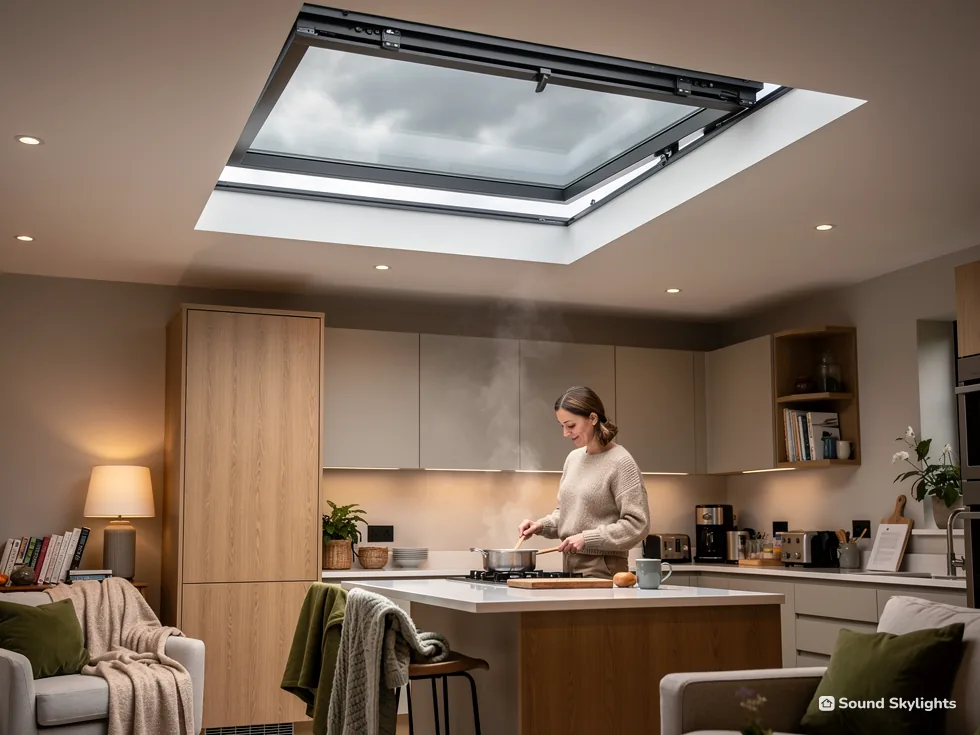
Glass overhead warms a room in summer. A pleated blind softens it, and solar control glass is available from makers if the room faces the garden. An opening unit lets the cooking heat out, and an electric one works from a wall switch. Our guide to picking a rooflight for a flat roof goes through the options in detail.

A developer's roof, a newer extension

A house on one of the modern developments that replaced the old works sites has a newer roof. That helps an extension, because the line of the new roof can follow the old one without fuss. The survey still looks closely at where the rooflight will sit against the wall, and at the covering, before anything is ordered.

Planning for each

Fitted to an existing flat roof, a lantern usually stands too far proud to count as permitted development, so planning permission is normally needed unless the council says otherwise. On a new extension, the lantern is assessed with the extension; we confirm the position with the council before work starts. For a Lowton house the planning guide explains the difference before you commit to either.

Lantern or flat unit, compared

Shape
Lantern rises; the flat unit stays low
Best room
Wide for a lantern, narrow for a flat unit
Cleaning
Flat is simpler; bars on a lantern take longer
Shade
A blind on both; solar control glass as an option

We live in a bungalow and never use the loft. Can a roof window turn it into a room?

Loft in a bungalow

Measure the height at the ridge before you plan the room. The window follows what the roof allows.

A bungalow has a roof but little else above the ceiling, and people often wonder whether that space can become a bedroom or an office. The answer comes down to height and layout, and a roof window is only part of it.

Is there room?

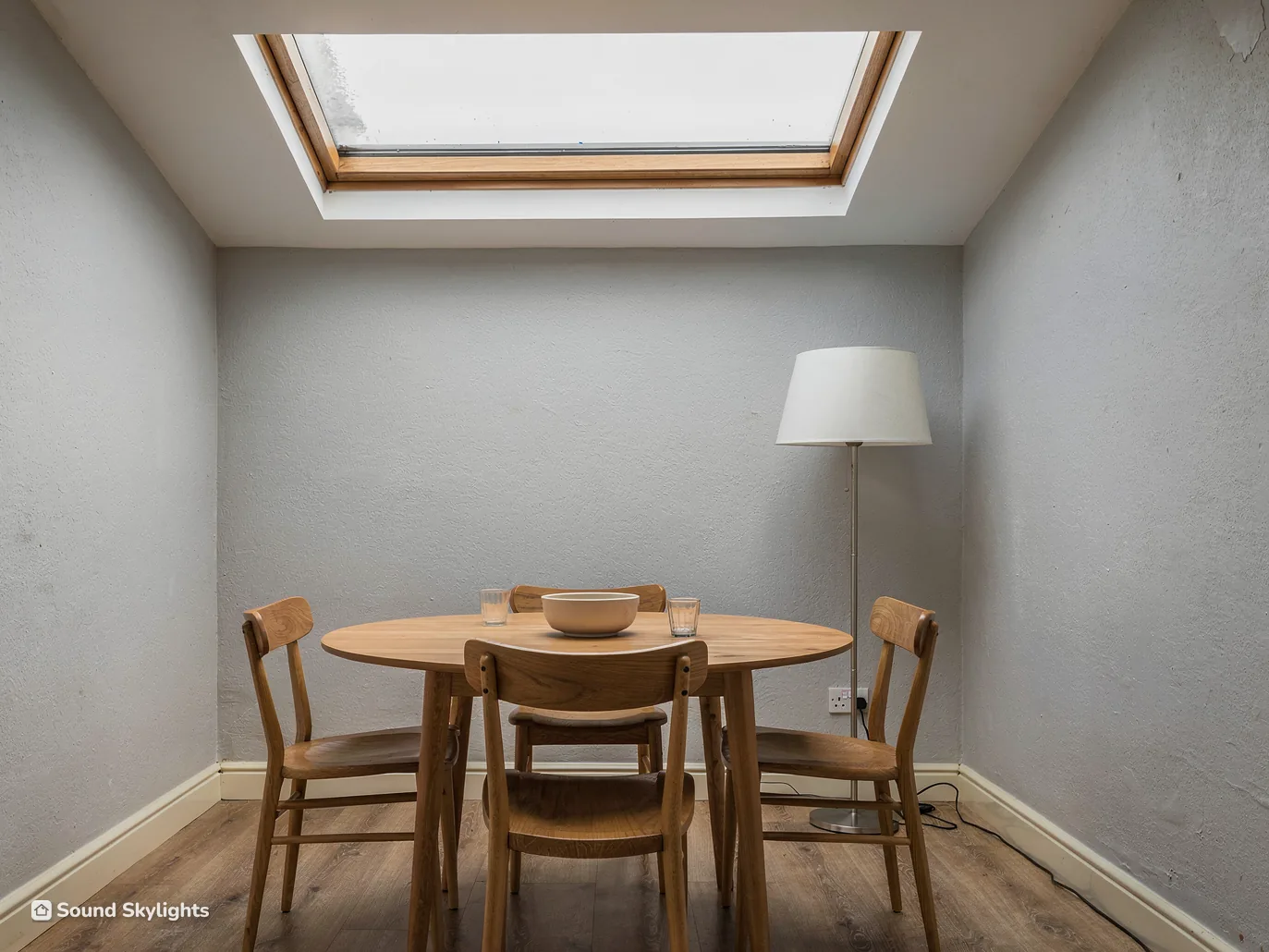
On a lower-pitched tiled roof, the space under the ridge is shallower than in an older steep roof. Whether it is enough for a room depends on how far above the floor the ridge reaches and where the trusses fall. A window can bring light and give a view, but a dormer may be needed to add headroom. We measure in the loft and on the roof so you are told plainly what is possible.

The stair

A loft room needs a stair, and in a bungalow the stair has to be fitted into rooms below. That sets which slope the window goes on and how it can be reached. A stair that climbs along the party wall leaves the opposite slope free, while one that rises in the middle of the plan pushes the window to wherever the head of the stair lands. We plan it with you before anything is ordered, so the room suits the person who will sleep or work in it. A new floor also needs a safe way out, and our Building Regulations guide explains the requirement. Where the work is notifiable, the notification for our roof windows is ours to send.

Opening and shading

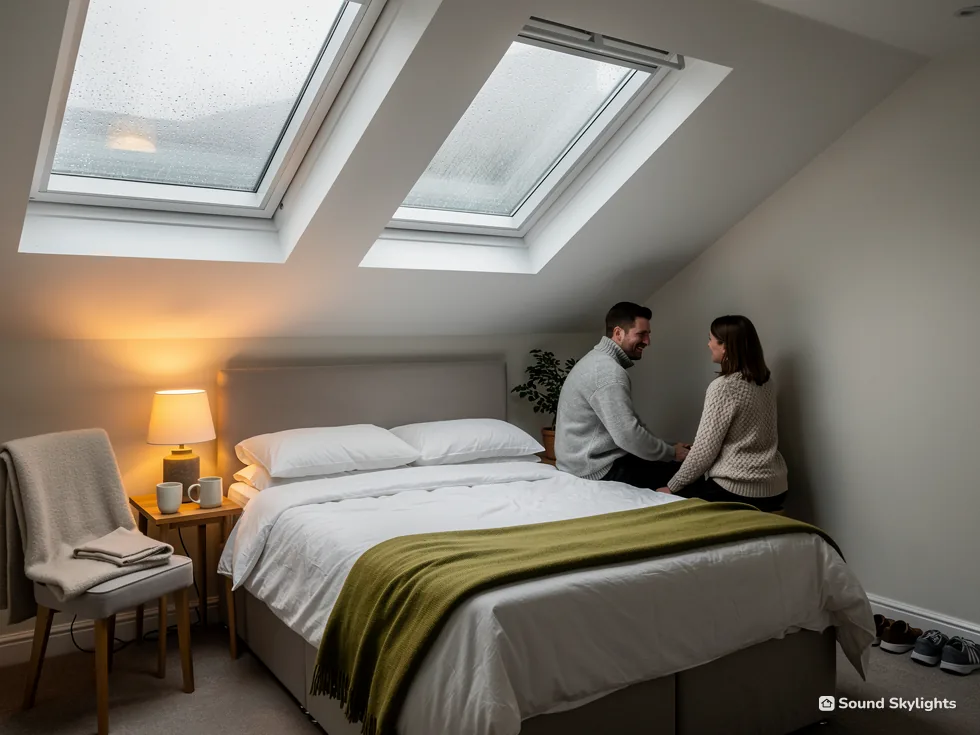
A window above a bed is high. Electric and solar versions open from a handset, so there is no need to climb, and VELUX makes blinds that run from the same handset. If children use the room, restrictors keep the opening limited, which our child-safe opening guide describes. Blackout is the usual choice for a bedroom.

Keeping it tidy

A roof window set in concrete tiles is wiped from inside if it pivots. We explain how the window you choose behaves at handover.

Who is it for?

Think about the person who will live up there. A teenager wants a window they can open without asking, a guest wants a blind that works first time, and an older relative wants a stair and a handle that do not demand effort. We note who it is at the survey, because the same loft can end up with three quite different specifications.

Our house is an older farm building near the church. What do we have to do first?

Away from the newer streets, Lowton has older buildings. Historic England lists buildings in the area, among them the Church of St Luke, a sundial at its west entrance and Fair House Farmhouse. If your home stands in that company, you should confirm its status before anything else. On a listed building, glazing in the roof almost always needs listed building consent, a step separate from planning and from Building Regulations.

Putting it to Wigan

Whether a conservation area touches your road is not something we guess. We put every address to Wigan Council ahead of the quote and pass the answer on. For a house that is not listed, the planning guide sets out the usual position, and a condition on an earlier permission can change it.

Old roofs, short rafters

An older farm building can have a roof that has been patched more than once, with rafters at uneven spacing and a covering of mixed age. A roof window has to be placed where the structure is sound, which is why the survey does the real work. We look at the roof from outside and inside the loft, and we talk through the room beneath it. A roof like this is also seen from the ground, so we pay attention to how a new window will sit against the existing covering, and to whether the old tiles can be cut back neatly around it.

Choosing for the setting

Where a roof is seen from a lane or a churchyard, a slim, flush window keeps the line of the roof. A conservation-style window is made for this, and the page on picking a conservation rooflight shows how the frames differ. The listed buildings guide, rooflights and listed buildings, explains consent step by step.

Old-house terms, explained

Listed
Entered on the national list for its special interest, which brings extra controls.
Rafter
A sloping timber that carries the roof covering.
Flush
Sitting level with the surrounding covering.
Dormer
A small projecting structure that adds headroom to a loft.

Across Lowton and its newer streets

Lowton

Lowton is within the ring shown on the map, which measures straight-line distance from Stockport.

Is your Lowton address in range?

Lowton is 24 road miles west of Stockport, and our area covers the developments built on the old works sites as well as the older addresses. Add your postcode to confirm.

Takes you to the survey form on this page and adds your postcode to any WhatsApp message.

Nearest town pages

Practical questions from Lowton homes

Who decides planning matters for a house in Lowton?

Wigan Council. We ask it about your address before the quote is fixed. Inspection of the building work is open to Wigan's building control team or to a registered building control approver, and notifiable work gets its Building Regulations notification from us.

Can a sun tunnel brighten a dark landing in an estate house?

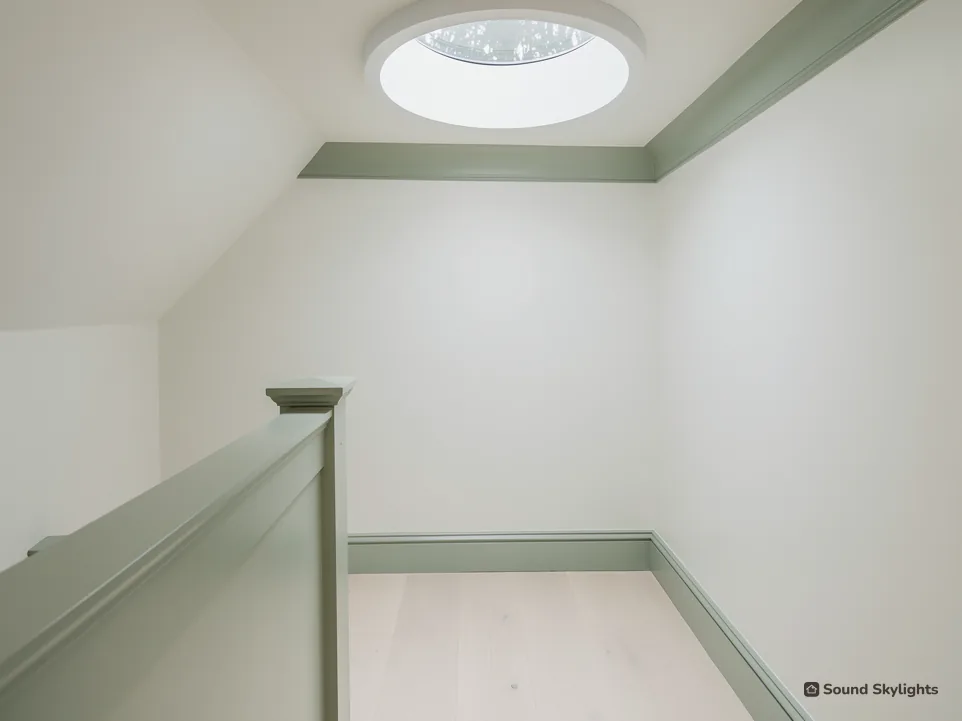
If there is loft space above, yes. A small dome on the roof and a tube bring daylight to a diffuser fitted into an opening cut in the ceiling. It is for light only: nothing opens and there is no view. Our guide to rooms that suit one has more.

Does the low pitch of a tiled roof limit which window I can have?

It changes how the window sits, not whether you can have one. On a shallow slope the glass lies flatter, so we check the reach and the handle position. A centre-pivot window is often easier to clean there. See centre-pivot or top-hung windows.

Who explains the blinds and remote at the end?

We do, at handover. Controls, blinds and cleaning are explained so whoever uses the window knows how it works before we leave.

Does Lowton's low ground change which window we choose?

Not in itself. The centre sits about 40 metres above sea level, so exposure is not something we build a decision around. The choice rests on the roof, the room and who will open the window each day.

When does the fixed written quote for a Lowton job arrive?

After the free survey, once the roof, the room below and the person who will open the window have all been looked at. Makers' guarantees on the products differ, and we talk you through them at that visit.

Free survey

Book your free survey

Tell us about the room and the roof. We visit, measure and send a fixed written quote for the job in Lowton.

  • Fixed written quote
  • We handle the Building Regulations notification where the work is notifiable
  • 10-year workmanship guarantee

Request my survey