Hadfield rooflights at the Peak District's edge

Skylights and rooflights for Hadfield's mill-built homes in Longdendale

Hadfield was developed by the mill-owning Sidebottom family on the southern side of the Etherow valley, known as Longdendale. We choose the rooflight by the room and by who will use it.

Takes you to the survey form on this page and adds your postcode to any WhatsApp message.

  • High Peak Borough Council checked for your address before we quote
  • At the Peak District's edge, with High Peak deciding planning for the town
  • Dark stairs and landings answered with a sun tunnel where the loft allows
11 road miles north-east of Stockport

Hadfield is a Derbyshire town, set beside Bottoms Reservoir on the southern side of the Etherow valley, which is known as Longdendale. The town lies between about 120 and 210 metres up, so one street can sit well above the next. The Sidebottom family developed the town around the Waterside and Bridge Mill complex they bought in 1820, and Station Mill followed in 1834 as a cotton mill. The mills had their own branch railway, and by 1880 they were running 293,000 spindles and 4,800 looms. In 1976 the Waterside site was redeveloped as the Hadfield Trading Estate.

A town made by its mills has houses from different decades laid over one another, and we do not guess which one yours belongs to. We ask. For an older house the questions are usually reach and cleaning, because a loft window sits high on a pitch. For a later house they are more about the room being added and the blind it needs. Either way, the survey is about how the room is used, who opens the window, and what happens to it when the house is empty.

Four fittings for a valley-side town

These suit Hadfield's mix of older and later houses, from a loft bedroom to a dark stairwell with nothing above it but the roof.

Rooflight questions from the Etherow valley side

Four questions that fit Hadfield: the empty house in the working day, the conservation area, the stairwell and the child's room.

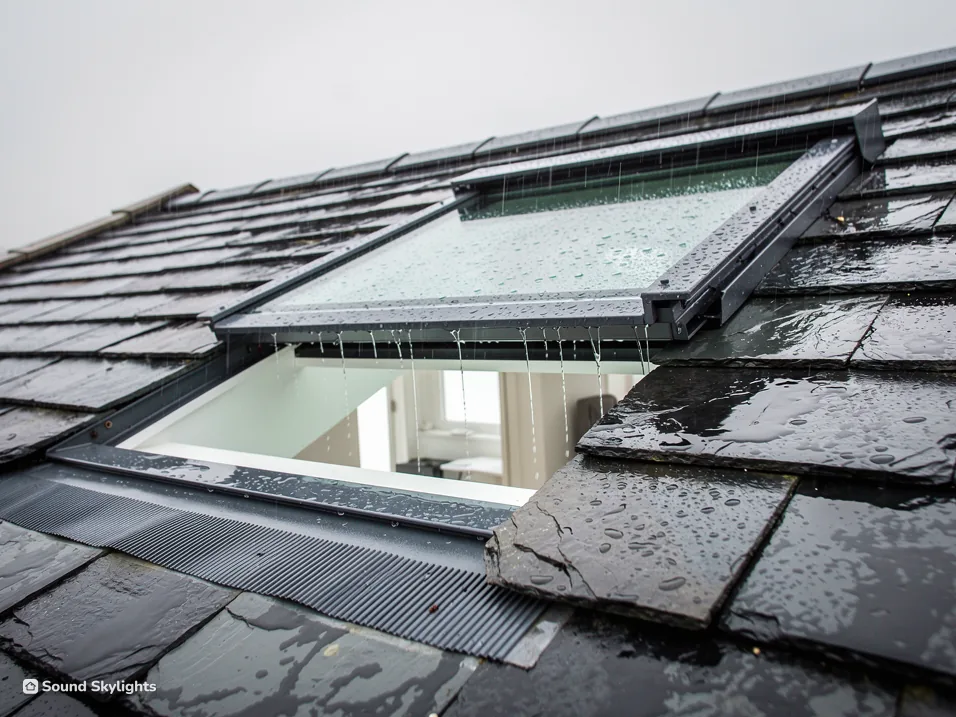
What happens to an open roof window if it rains while we are out?

Hadfield and Dinting stations serve the town on the Glossop line, and a household that catches the train leaves the house empty for the day. That is exactly when a window left on the latch gets rained on. It is the plainest reason to think about opening method before you think about the glass.

Three kinds of window

A manual roof window stays where you set it. If it is open when the weather turns, it is open until someone comes home. An electric window can be closed from a switch, and a solar one from a remote, so you do not need to climb anything. Some VELUX electric and solar models are made with a rain sensor that shuts the sash when it detects rain, which is the nearest thing to a window that looks after itself. The detail is in our guide to rain sensors.

Matching it to the room

A landing or study you rarely open needs only a latch. A bedroom you air every morning is a better fit for a motor, because the window is then closed again by the time you leave. We ask at the survey who is out all day, and who is home, and choose from there.

Blinds and the glass outside

The blind goes with the same remote where the maker allows it. The outside pane is cleaned in a way that depends on the roof, so we explain that before the order is placed. Controls are shown to you at handover.

A habit worth building

A window opened in the morning is worth a thought by lunchtime, whatever the forecast said. A rain sensor does that thinking for you when nobody is home, and a remote lets you do it from the kitchen when somebody is. Neither is essential. Both are worth pricing at the survey, next to the manual version, so you see what each adds.

Our street is in a conservation area. What do we need to know?

planning.data.gov.uk records conservation areas in the Hadfield area that include Hadfield itself and Tintwistle. High Peak Borough Council publishes its conservation area maps. Standing inside a boundary takes nothing away from you by itself. What can do that is an Article 4 direction or a condition on an earlier permission, which is why we look up your address before we quote.

The Peak District next door

The town stands at the Peak District's edge. Its centre is outside the National Park boundary, which runs within 2 km, and High Peak Borough Council is the planning authority there. Where a home falls inside the park, the National Park Authority deals with planning instead, so we check the address. Our planning guide explains how the position works in England.

Older buildings in the town

The national list in Hadfield includes the Old Hall and the Spinners Arms, both Grade II. A listed house is a separate case. The council will almost always want listed building consent first, and it decides the design. See listed houses and rooflights.

The list also names the Roman Catholic Church of St Charles Borromeo with its presbytery, and 5 and 7, the Cross. If your home is one of the listed ones, tell us at the first call, because it changes the order of work: consent comes first and the quote follows from what it allows.

If a low-profile unit suits

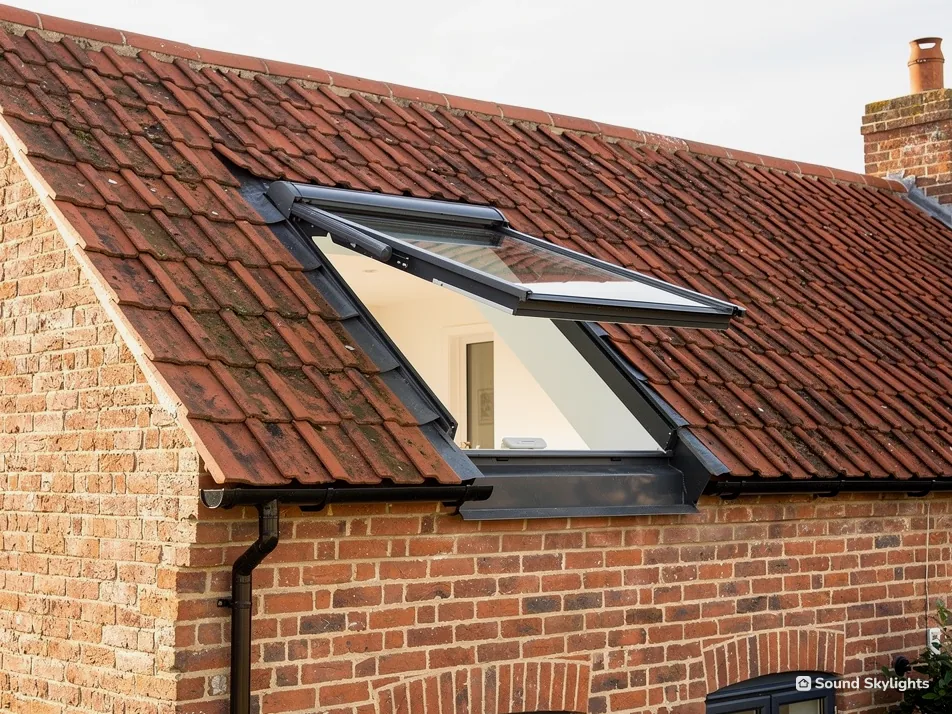
Where the roof is old and the street is looked after, a conservation-style rooflight that sits close to the covering is worth a look, whether or not anyone requires it. We bring the choices to the survey.

Terms you may see on the council's pages

Rights taken away
A council order for a stated area can remove certain permitted development rights, so an application is then needed.
Planning condition
A requirement on an earlier permission that can strip rights from one house.
Authority
The body that decides planning. For the town that is High Peak Borough Council; inside the National Park it is the Park Authority.
Grade II
The listing grade for buildings of special interest.

Which stairwell or landing can take a sun tunnel, and which cannot?

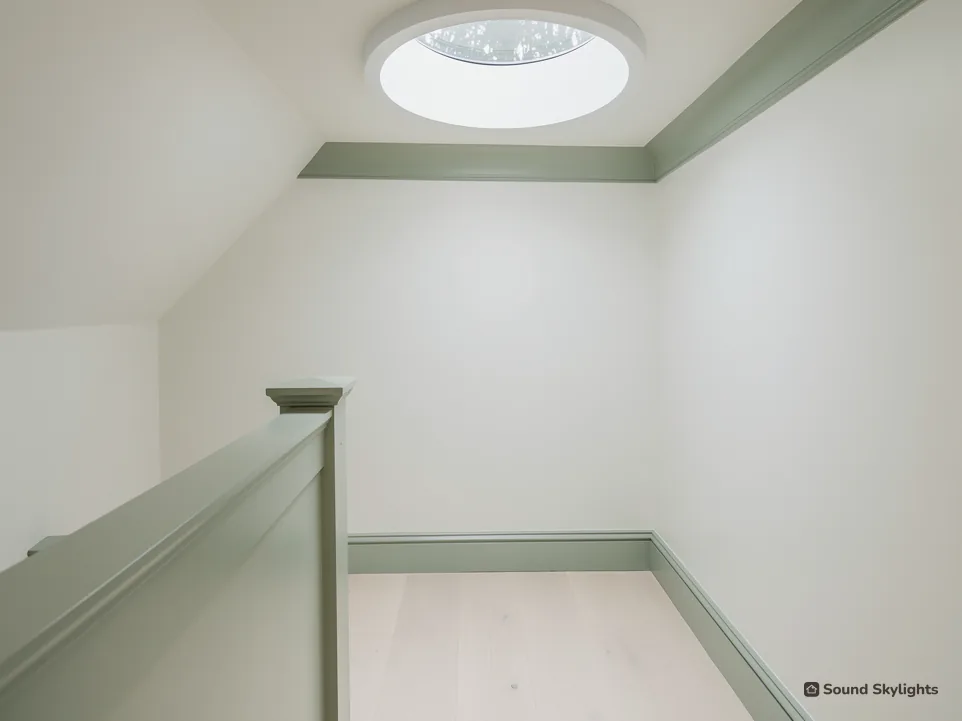
A stairwell with no window of its own is one of the darkest corners of a terraced or semi-detached house. A sun tunnel lights it without a loft conversion. A dome on the roof, a tube through the roof space and a diffuser in the ceiling bring daylight to the landing. It has no sash and no outlook.

What decides it

Three things settle whether a landing can take one. There must be roof space above it. The tube needs a fairly straight run from roof to ceiling, because every bend loses some light. And the loft should not already be a room. If the space above has been floored and fitted out, a roof window to the loft room is usually the better route. Our page on the rooms a sun tunnel suits sets out the ones that work. The landing is usually the first room to ask about, and a bathroom with loft space above it is the second.

What it asks of you

Almost nothing. There is nothing to reach and nothing to open, and the dome needs a clean from outside now and then. Choosing between a rigid tube and a flexible one comes down to the run, and rigid or flexible sun tunnels compares them.

Rules in a sentence

The dome is an alteration to the roof, so the position in the planning guide applies to it, and we confirm it for your address with High Peak Borough Council before work starts.

For a windowless stairwell

Look up at the ceiling above the landing. If you can see loft space, a tube probably fits.

Is a roof window safe in a child's loft bedroom?

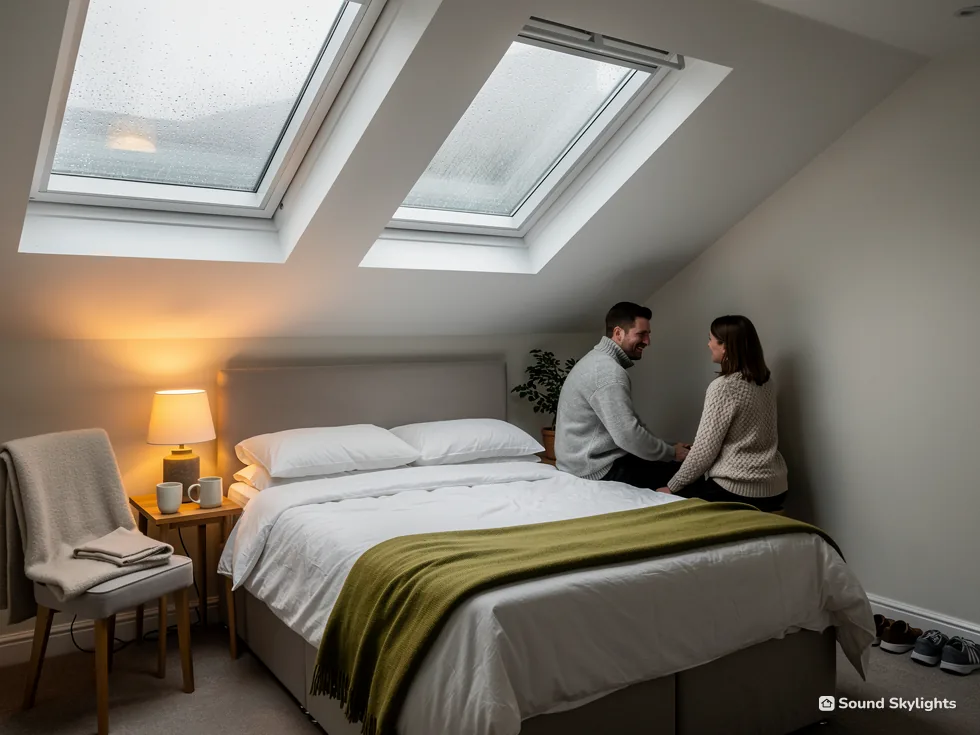
A loft bedroom is a common place to put a child's room, and the window in it sits close to the floor of the room in a way a wall window does not. Whether that matters depends on the child's age and on how the window opens.

Opening that suits a child's room

A window that opens only part way, with a restrictor, is the usual choice for a young child. A motor opens a window by a switch that a child can press, so the control is kept out of reach or locked. A manual window with a high handle is out of reach by design. If this is the room's escape window, though, a restrictor or lock must still let an adult open it all the way, so we ask which window that is. Our guide to child-safe opening rooflights goes through the options in more detail.

Blinds for sleep

Children often need the room dark in the evenings in summer. A blackout blind on the same window handles that. VELUX blackout blinds run in side channels, so they stay in place when the sash is open. We talk this through at the survey, because a baby's room and a teenager's need different things.

As the child grows

The room changes faster than the roof does. A window chosen for a toddler should still suit a teenager who wants the room dark on a summer morning and the air moving in the afternoon, so we favour controls that can be changed later over ones fixed for one age. A free survey is the place to talk about that, with the room and the roof in front of us.

Paperwork

If the loft is becoming a room, leaving it safely is dealt with in the Building Regulations guide. Where the job is notifiable, we make the Building Regulations notification ourselves.

A child's loft room, drawn up

Window
Roof window with a restrictor, sized to the rafters
Opening
Pole or high handle, or a motor with the control out of reach
Blind
Blackout, worked by hand or remote
Handover
Controls and cleaning shown before we leave

Where in Hadfield we work

Hadfield

The ring on the map is a straight 30-mile line out from Stockport in every direction, and Hadfield falls well within it.

Hadfield postcode check

Hadfield is 11 road miles north-east of Stockport, and every part of it is within our reach. Type your postcode to see whether we cover your street.

Takes you to the survey form on this page and adds your postcode to any WhatsApp message.

Nearest town pages

Hadfield households, answered

Which council decides planning for a house in Hadfield?

High Peak Borough Council for the town, whose centre lies outside the Peak District National Park. A home on the edge that falls inside the park boundary would go to the National Park Authority instead, so the address is checked first. The Building Regulations side can be handled by the council's building control team or else a registered building control approver.

Can I replace an old roof window with the same size?

Usually, yes. A new window that matches the old opening goes into the same position and the lining inside stays. Look for the size code on the label. See finding your VELUX size code.

Does a sun tunnel work in a stairwell with a bend in the loft?

It can, with a flexible tube, but each bend costs some light, so we measure the run at the survey before we promise a result. A straight run does the best job. See sun tunnels.

How do I find out whether my street has a direction on it?

High Peak Borough Council publishes its conservation area maps, and planning.data.gov.uk holds a public record that can be incomplete. We put your address to the council as part of the survey, so you do not have to.

Will a loft window light the stairs below it as well?

Not reliably. A roof window over a loft room is chosen for that room, and the stairwell gets light only if the opening happens to line up with it. A sun tunnel is the usual answer for stairs, and we compare the two at the survey, looking at your actual roof space.

What comes with the work once it is finished?

A finished Hadfield job, whether a landing sun tunnel or a loft window, brings our 10-year workmanship guarantee and a walk through the controls, blinds and cleaning. Makers' own guarantees on products vary, so we say which applies to the model you choose. See our guarantee.

Free survey

Book your free survey

Tell us about the room and the roof. We visit, measure and send a fixed written quote for the job in Hadfield.

  • Fixed written quote
  • We handle the Building Regulations notification where the work is notifiable
  • 10-year workmanship guarantee

Request my survey