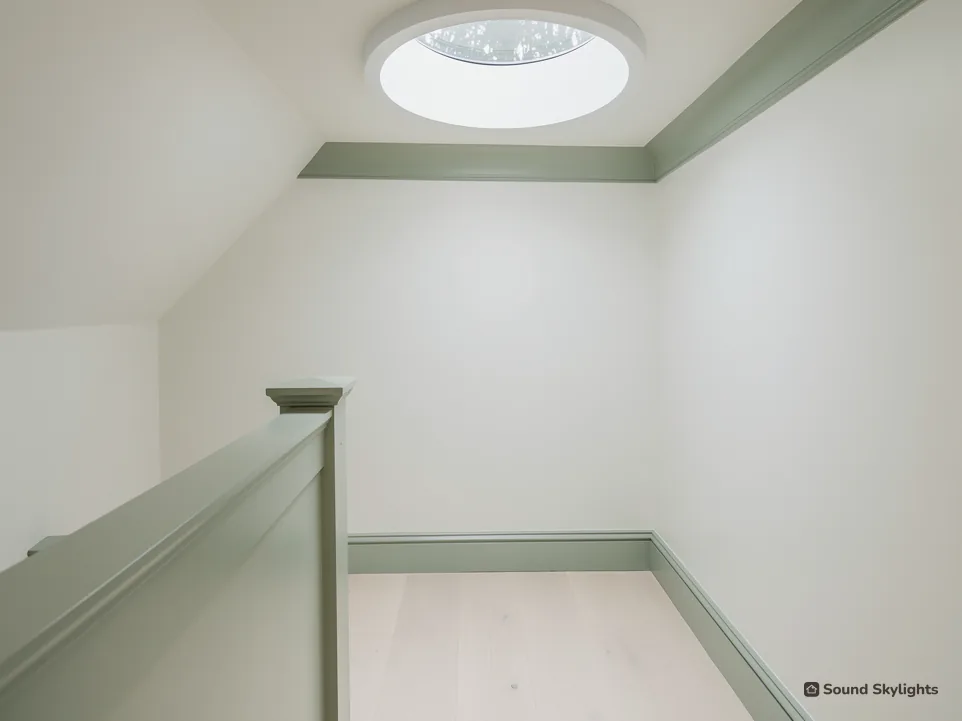

Our flat is in a converted mill. Who can reach the rooflight, and who can clean it?
Dukinfield's largest cotton mills were built in brick in the 1890s, four or five storeys tall, and most of them have been demolished. Some were kept and converted into flats. If you live in one, the roof above you may not be yours alone, so the first question is who is responsible for it. Ask the freeholder or the managing agent before you plan anything. We cannot tell you that from the pavement, and it saves a wasted survey.
Flat roofs and big panes
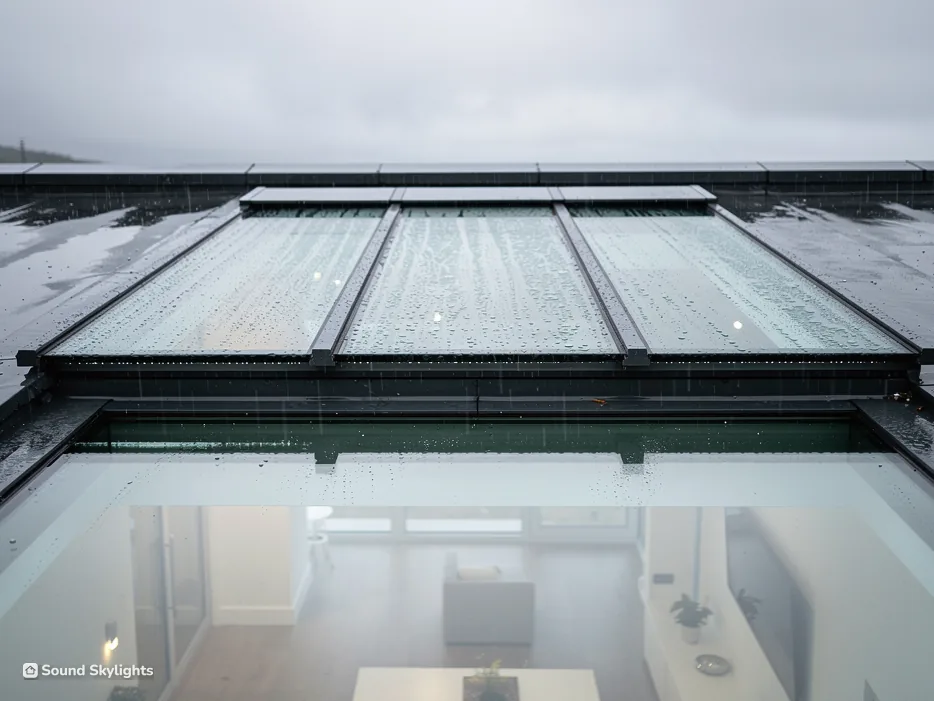
Where a flat has a flat roof above it, a flat rooflight is the likely answer. It sits low on its upstand and lets in a wide sheet of daylight. A fixed pane asks nothing of you day to day. An opening one can be worked from a wall switch or a remote, which suits a high ceiling. Our guide to the best rooflight for a flat roof goes through the choices.
Cleaning the outside
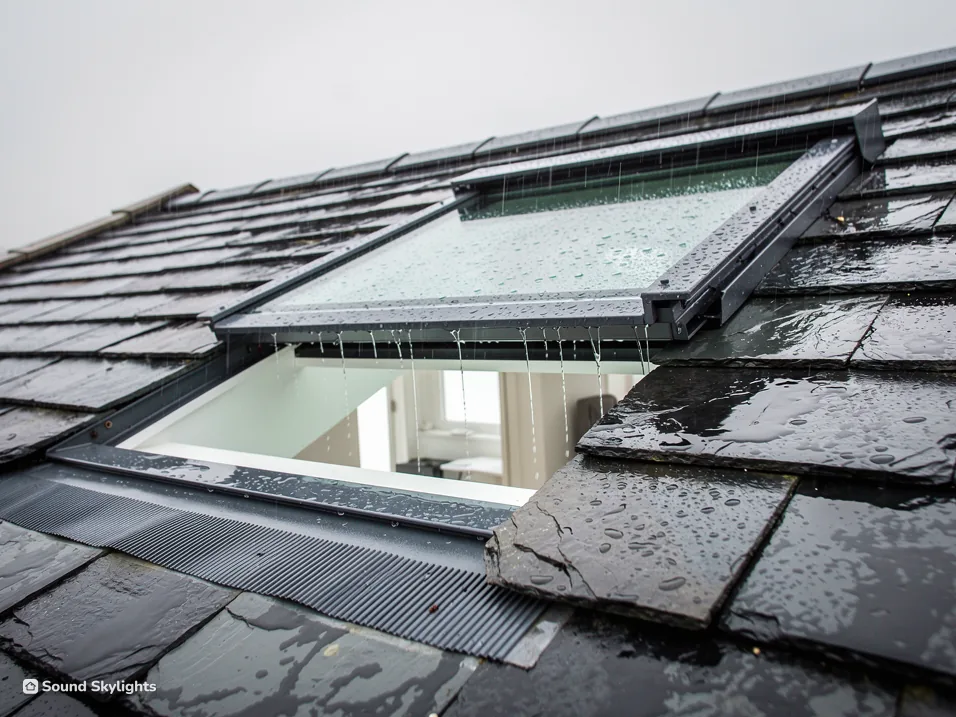
The outside glass of a flat rooflight collects dirt that rain does not shift. If somebody has to reach it from the roof, that person needs a safe way up and the glass needs to bear their weight. A walk-on rooflight is made to be stood on. For an ordinary one, we explain at the survey how the glass is reached and whether a self-cleaning coating on the outer pane would help.
Getting out
If the rooflight is part of an escape route, the details come from the Building Regulations guide, and we work them through with you.
Light for a long room
Mill buildings have deep floors. A flat in one can have a living area a long way from the nearest window, and a rooflight above the dark end is where the extra light does most good. Think about where you sit in the evening and where the blind will need to reach. A wide pane on a high ceiling is not a window you can pull a blind across by hand, so the blind should come with a motor or a pole. We ask about that before we suggest a size.
Mill flat, first step
Find out who owns the roof before you choose the glass.