Bollington, where the cotton mills still shape the roofs

Skylights and rooflights for Bollington's stone mill cottages and converted mills

Bollington was a major cotton-spinning centre, and mill cottages and terraces on this Pennine edge are commonly gritstone under stone-slate or Welsh-slate roofs. We choose the rooflight for the room and for whoever has to open, shade and clean it.

Takes you to the survey form on this page and adds your postcode to any WhatsApp message.

  • Stone mill cottage roofs surveyed before any rooflight is chosen
  • Mill-conversion flats: we sort out the freeholder question with you first
  • Your address checked with Cheshire East Council ahead of the fixed written quote
11 road miles south of Stockport

Bollington sits on the River Dean and the Macclesfield Canal, on the edge of the Peak District, and from the late 18th to the mid-20th century it was a major centre for cotton-spinning. The mills are the story of the place: Clarence Mill still stands on Clarence Road with flats on its upper floors, Defiance Mill on Queen Street dates from around 1800 and has been restored for homes, and a traditional stone mill survives among the later brick buildings at Lower Mills.

That history sets the brief for a rooflight. The cottages and terraces that grew up around the mills are commonly built of local gritstone under stone-slate or Welsh-slate roofs, and the conversions bring flats under old roof structures. In both, the daily questions are the same ones: who can reach the opening, how the blind copes with the sun, and how the outside of the glass gets cleaned. Every survey starts there, and the fixed written quote follows.

Rooflights that sit well on stone and slate

These four suit the cottages, terraces and mill conversions here, whichever room is short of daylight.

Close-up of a white roof window handle with its key lock

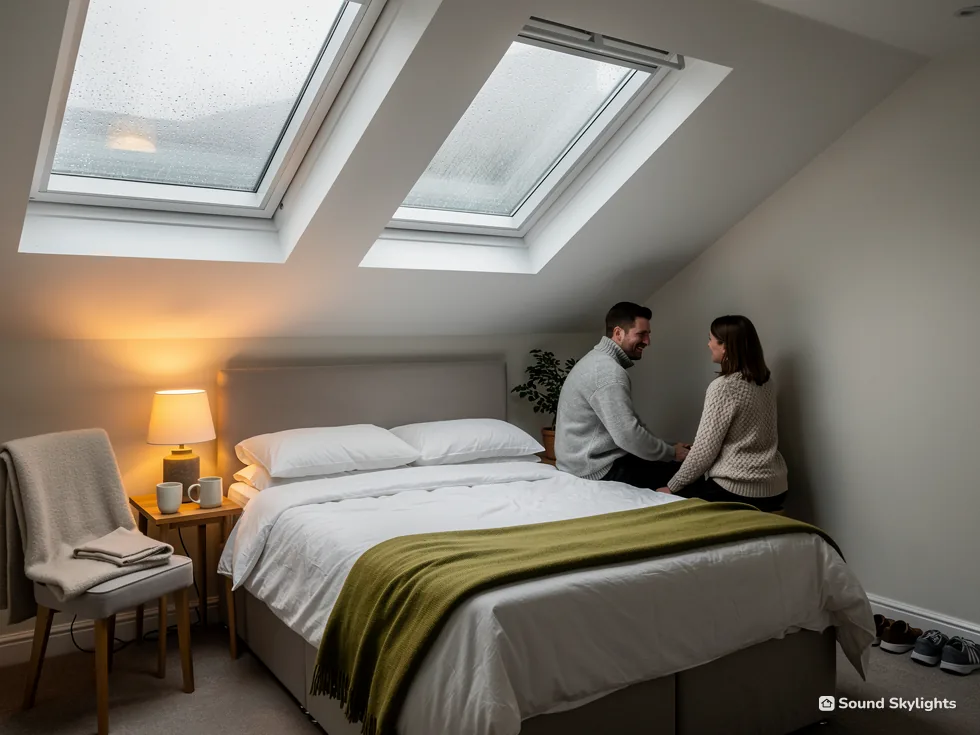
Living under a rooflight in a mill-town house

  • In a cottage with a low eaves line the window may be within reach, while a stairwell opening is not. We match a rod or a motor to the spot.
  • A top-floor mill flat gets strong sun through the roof. A pleated or roller blind on the window's own control keeps the room usable.
  • A flush window on a stone-slate roof is cleaned from inside or with a pole, and we show you which before we go.
  • The free survey is where we look at the roof, the stairs and who lives in the house.

What Bollington's mill-era roofs ask of a rooflight

From cottages beside the canal to flats in a converted mill, these are the questions that come up when a rooflight is planned here.

Which rooflight sits properly on the roof of a stone mill cottage?

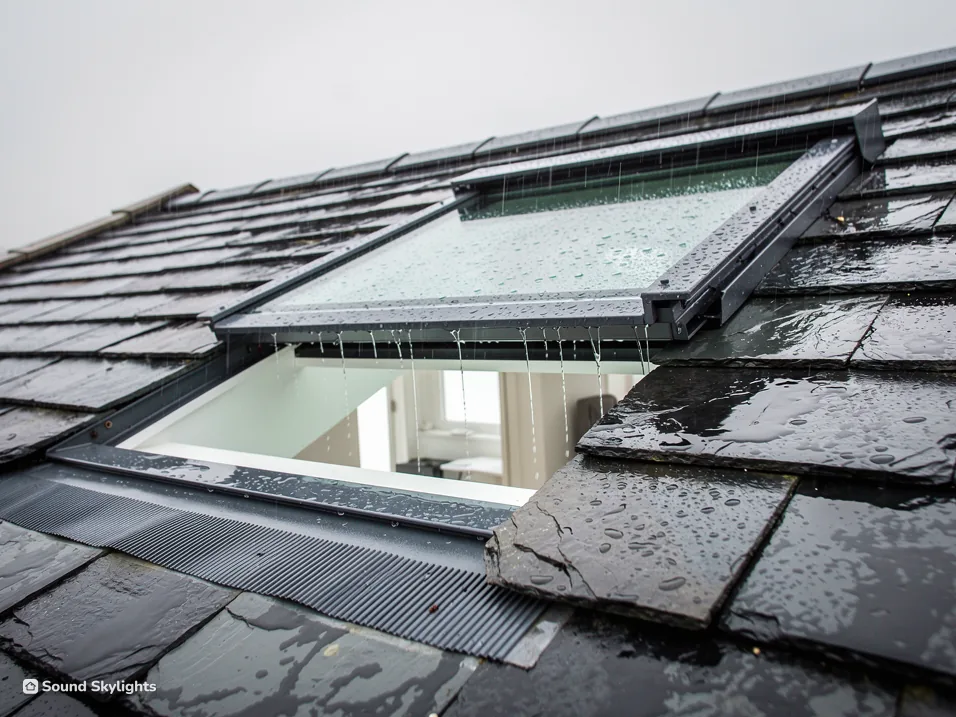
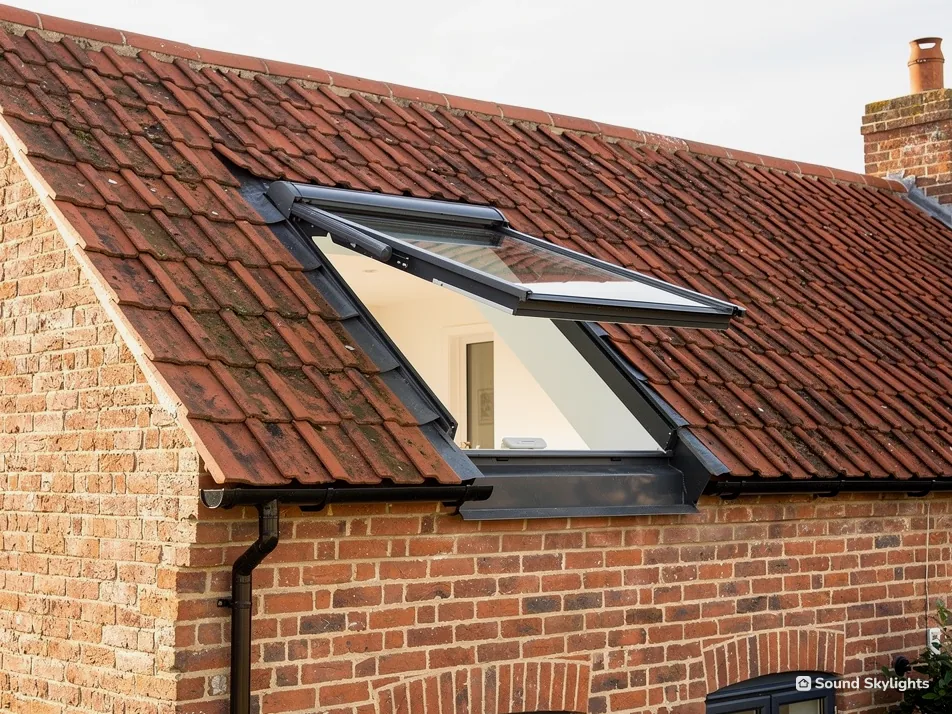
Stone cottages and terraces on the Pennine edge of Cheshire are commonly roofed in stone slate or Welsh slate, on moderate pitches. The covering is heavy, and the roof can often be seen from the street. A rooflight here should look as if it belongs to the roof, not stand off it.

Flush rather than raised

A conservation-style roof window is made to sit low in the slope with slim frames and a central glazing bar, so it follows the line of the slates. The flashing is dressed to your own covering, which is why we look at the slates close up before ordering anything.

Who reaches it

On a cottage the window can sometimes be placed within an arm's length of a landing, so a plain handle is enough. Over a stairwell or above a bed it is out of reach. A manual window can be worked with a pole, while an electric or solar one opens from a handset, which suits a bedroom window used each morning. Our guide to choosing a conservation rooflight explains the frame and glazing options.

Keeping the glass clear

A window in a stone-slate slope cannot be reached from a ladder without risk, so we ask how it will be cleaned before it is fitted. Some roof windows pivot so the outer pane can be wiped from indoors. We explain that at handover rather than leaving you to find out.

A cottage rooflight, room by room

Roof
Stone slate or Welsh slate
Window
Flush conservation style, flashed to your slates
Opening
Handle, pole or remote, by the height
Outside glass
Wiped from indoors where the window pivots

Sizes and positions are fixed at the survey.

We have a top-floor flat in a converted mill. Can it have a rooflight at all?

Clarence Mill has flats on its upper floors, and Defiance Mill has been restored for people to live in. A flat in a mill like these sits inside a building that belongs to more than one person. The roof, and sometimes the structure under it, is not yours alone, and a lease may say what you can change. Clarence, Adelphi and Lowerhouse are notable 19th-century mill buildings in the north-west, and a building made for spinning cotton was never planned around a bedroom window, so each roof has to be read afresh.

Ask first, then survey

A rooflight on a flat needs planning permission and usually the freeholder's consent. Before we can quote, we need to know who owns the roof, and your lease or the managing agent will tell you. If a rooflight is allowed, the free survey looks at what is above the ceiling, how the old roof is built and where a window can sit without cutting into anything that carries weight.

Sun on a top floor

A top-floor room under a pitched roof can get a lot of sun. A blind is not a luxury here, it is the part you will use most. VELUX makes blinds that run from the window's own controls, and there are pleated and roller types as well as blackout. We talk through which suits the room, and whether a bedroom, a living room or a study is under the glass.

Paperwork

A new window in a flat is building work. The Building Regulations notification is ours to file when the work needs one, and the Building Regulations guide sets out what applies. Planning permission for a flat is covered in the planning guide.

Before you order

In a shared mill building, settle who owns the roof first. Planning permission for the flat follows, and the planning guide sets it out.

Our farmhouse is listed. What happens if we want a rooflight?

Historic England lists buildings in Bollington, from Sowcar Farmhouse and Bollington Hall Farmhouse to Adelphi Mill and Moss Cottage. If your house is on the list, the first question is not which window but whether one can be added.

Consent comes first

On a listed house, a new roof opening almost always needs listed building consent beforehand; our guide to rooflights and listed buildings sets out how that works. That consent is separate from planning and from the Building Regulations, and each is checked on its own.

If the house is not listed

Whether a conservation area touches your road is something we do not guess. For every address the position is checked with Cheshire East Council ahead of any quote, and you hear the result. For a house that is not listed, the rules for adding a rooflight are in the planning guide.

What the survey is for

On a farmhouse the survey looks at old timbers, thick walls and an uneven roof, all of which change where a window can go. The rooflight is then chosen to be slim and flush, and fitted so the roof still reads as the roof it was. Local gritstone, with a roof of stone slate or Welsh slate, is the common build for a cotton-mill terrace here. Where the roof can be seen from the road, we look at that before anything is chosen.

Terms for an older house

Consent for listed work
The council's approval for changes to a listed building that affect its character.
Flush fit
A rooflight set low in the slope so it follows the roofline.
Flashing
The metal dressing that makes the join with the roof covering watertight.
Notifiable work
Building work that has to be notified to building control.

Would a sun tunnel brighten the dark stairs in our terrace?

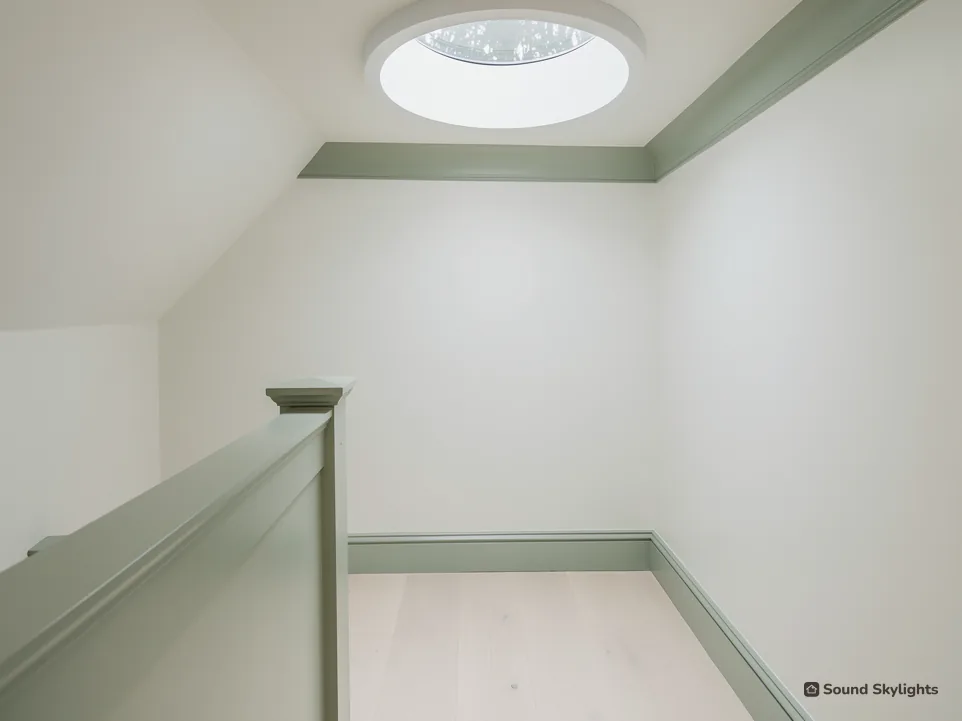
In a stone terrace from the cotton-spinning years, the hall and landing can end up the darkest part of the house. If there is loft space above, a sun tunnel is a neat way to bring daylight down.

What it is and is not

A sun tunnel is a small roof dome joined by a tube to a diffuser fitted into an opening cut in the ceiling. It carries daylight but does not open, give a view or bring in a breeze. That makes it a good match for a landing or a bathroom, and a poor one for a bedroom where you want to look out. Our page on rooms for sun tunnels goes through the options.

Rigid or flexible

A rigid tube carries more light over a straight run. A flexible one bends round roof timbers and a chimney breast. The choice depends on what sits between the roof and the ceiling, which we see at the survey. Our note on rigid and flexible sun tunnels sets out the difference.

Planning and regulations

A sun tunnel is an alteration to the roof, and the planning and Building Regulations note covers what applies. We handle the notification where the work is notifiable. Cleaning is usually just the dome, wiped when the roof is reached for another reason.

Round the mills and along the canal

Bollington

Bollington sits well within the ring on the map, whose radius runs as the crow flies out from Stockport.

Is your Bollington address covered?

Bollington is 11 road miles south of Stockport, and our area takes in the canal-side cottages and the converted mills. Put your postcode in the box to see where you stand.

Takes you to the survey form on this page and adds your postcode to any WhatsApp message.

Nearest town pages

Bollington roof and rooflight queries

Which council do we deal with for a Bollington house?

Cheshire East Council is the planning authority. Sign-off of the building work can come from Cheshire East's own team or from a registered building control approver. We check your address with Cheshire East before we quote, and notification under the Building Regulations is something we deal with for notifiable work.

Is Bollington inside the Peak District National Park?

No. The town sits on the edge of the Peak District, and its centre is outside the National Park, whose boundary runs within 2 km. Some homes near that boundary may be inside it, where the National Park Authority deals with planning, so we check each address.

Can an old roof window in a cottage be swapped without redoing the plaster?

Often it can. If the new window matches the old opening, the lining inside can stay. The size code on the old window tells us. See new opening or same opening for how we decide.

What shade works best for a sunny top-floor room in a converted mill?

That depends on the room. A bedroom usually wants blackout. A living room or study often does better with a pleated or roller blind that cuts glare and still lets in light. Our blinds and controls guide covers the options.

Does living by the canal or the river change which rooflight we pick?

Not in itself. The River Dean and the Macclesfield Canal are part of the town's setting, but the choice still comes down to the roof covering, the height of the window, the room beneath it and who will use the controls each day. We work that out at the survey.

Do you give a written price after the survey?

Yes. After the free survey you receive a fixed written quote, and the fitting on your cottage or flat comes with our 10-year workmanship guarantee. Makers' guarantees on the products differ.

Free survey

Book your free survey

Tell us about the room and the roof. We visit, measure and send a fixed written quote for the job in Bollington.

  • Fixed written quote
  • We handle the Building Regulations notification where the work is notifiable
  • 10-year workmanship guarantee

Request my survey