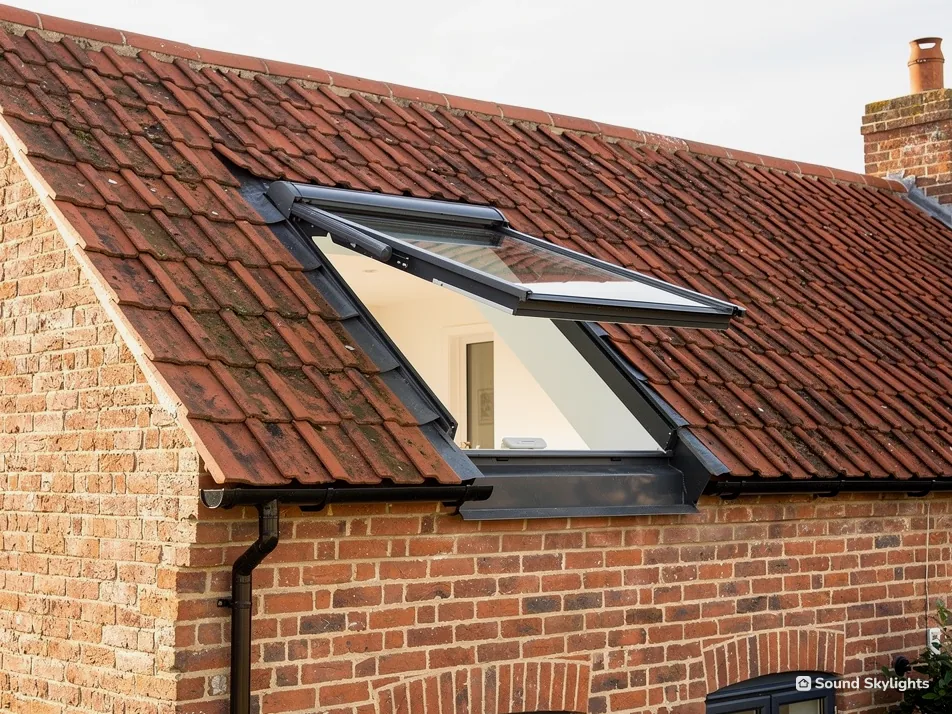
Our house is stone with a stone-slate roof. Can a rooflight sit in it without looking wrong?
Pennine foothill towns in South Yorkshire commonly have gritstone houses with stone-slate or Welsh-slate roofs, and sandstone flags were quarried in Penistone. A new window in a roof like that has to fit the slope it sits in. We look at what covers your house, how thick the slates are and what holds them up before we say anything about a model.
Why a flush window suits
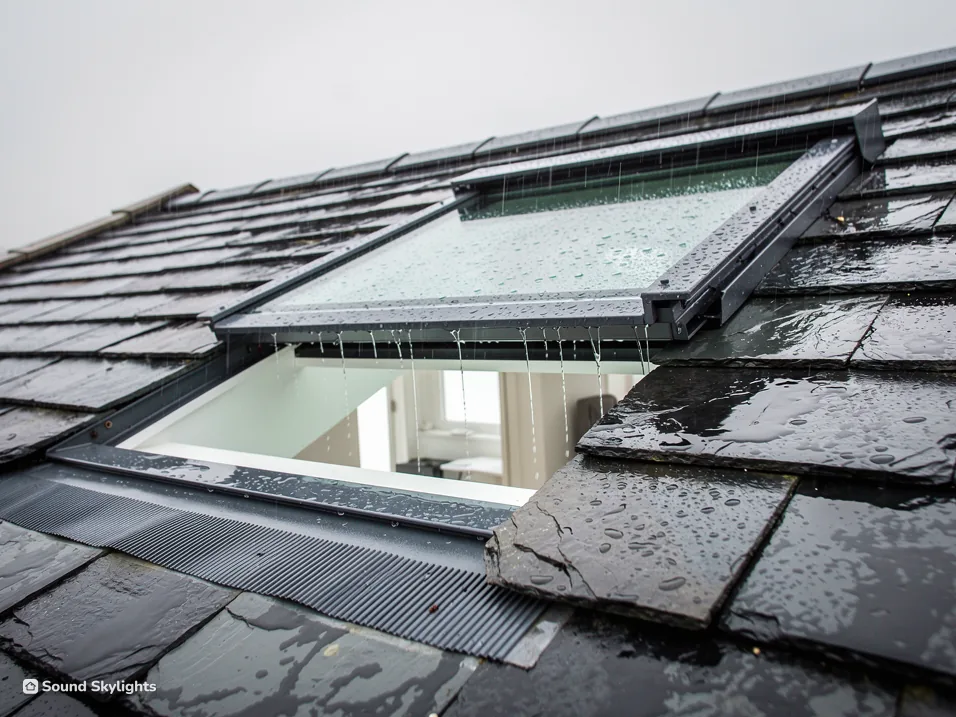
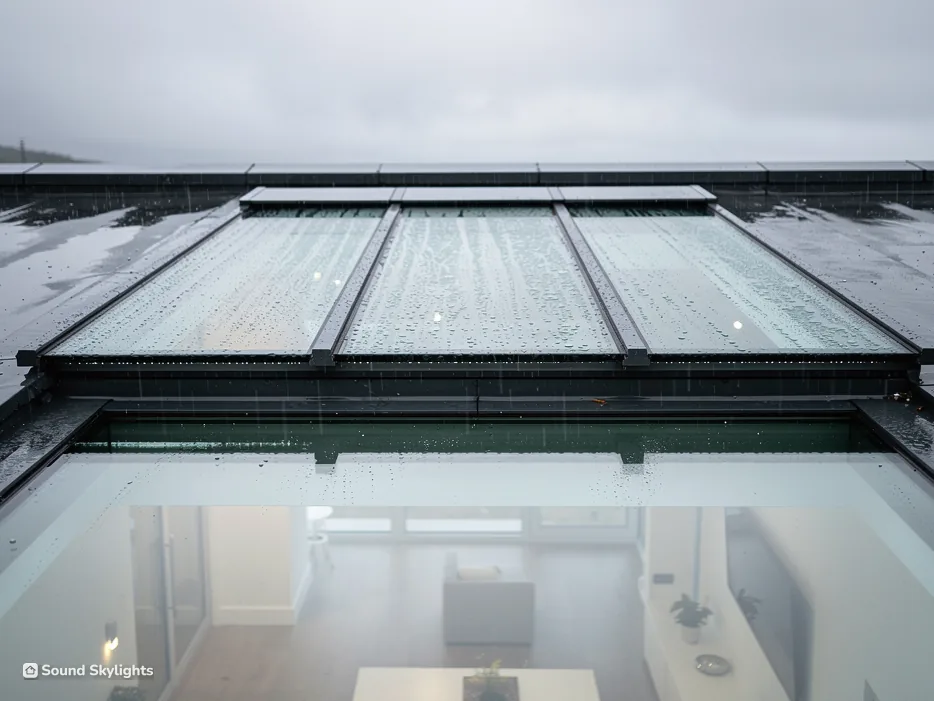
A conservation rooflight sits low in the slope with a slim frame and a central bar, so from the lane it looks like part of the slope rather than a plastic box set on top. It is built for older roofs and is usually double glazed. The page on choosing a conservation rooflight sets out what to compare.
The flashing follows the covering
Every roof window needs a flashing kit made for the covering around it. Stone slate is heavier and less regular than machine-made slate, and the surround is dressed to suit it. A page on how flashing meets slate and tile shows why we check the covering first.
Opening it
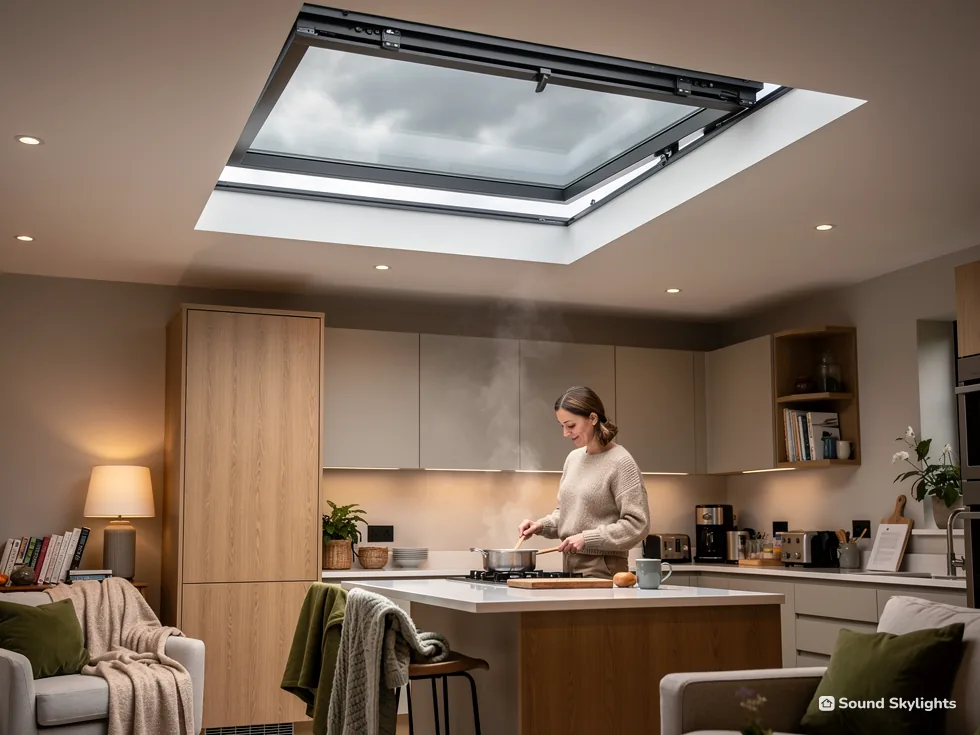
A conservation rooflight can be fixed or opening. If you want to open it daily, a motor or a remote is easier than a handle. If it lights a landing, fixed may be enough. We decide with you, room by room.
Blinds under old stone
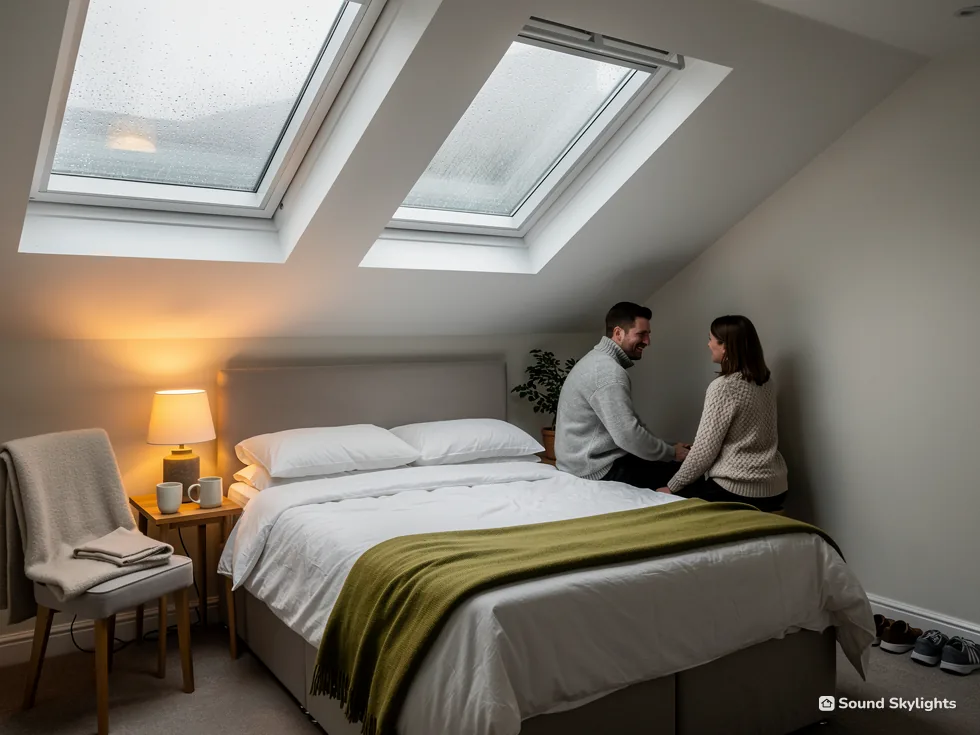
A bedroom under a stone roof wants blackout, in a blind made for a sloping window. A landing can go without. A light fabric in a kitchen keeps the room bright while cutting glare. If the window is out of reach, the blind can be worked by the handset that opens the window, so there is only one control to find.
Roof words from a stone-slate survey
- Stone slate
- A roof covering of thin split stone, heavier and less even than machine-made slate.
- Flashing
- The metal surround that keeps water out where a window meets the roof.
- Flush
- Sitting low in the slope, with the glass close to the line of the slates.
- Rafter
- The timber under the covering that the window is sized to fit between.