Swinton homes and their dark landings

Skylights and rooflights for homes in Swinton, a former brickmaking town

Swinton was a mill town and coal mining district, and its bricks went into the Bridgewater Canal. We fit rooflights that light dark landings, lofts and back extensions, and that are easy to open, shade and clean.

Takes you to the survey form on this page and adds your postcode to any WhatsApp message.

  • Article 4 directions cover parts of Swinton, so every address is checked first
  • A dark landing gets a roof window or a sun tunnel, picked for who uses it
  • Back extensions suit a flat rooflight or lantern, with blind and cleaning planned
17 road miles north-west of Stockport

Swinton is a town in the City of Salford, Greater Manchester. By the middle of the 19th century it was an important mill town and coal mining district, with factories and brickworks. Collieries opened during the Industrial Revolution, and coal fuelled cotton spinning and brickmaking. Swinton bricks were used for industrial projects including the Bridgewater Canal, which passes the town to the south.

For a rooflight, the practical points are close to home. If your house is a brick terrace or an interwar semi, the dark places can be the landing, the stair and the room at the back. The questions are how a window or a sun tunnel will light them, who opens it and how, and how the outside glass is cleaned. Because Article 4 directions cover parts of Swinton, your address goes to Salford City Council ahead of the quote, and you hear what comes back.

What suits a former mill town's homes

These five cover landings, lofts and back extensions, each chosen for who uses the room and how high the window will sit.

Swinton's landings, lofts and back rooms

Homes in a former mill town raise their own questions. These are the ones we are asked on Swinton surveys.

Parts of Swinton carry Article 4 directions. What does that mean for a rooflight?

planning.data.gov.uk records Article 4 direction areas in Swinton. Such a direction is a council order: inside its boundary, work that would normally go ahead without an application may need one. What each direction covers is not something we assume, so we put your address to Salford City Council before we quote.

Why we do not guess

Two houses on neighbouring roads can sit on different sides of a boundary. A rooflight that needs no application in one place may need one in another. Our planning guide covers the national rules for a house, and the council's records settle your address.

Older buildings in Swinton

Swinton's Historic England entries include Wardley Hall at Grade I, the Church of St Peter at Grade II* and Wainwright's Farmhouse at Grade II. Should your own house be listed, consent for a listed building will almost always be needed for a new or altered rooflight, and the council decides the design. The guide to rooflights on listed homes explains what that involves.

What the check looks like

The check works like this. We take your address, look it up against the council's records and the Article 4 areas, and tell you what we find before you spend anything. If the answer is that an application is needed, we say so plainly, and you decide whether to go ahead with that route or choose a different design.

What to bring to the survey

If you have had work done to the roof or the house before, or know of a condition attached to an earlier planning permission, tell us. A condition on an earlier permission can remove rights that a house would otherwise have, and it is worth knowing about before a window is ordered.

Planning terms for a Swinton address

Article 4
A council order that switches off certain freedoms to build without applying, inside a marked boundary.
Permitted development
Work the national rules let you do without a planning application.
Earlier condition
A restriction attached to a past planning permission that can still apply.

The landing in our brick house is dark. Is a roof window or a sun tunnel better?

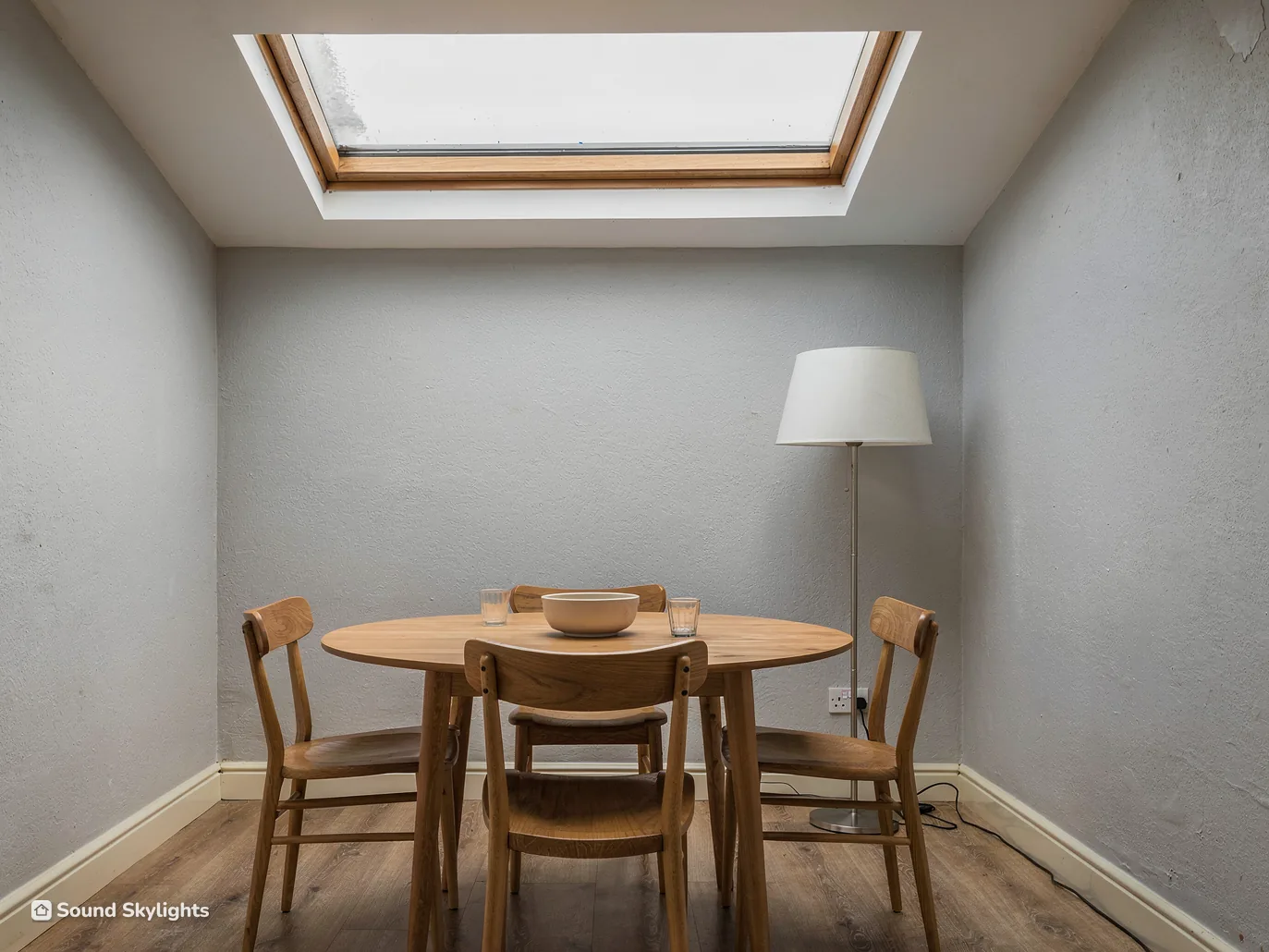
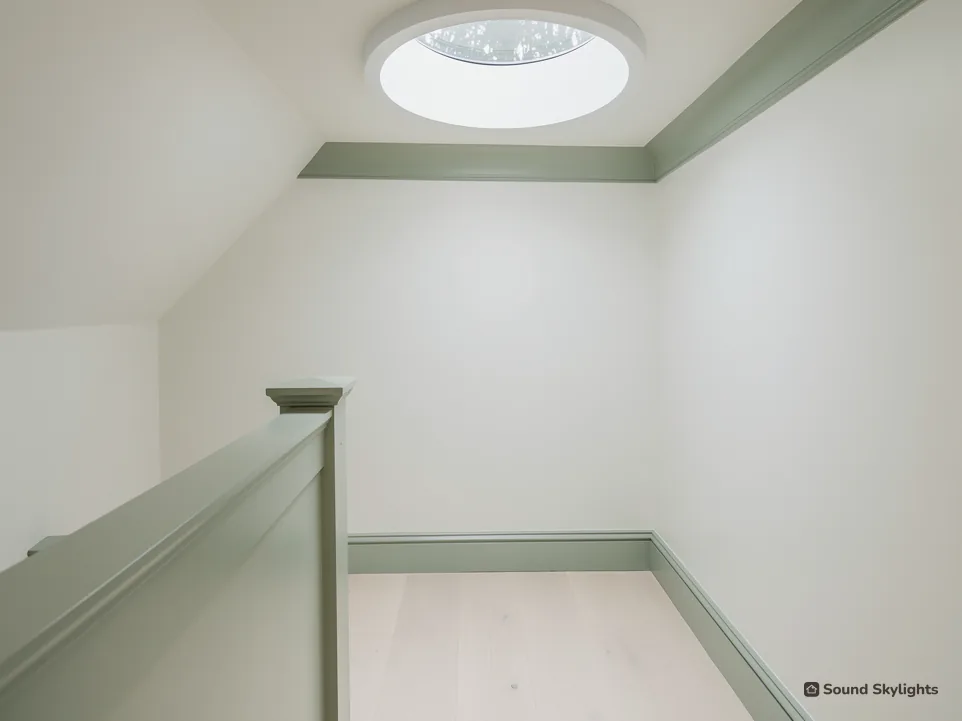
In a terrace or an interwar semi, the landing and the stair sit in the middle of the house, away from the outside walls. They can be the darkest places in it. If the loft above is unused, two things can bring daylight down, and they suit different households.

A roof window

A roof window opens, shows the sky and lets you air the stairwell. It sits high, so how it opens matters. A rod does for a window you rarely touch. If you want to open it every day, electric or solar with a wall remote is easier. Read electric versus solar opening for the trade-offs.

A sun tunnel

A sun tunnel is a tube. A small dome sits on the roof, the tube runs through the loft, and a diffuser fills an opening cut in the landing ceiling. It brings in daylight, but it stays shut and shows no sky. It suits a landing or bathroom where you only want the dark taken out. The page on rooms for sun tunnels has examples.

Stairs, children and light

A stairwell is the one place where a window overhead and a child on the stairs meet, so we think about the opening. A fixed unit, or a window with a restrictor, keeps things simple. A sun tunnel has nothing to open, which some families prefer. Daylight from above also changes how a stair feels at the end of the day, which is worth seeing before you decide.

Cleaning either one

A roof window is often wiped from the room if the sash turns, or from a ladder at the eaves. A sun tunnel dome sits on the roof and collects dust, but it is small and sees little traffic. We explain how each would be kept clear, so the choice does not leave you with a chore you did not expect.

Who decides it

Beyond the household's habits, the loft is the deciding factor. If it is full of boxes or has been converted, a tube may not have a clear run. We go up with you and look before we recommend either.

A dark landing, two answers

Roof window
Opens, shows sky, sits high so needs a rod or remote
Sun tunnel
Fixed, no view, needs a clear run through the loft
Blind
A window can take one, a tube cannot
Cleaning
A dome is wiped from the roof, a window may turn

We have added a room at the back. How should we light it from the roof?

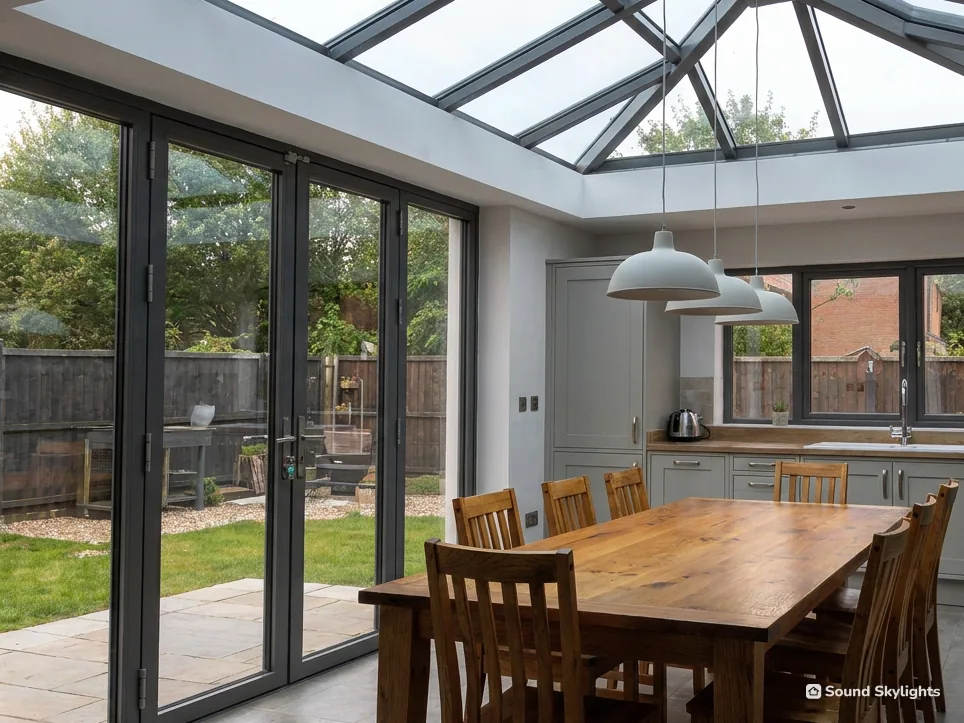
A room added at the back of a brick house can be the dullest one, because the old walls stand between it and the light. If it has a flat roof, that roof is where the daylight can come from. The decision comes down to cleaning, shade and how the room is used.

A flat rooflight for a narrow room

A flat rooflight stands on a shallow upstand. It is tidy from the garden and the glass can be wiped from a ladder. It can be fixed or opening. In a utility room or galley kitchen it does the job simply. See choosing for a flat roof.

A lantern for a wide one

A lantern rises above the roof with glazed sides and gives a broad room more height and sky. More edges mean more cleaning, and summer sun through the glass can be strong, so a blind or solar control glass helps. See the page on lantern sizes and kerbs.

Shade and glare

A room at the back can hold the afternoon sun for hours, and a glass roof turns that into heat and glare on screens. A blind inside softens it, and solar control glass is a further choice that stops some of the heat at the pane. We sit in the room at the survey and look at where the light lands, because the same rooflight can suit a north-facing garden and not a south-facing one.

Roof and paperwork

Allow for the state of the flat roof itself. We look at it at the survey, because the upstand and the covering around it have to be weathertight together.

The page on upstands and coverings explains how the rooflight and the covering meet. If your extension is new, ask us what the planning guide says about adding a rooflight to it. We confirm what applies to your address.

At the back of a brick house

Stand in the new room at midday. Where the sun lands decides the blind, and the width of the room decides the rooflight.

We want a bedroom in the loft of our interwar semi. What should we settle first?

A loft bedroom is a bigger job than a store room, and the roof windows are part of the design. Fixing their positions before the stair and the walls are drawn saves changes later.

Which slopes

The back slope is usually the easiest for a roof window. If your roof is hipped, a window on a slope that faces the side brings extra conditions of its own, listed in the planning guide. On a gabled house the end is a wall, so the windows go in the front and back slopes. See roof windows for loft conversions.

A safe way out

Any new floor needs a safe way out, as the Building Regulations guide sets out. Where the roof work is notifiable, the notification is ours.

Other uses for the room

Not every loft becomes a bedroom. A study or a playroom asks less of the blind and more of the light, and a light fabric against glare on a screen may be all it needs. The window can stay hand-operated if the desk sits beneath it. Think about how often you will open it, and from where.

Sleeping under glass

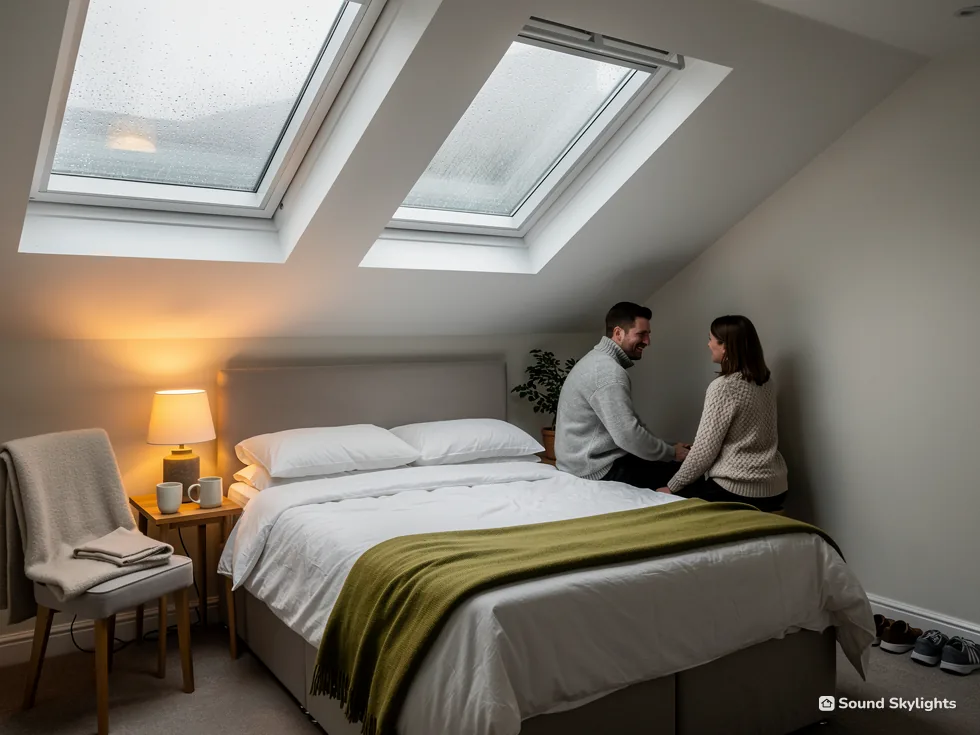
A bedroom wants blackout, and a window you can open from the bed with a handset. For a child's room, ask about restrictors; the page on child-safe opening sets out the options.

Swinton, street by street

Swinton, Greater Manchester

Swinton sits inside the straight-line ring the map draws around Stockport. Our cover is set in road miles, so the postcode box has the final say.

See if we cover your Swinton postcode

We cover Swinton, 17 road miles north-west of Stockport. Put your postcode in the box to check, then ask for a free survey and we will look at your roof.

Takes you to the survey form on this page and adds your postcode to any WhatsApp message.

Nearest town pages

Swinton, asked and answered

Which council is the planning authority for a Swinton house?

Salford City Council. Swinton is in the City of Salford, Greater Manchester, not South Yorkshire. Its records are checked for your address before we quote.

Why do you check every address when you say a rooflight is often allowed?

Because the general rules can be changed locally. Article 4 directions cover parts of Swinton, and a past planning condition can also matter. A short check before we quote saves you ordering something the council would refuse.

Can an old roof window be swapped without redoing the plaster?

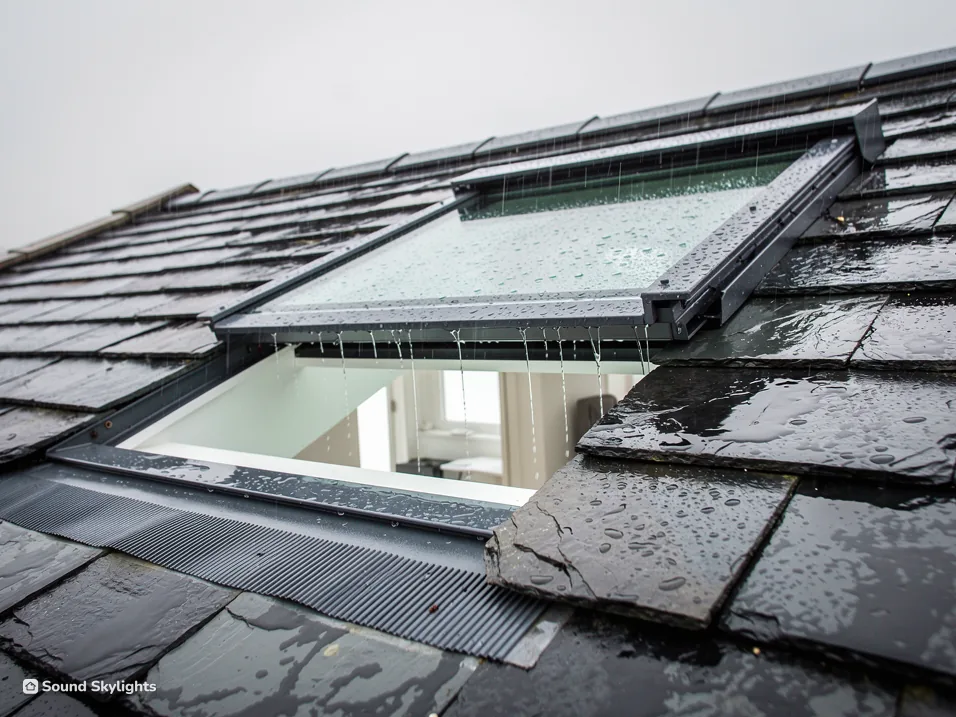
Often, provided the new window suits the existing hole. The old frame carries a size label. Our page on keeping or changing the opening explains the choice.

Can a misted window just have its glass changed?

Sometimes the glass unit alone can be swapped and sometimes the whole window suits better. See unit or whole window.

Does Swinton's brick history matter to a roof?

Only as background. Swinton bricks went into the Bridgewater Canal, and the town had brickworks by the middle of the 19th century. That tells us nothing about your own roof, so we read the covering and the structure at the survey instead of assuming.

What do you show us when the job is finished?

Controls, blind and outside cleaning are demonstrated at handover. On a Swinton job the 10-year workmanship guarantee is ours and written down, and makers' guarantees differ.

Free survey

Book your free survey

Tell us about the room and the roof. We visit, measure and send a fixed written quote for the job in Swinton, Greater Manchester.

  • Fixed written quote
  • We handle the Building Regulations notification where the work is notifiable
  • 10-year workmanship guarantee

Request my survey