Streets the Hyde cotton mills built, and the roofs above them

Skylights and rooflights for Hyde's mill-era streets, landings and loft rooms

Hyde is largely a creation of the 19th century, when cotton mills drew people in and houses went up around them. Its dark landings and loft rooms are where a roof window or sun tunnel can help.

Takes you to the survey form on this page and adds your postcode to any WhatsApp message.

  • Tameside Metropolitan Borough Council asked about your address before we quote
  • Dark landing or loft room: roof window or sun tunnel decided in the house
  • Estate houses on old mill sites: extension roof glass chosen for cleaning
7 road miles north-east of Stockport

In the late 18th century the future town centre was a cluster of houses known as Red Pump Street. The modern town is largely a creation of the 19th century and the Industrial Revolution, and at one stage Hyde had 40 working mills. Hyde today takes in areas and suburbs such as Gee Cross, Newton, Godley and Flowery Field. The mills then dwindled: by 1872 only 27 remained, and half of those closed between 1921 and 1939. The Ashton Brothers' Mill has been demolished to make way for a housing estate, so newer homes now stand where that mill was.

For a rooflight that history matters in a plain way. An older house may have a landing with no outside wall, or a loft a family wants to use. An estate house may have a flat-roofed extension, and that roof is where cleaning needs the most thought. In both, the question is how the thing will be used: who opens it, how high it sits, and how it gets cleaned. The survey answers that before a price is written.

Rooflights for Hyde's streets and estates

Five choices cover the loft rooms, dark landings and extension roofs that come up in Hyde, each matched to the room under it.

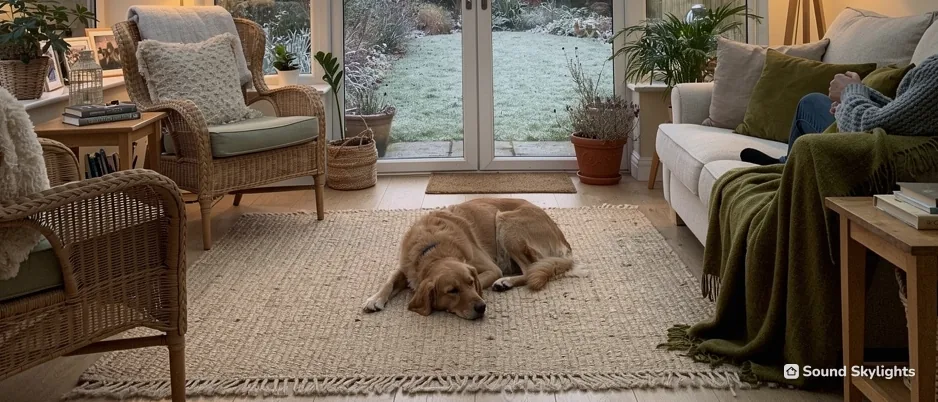
A sitting room with a dog asleep on the rug and French doors onto a frosty garden

Daily life under a Hyde rooflight

  • A window over a landing is opened rarely, so a rod does the job; a loft bedroom window opened daily is better on a remote.
  • A landing with a sun tunnel needs no blind at all, while a loft bedroom under a roof window wants blackout.
  • A rooflight on an extension behind the house can be reached from a ladder in the garden, which is worth knowing before you choose.
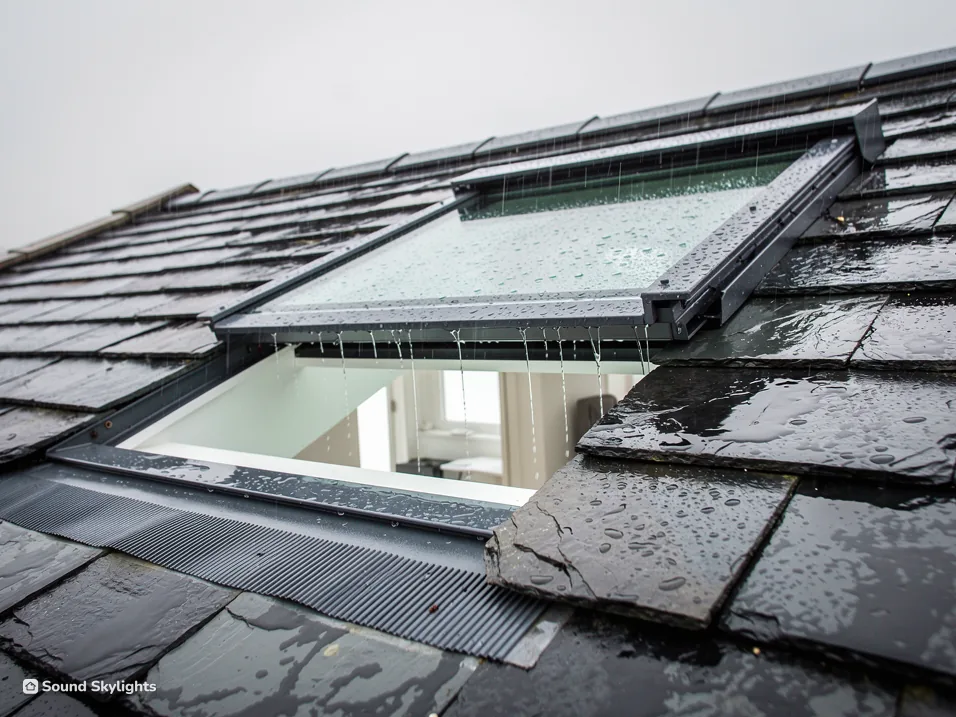
  • An open window and an empty house go badly in a shower, so a rain sensor, where the maker offers one, is the thing to ask about.

What Hyde's houses ask of a rooflight

A dark landing, a terrace loft and an extension on an estate: three questions we answer at Hyde surveys.

The landing and stairs get no daylight at all. Roof window or sun tunnel?

In some houses the stairs run through the middle of the building, with no outside wall to put a window in. The result is a landing that stays dim in the middle of the day. Two products answer it, and they are chosen for different reasons.

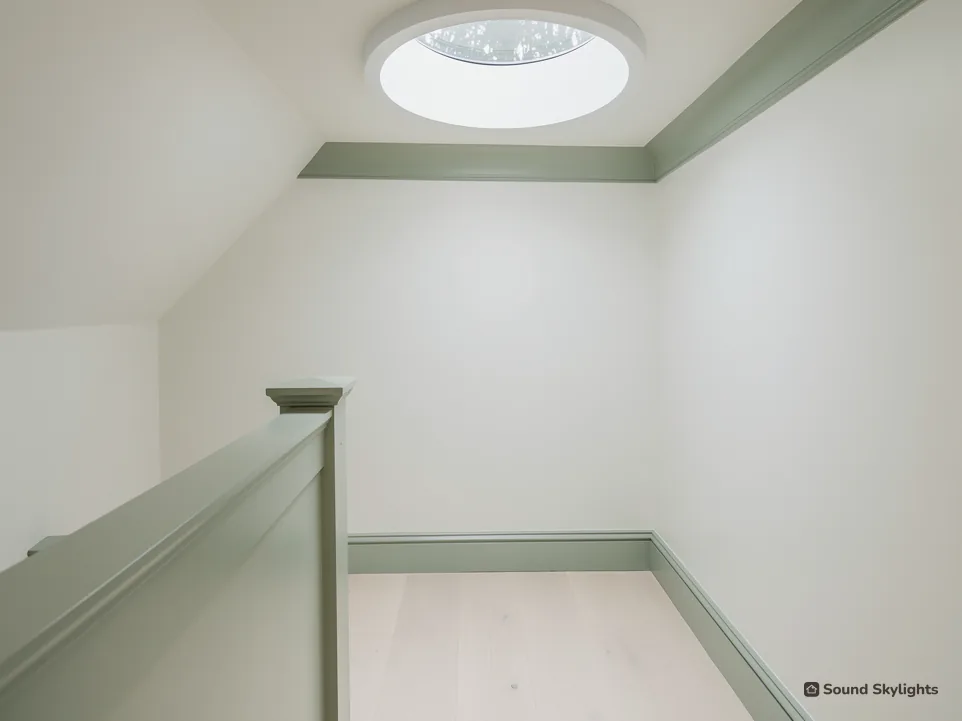
A sun tunnel

Outside sits a dome, which feeds a tube across the loft to a diffuser set into the ceiling. The ceiling is cut open for the diffuser, and the tube needs a clear run through the loft. It does not open and it gives no view, which suits a landing or a bathroom where nobody wants either. Indoors there is only the diffuser to dust, and the dome outside is the only part to reach. Our page on rigid or flexible sun tunnels explains the tube choices.

A roof window

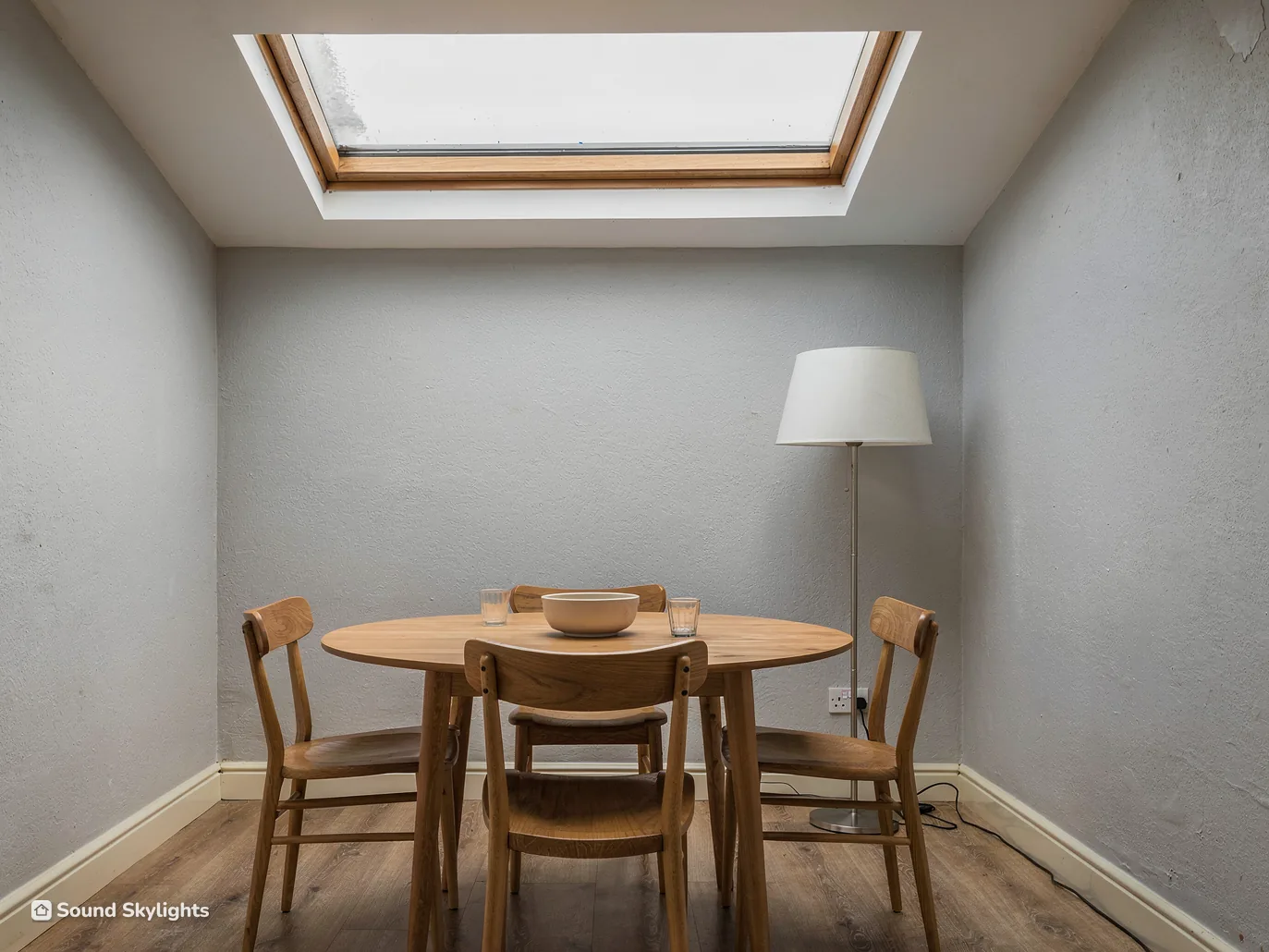
Where the loft is already used, or about to be, a roof window above the stairs lights the landing and the room alike. Here the daily-use question returns. A window above a stairwell sits well out of reach, so the opening method is settled with the window. A rod serves a window that is opened only on odd days. If you open it daily, a remote is kinder.

Choosing between them

Ask what the landing is for. If it is a route to bedrooms, a steady glow all day may be all you need. If the loft above it is becoming a room, the window serves both. We look at the loft at the survey and say which fits. Think too about who lives in the house: an older relative who cannot manage a stepladder, or a child who should not be handed a rod, changes which opening method makes sense. And our page on fitting roof windows when converting a loft goes into sizes and positions.

Hyde landing, in a line

If nobody will open it or look out of it, a sun tunnel is the plain answer. If the loft is a room, put in a window.

Our estate house has a flat-roofed extension. What would suit the kitchen?

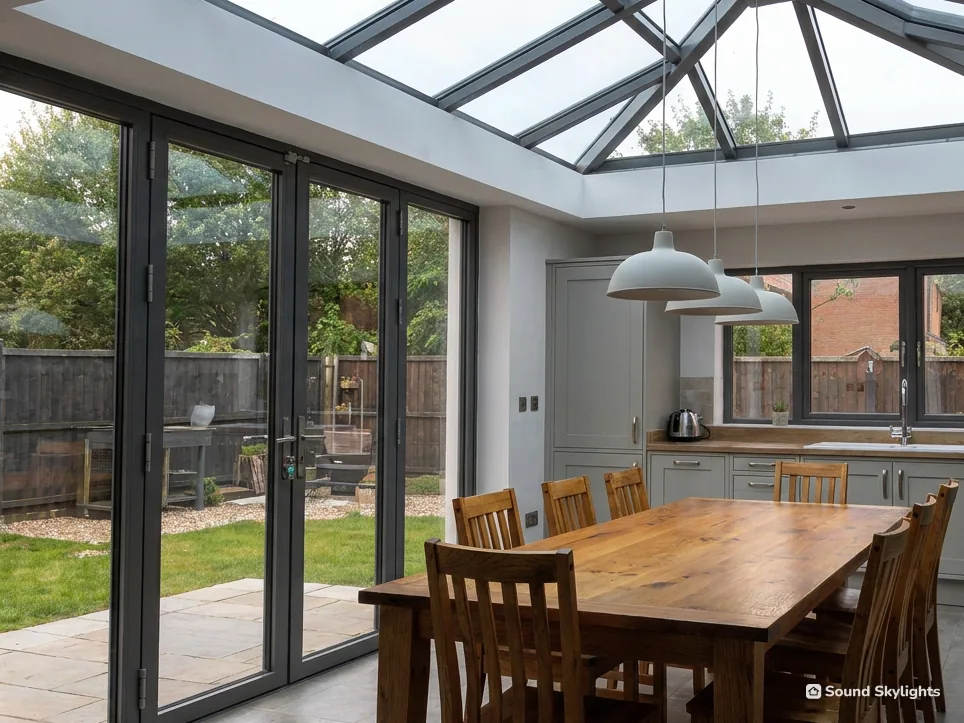
Where the Ashton Brothers' Mill stood, a housing estate now stands in its place. A house there or on any estate that has been extended at the back may have a new kitchen or dining room under a flat roof that wants light. The roof offers three answers, and daily use picks between them.

A flat rooflight

A flat rooflight sits low on an upstand and suits a narrow room or a galley kitchen. It can be fixed, or it can open on a motor from a switch on the wall, which spares you a stepladder. From the garden it hardly shows, and the glass is within reach of a ladder.

A lantern

A lantern rises above the roof and gives a wide room more height. It suits a dining area where the table sits under it. It has more edges to clean and more glass to shade in summer, so a blind or solar control glass is part of the conversation. A lantern on a new extension and one added to an existing flat roof are treated differently for planning; the planning guide explains both, and we confirm yours before you commit.

The roof under the glass

If the felt is near the end of its life, say so at the survey, because renewing it later means working round the rooflight. Which type wins on a given roof is compared in choosing a rooflight for a flat roof. Think about the sun: a west-facing extension at four in the afternoon is a different room from a north-facing one, and a blind picked alongside the rooflight works better than one added later.

A Hyde extension roof at survey

Roof
Flat, on an upstand built into the covering
Narrow room
Flat rooflight, fixed or opening
Wide room
Lantern over the table
Cleaning
Ladder from the garden for the outer pane
Blind
Chosen with the glass, not after it

We want to convert the loft in a mill-era house. What must we decide first?

In a house from Hyde's mill era the roof space is already there, and the roof windows are part of the design of any loft room. Several decisions come before the window itself.

Where the windows go

The rear slope can be the simplest place for a roof window, since it does not face the street. A slope that forms the side of the house carries extra conditions, set out in the planning guide, so it is worth knowing before the layout is fixed. Some conversions add a dormer for headroom, and the roof windows then go in the slopes that remain.

The room as it will be used

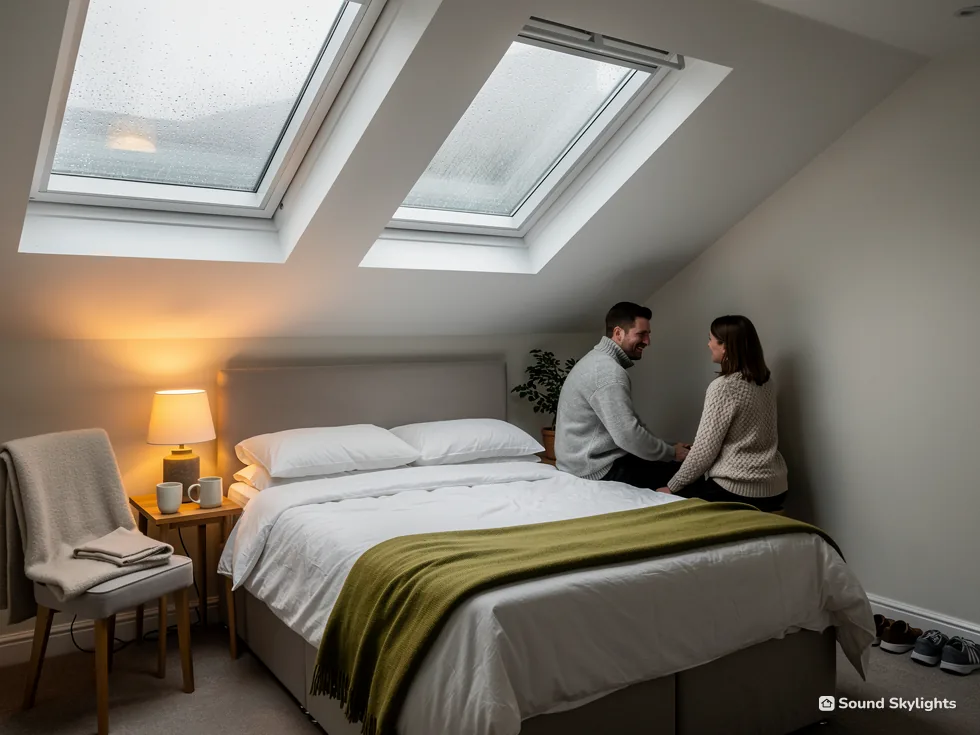
Picture the room on an ordinary evening. A child's bedroom wants a blackout blind and perhaps a restrictor; if that is the room's escape window, an adult must still be able to open it fully. Our page on child-safe opening rooflights covers the restrictors. A home office wants glare control instead. A spare room needs little more than a rod and a plain blind.

Where the water is

The River Tame, a tributary of the Mersey, separates Hyde from Denton, and the Peak Forest Canal was built through the town and completed in 1800. A loft room in a house near either is fitted like any other. What does change is the habit of the household: windows left open for a breeze on a damp day need a way of closing without a climb.

Checks that come with the house

Before we quote, we ask Tameside Metropolitan Borough Council about your address, so that anything attached to the house is known at the start. Hyde Town Hall and the Church of St George are listed Grade II, and Apethorn Farmhouse is Grade II*. A listed house will almost always want listed building consent for a rooflight, and our page on conservation rooflights and listed homes explains it. The new floor also needs a safe route out, and the Building Regulations guide covers how that is judged.

Loft terms heard in Hyde

Rafter
A sloping timber that carries the roof. Where the rafters fall decides how wide a roof window can be.
Dormer
A box built out from the slope to give headroom, with its own vertical window.
Restrictor
A catch that stops a window opening past a set gap, useful in a child's room.
Flashing kit
The set of metal and rubber parts that seals a roof window into the covering around it.

Across Hyde and its streets

Hyde, Greater Manchester

The ring here is a straight-line radius around Stockport and Hyde falls well inside it; our service area itself is reckoned by road.

Enter your Hyde postcode

We cover all of Hyde, 7 road miles north-east of Stockport, from Flowery Field and Newton to Godley and Gee Cross, and the estates built where mills once stood.

Takes you to the survey form on this page and adds your postcode to any WhatsApp message.

Nearest town pages

Hyde householders ask

Who deals with planning and building control for a Hyde house?

Tameside Metropolitan Borough Council is the planning authority. A registered building control approver can handle the building control side instead, if you prefer. We check your address with Tameside before we quote and tell you what we find.

Can you replace an old roof window without disturbing the loft room?

Where the new window matches the old one's size, it can go into the same opening and the inside lining stays. The size code is on a label on the old frame. See replacing an old VELUX window and new opening or same opening.

Is a sun tunnel worth it for a bathroom with no window?

It can be. The dome on the roof feeds light through a tube to a diffuser, which sits in an opening cut in the ceiling. It brightens the room in daylight but has no switch or view and does not open. Which rooms benefit is covered in sun tunnels by room.

Our extension roof is felt. Must it be renewed before a rooflight goes in?

Not always, but a tired covering is easier to deal with before the rooflight than after. The upstand is dressed into the roof, so the two should last together. We look at the felt at the survey. See upstands and coverings.

Who shows us how the remote and blind work?

We do, at the end of the job. Controls, blinds and cleaning are explained before we leave, so whoever opens the window knows how it works. Our guide to blinds and controls covers the options beforehand.

Is the survey free, and does it fix the price?

The survey is free. Once we have been up to look at your Hyde roof and the room under it, we send a fixed written quote for the work.

Free survey

Book your free survey

Tell us about the room and the roof. We visit, measure and send a fixed written quote for the job in Hyde, Greater Manchester.

  • Fixed written quote
  • We handle the Building Regulations notification where the work is notifiable
  • 10-year workmanship guarantee

Request my survey